
Project case
Ship Exterior Hull Polyurea Protective Coating Case
A ship exterior hull protection case using BW8008 metal primer, BW3-951 spray polyurea coating and BW0-8027 protective topcoat to support corrosion protection, moisture resistance, surface toughness and exposed marine steel durability.
- Project Type
- Ship exterior hull polyurea protective coating
- Application Area
- Ship exterior hull side shell, marine steel plate surfaces, vertical hull areas, weld seams, plate joints and local repair zones
- Main Substrates
- Prepared marine steel hull surfaces, exterior steel plates, weld lines, panel transitions, edges, repair areas and large vertical steel surfaces
- Service Environment
- Marine atmosphere, seawater-related humidity, salt spray, sunlight, temperature change, shipyard maintenance, docking contact, abrasion and mechanical impact conditions
- Coating Approach
- BW8008 metal primer + BW3-951 spray polyurea protective coating + BW0-8027 protective topcoat
- Main Functions
- Metal surface adhesion support, marine corrosion protection, moisture resistance, surface toughness, impact resistance, coating continuity and exposed hull surface durability
Project information is summarized for application reference. Some project details are not disclosed due to confidentiality requirements.

Why This Coating Route Was Used for Ship Exterior Hull Protection
Ship exterior hull surfaces work in one of the most demanding coating environments. Unlike ordinary steel structures, the outer hull is exposed to seawater, salt spray, moisture, sunlight, temperature change, docking operations, shipyard maintenance, mechanical abrasion and long-term marine corrosion risk. If the protective coating is weak, damaged or poorly bonded, corrosion may begin from local exposed steel areas and gradually spread under the coating film.
One of the main pain points of ship exterior hull protection is salt-related corrosion. The hull surface may be exposed to seawater, wet-dry cycles, marine atmosphere and salt contamination during service and shipyard maintenance. These conditions can accelerate steel corrosion, especially around coating defects, welded seams, plate edges, damaged areas and difficult-to-clean surfaces. For a large vessel, local coating failure can also increase later repair difficulty and maintenance cost.
Another challenge is mechanical damage. Ship hull surfaces may experience abrasion, impact, docking contact, maintenance platform movement, rope contact, cleaning work and construction handling during shipyard operations. A coating system for the exterior hull should therefore provide more than basic color coverage. It needs to support corrosion protection, surface toughness, coating continuity and better resistance to practical mechanical damage.
The geometry and scale of the hull also make coating work more difficult. The project photos show a large exterior hull surface with vertical and curved steel plates, long weld lines, panel transitions, scaffold areas and large shipyard construction zones. A coating route for this kind of surface must be suitable for large-area application while maintaining coverage continuity around seams, edges, local details and repair zones.
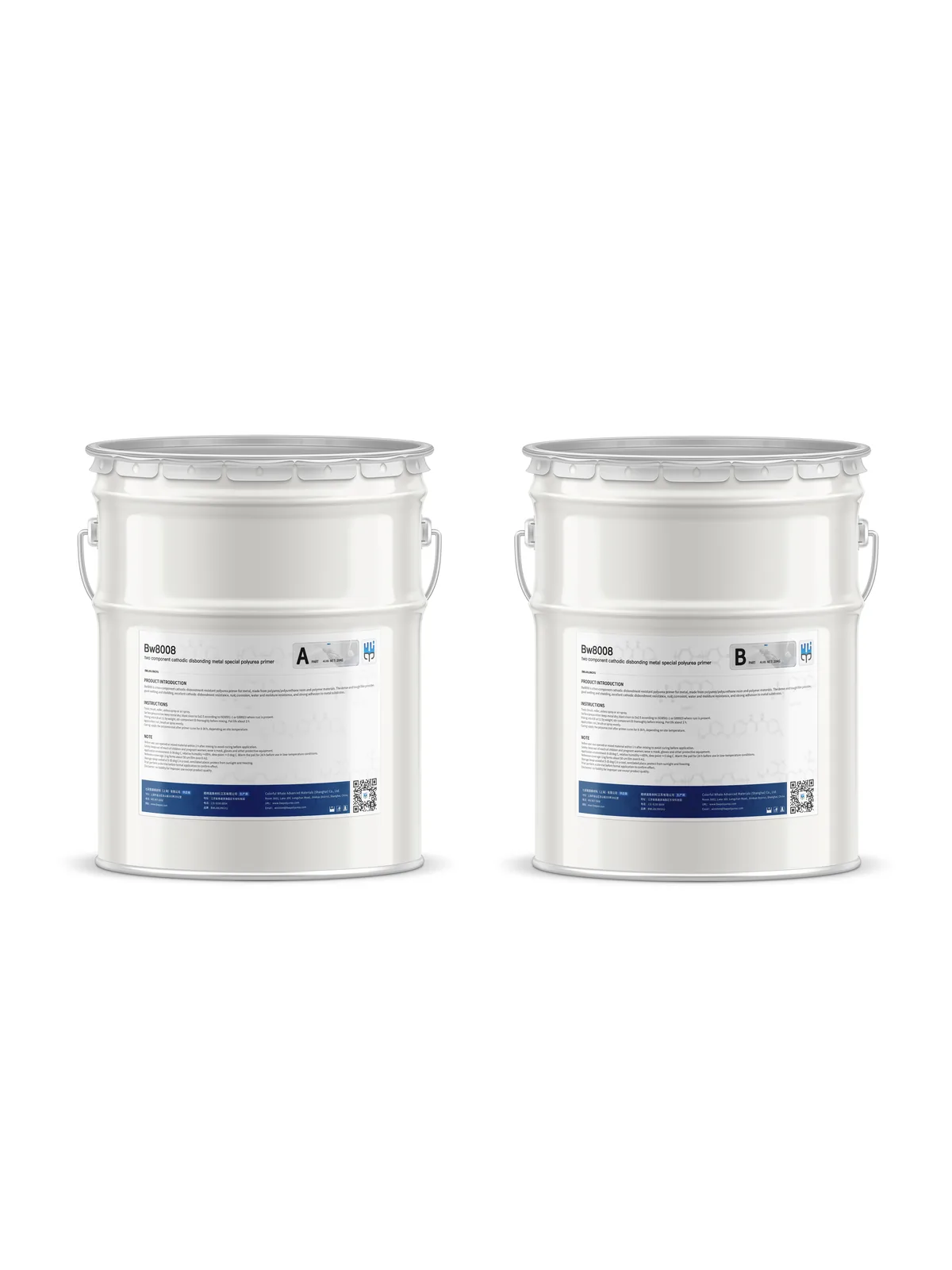
In this project, BW8008 was used as the metal primer layer. The role of BW8008 is to support adhesion between the prepared steel substrate and the following spray polyurea protective layer. For ship exterior hull surfaces, this primer interface is important because the coating system must resist moisture, salt-related contamination, temperature variation and long-term marine exposure.
BW8008 is not used as the main protective membrane in this route. Its main value is at the steel substrate interface. It helps prepare the metal surface for the following BW3-951 spray polyurea layer and supports the bonding stability of the full coating system. This is especially important around weld seams, steel plate joints, local repair areas and vertical hull surfaces where coating failure may begin if the primer interface is weak.
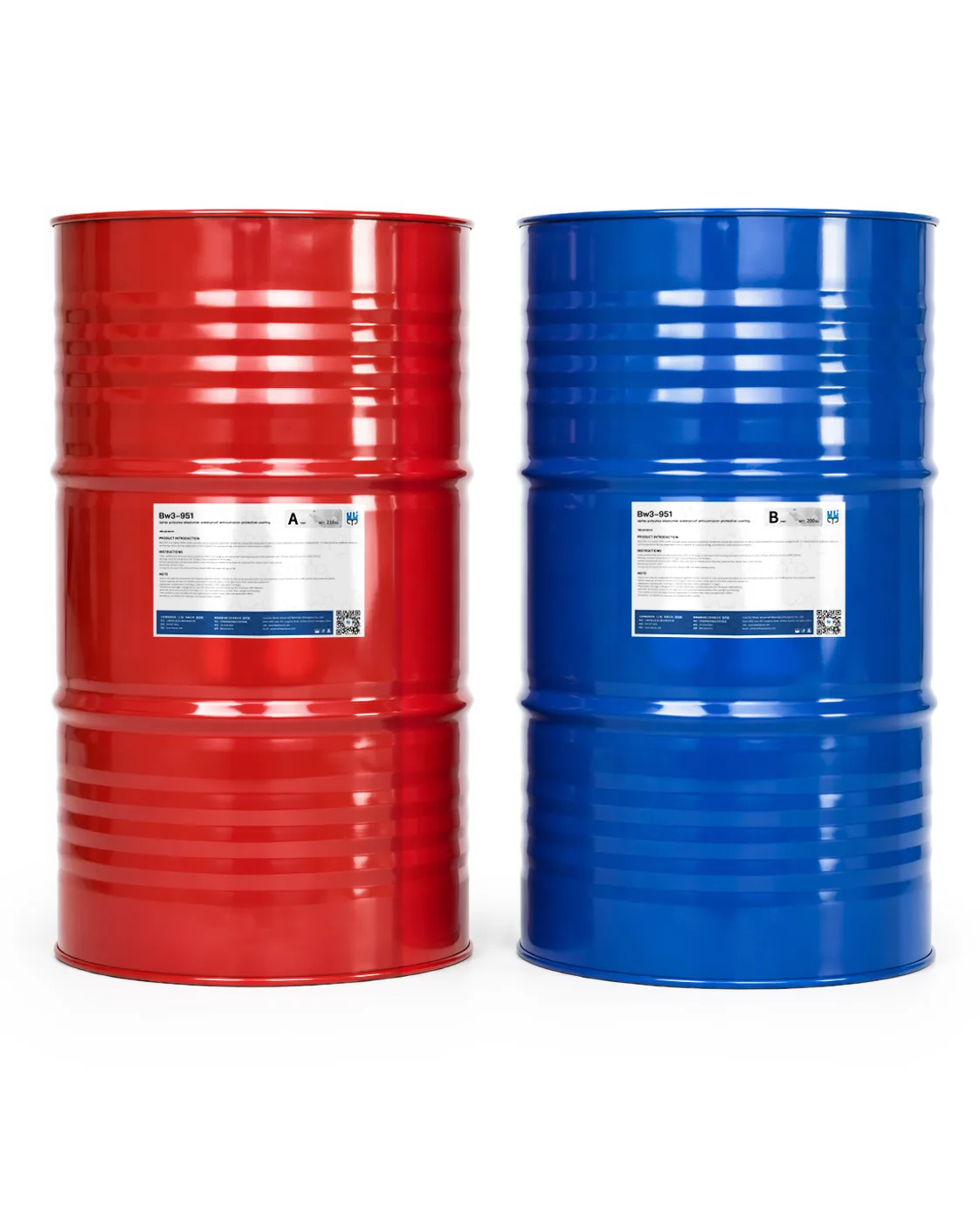
After the BW8008 primer layer, BW3-951 was applied as the main spray polyurea protective coating. The purpose of BW3-951 is to form a continuous, elastomeric and durable protective membrane over the prepared exterior hull surface. Compared with ordinary thin coatings, a spray polyurea layer can provide a more functional protective barrier for steel hull surfaces that may face moisture, abrasion, impact and corrosion risk.
The spray-applied nature of BW3-951 is valuable for large ship hull surfaces. The coating can follow vertical steel plates, curved hull geometry, weld areas, local transitions and repair sections more continuously than systems that rely only on manual thin-film application. This helps reduce weak points caused by incomplete coverage, seams or local coating discontinuity.
The elastomeric character of BW3-951 also provides practical value for ship hull protection. Hull surfaces may experience vibration, temperature movement, docking stress, maintenance impact and handling damage during shipyard work. A flexible protective membrane can better adapt to the steel surface and local movement while helping maintain corrosion-protection continuity.
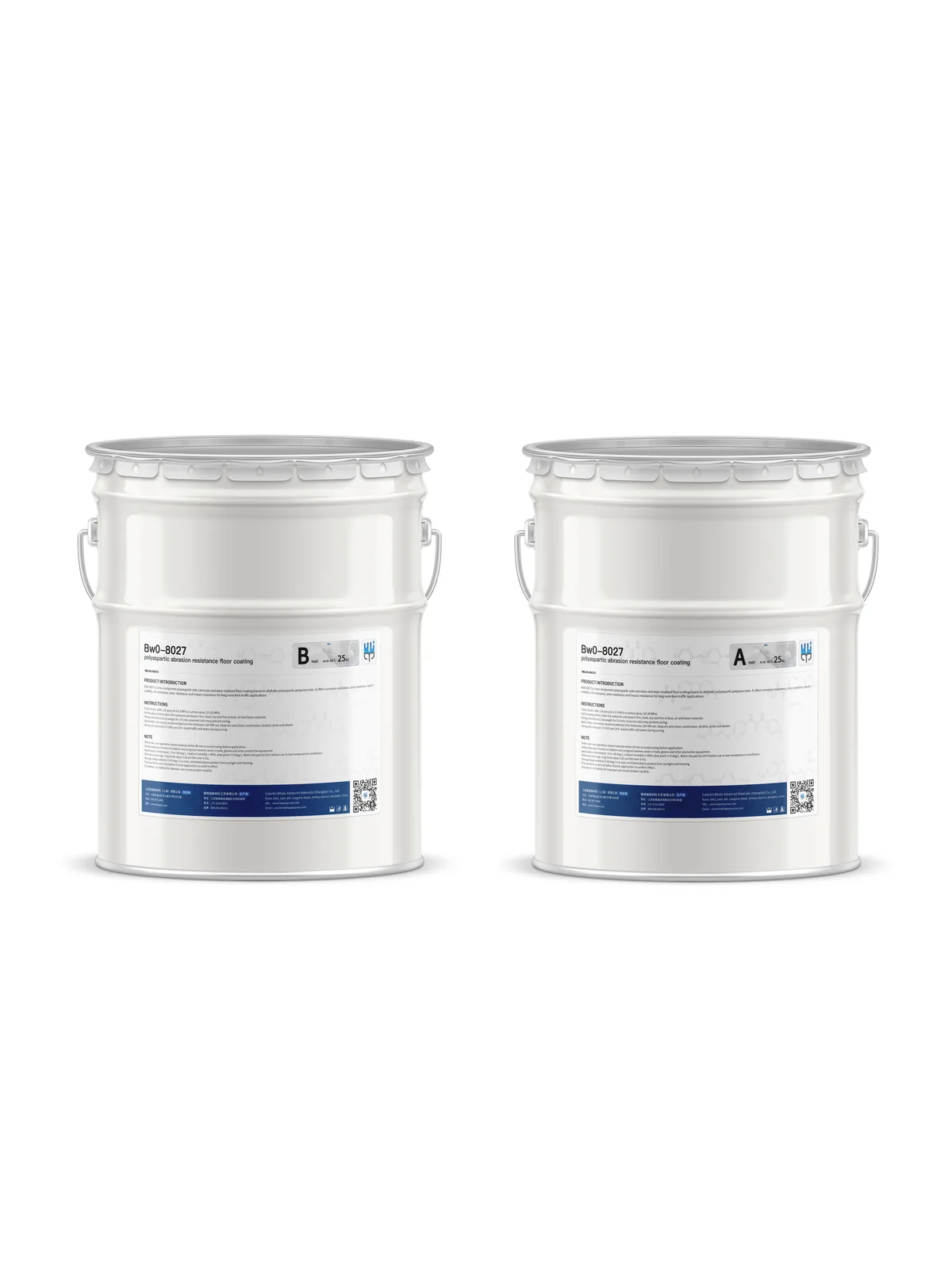
After the BW3-951 spray polyurea layer, BW0-8027 was used as the protective topcoat. The role of BW0-8027 is to protect and finish the exposed polyurea surface. Ship exterior hull coating may face sunlight, outdoor weather, cleaning work and long-term surface aging, so the topcoat helps support exposed surface durability, weather resistance and a more stable finished appearance.
In this coating route, BW0-8027 is not the main corrosion-protection build layer. The main protective membrane comes from BW3-951, while BW0-8027 provides the exposed finishing and surface-protection function. This division of function makes the system more suitable for ship exterior hull applications than a single decorative coating approach.
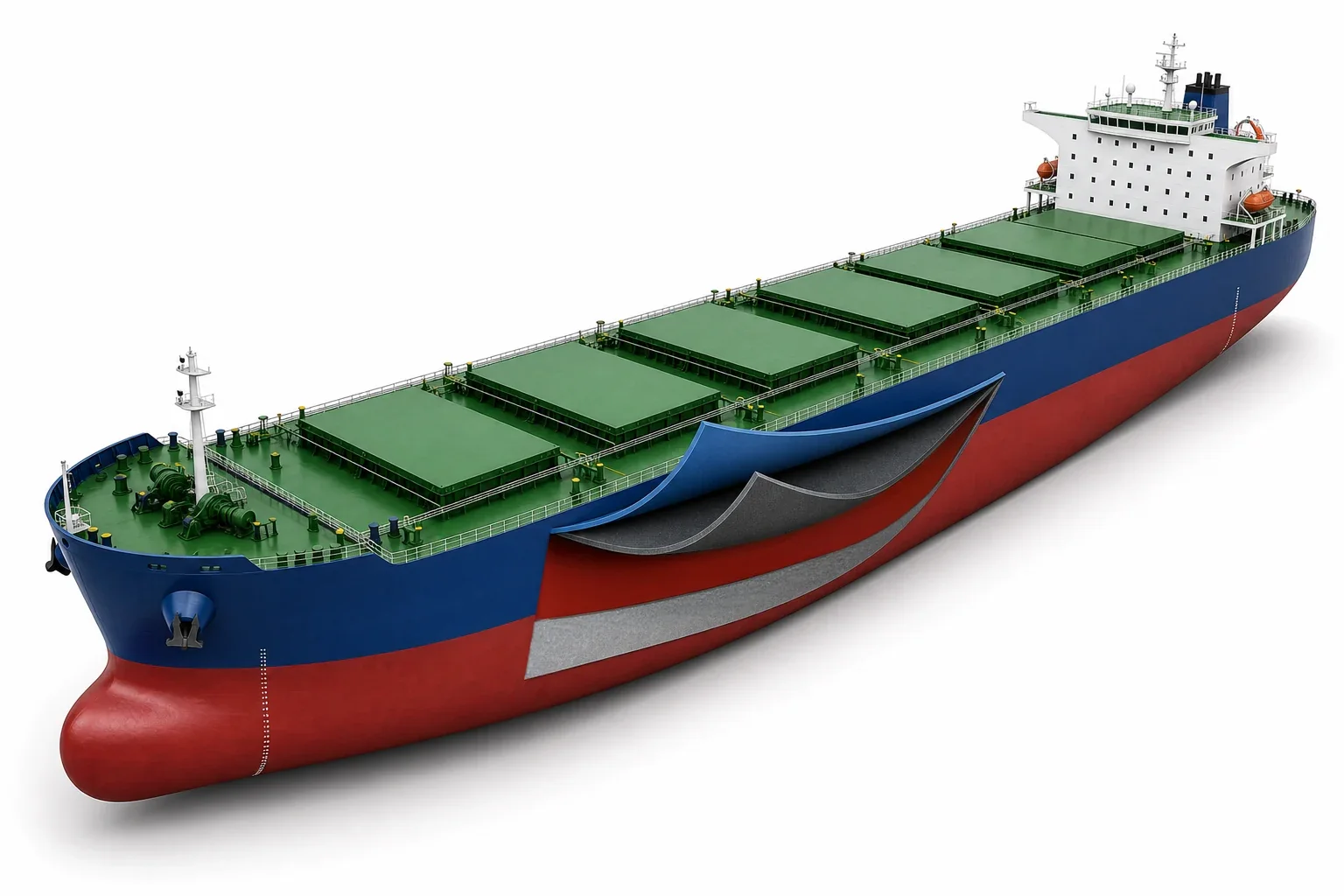
The full coating route has a clear structure. BW8008 supports the steel-primer interface and adhesion. BW3-951 forms the main spray-applied polyurea protective membrane. BW0-8027 provides the exposed protective topcoat for surface durability and weathering support. Together, the three layers create a coating route focused on marine steel corrosion protection, moisture resistance, surface toughness and long-term exterior hull protection.
This route is suitable for ship exterior hull protection because it addresses the real weak points of marine steel surfaces. The risk is not only broad-surface corrosion, but also local coating failure around welds, plate joints, edges, scaffold contact areas, docking-related damage and repair zones. By combining a metal primer, spray polyurea protective membrane and exposed topcoat, the system is better matched to large ship hull surfaces under marine and shipyard conditions.
Surface preparation remains critical. Rust, salt contamination, oil, dust, welding residue, unstable old coating and moisture should be removed or controlled before primer application. Weld seams, plate edges, repair areas and vertical surfaces should be checked carefully because these locations often determine the long-term reliability of the hull coating system.
The key value of this case is that the coating route does not treat the ship hull as a simple painted steel wall. It considers marine exposure, salt-related corrosion, large-area vertical application, mechanical damage, weld-line details and exterior surface durability. BW8008 provides the metal primer interface, BW3-951 provides the main continuous spray polyurea protective layer, and BW0-8027 supports the final exposed surface performance.
For similar ship exterior hull, marine steel structure, shipyard repair, vessel side shell or large steel hull protection projects, the final coating route should still be reviewed according to steel surface condition, marine exposure level, immersion or splash condition, abrasion risk, application environment, maintenance requirement and project specification. This case provides an application reference for using BW8008, BW3-951 and BW0-8027 to support corrosion protection and surface durability for ship exterior hull steel structures.
Related Products Used
Project Photo Gallery
Project photos show ship exterior hull coating, large marine steel side-shell surfaces, BW8008 primer route, BW3-951 spray polyurea application, BW0-8027 topcoat, shipyard maintenance areas and finished hull protection references.
