
Project case
Power Plant Storage Tank Polyurea Anti-Corrosion Protection Case
A power plant storage tank coating reference using separate external and internal coating routes for outdoor tank surface protection and internal anti-corrosion lining protection.
- Project Type
- Power plant storage tank anti-corrosion protection
- Application Area
- Industrial storage tank protection in a power plant environment
- Main Substrates
- Tank outer surfaces, tank inner surfaces and local steel tank details
- Service Environment
- Industrial outdoor exposure, moisture, corrosion risk, tank-side service conditions and internal storage environment
- Coating Approach
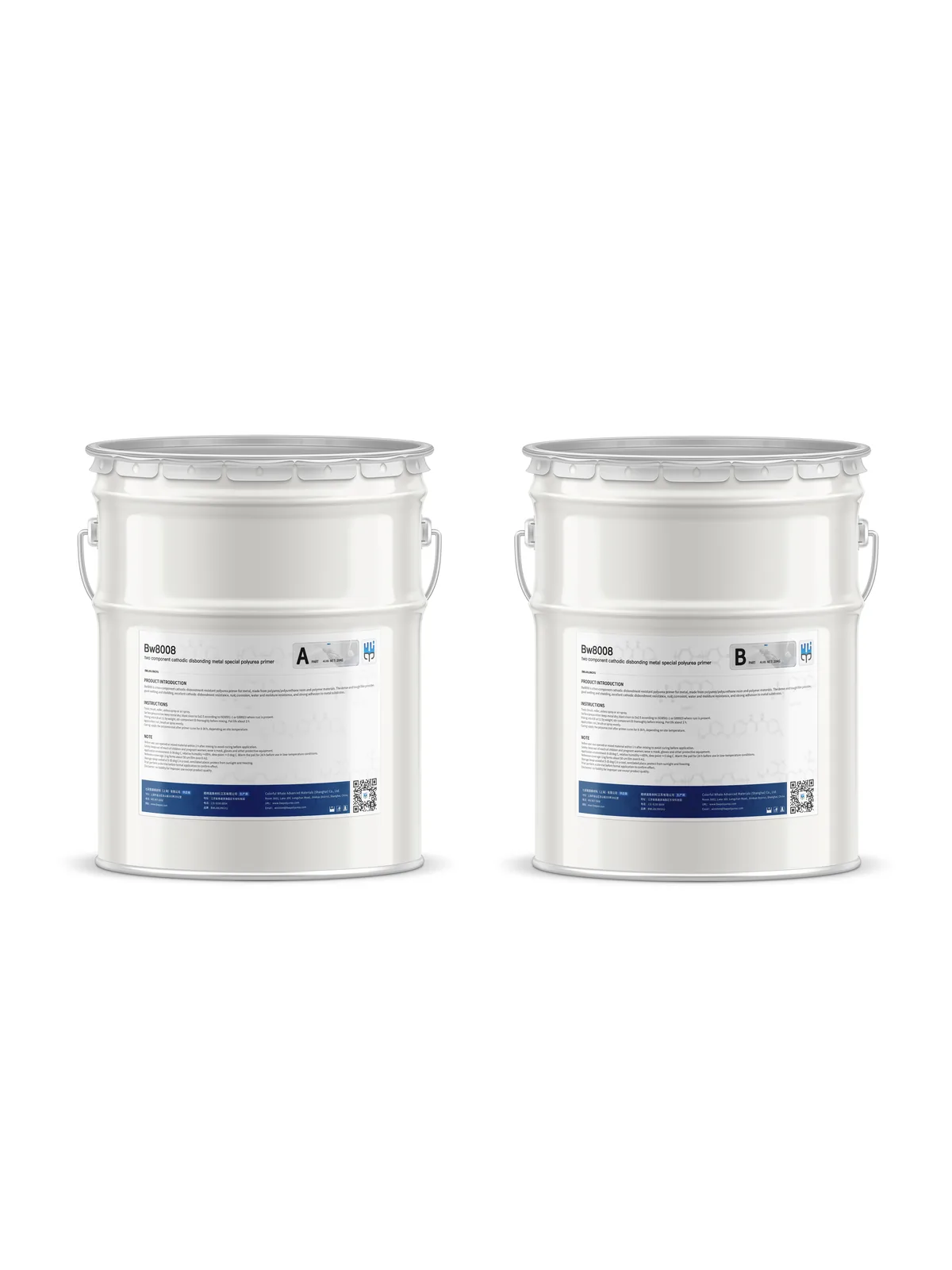
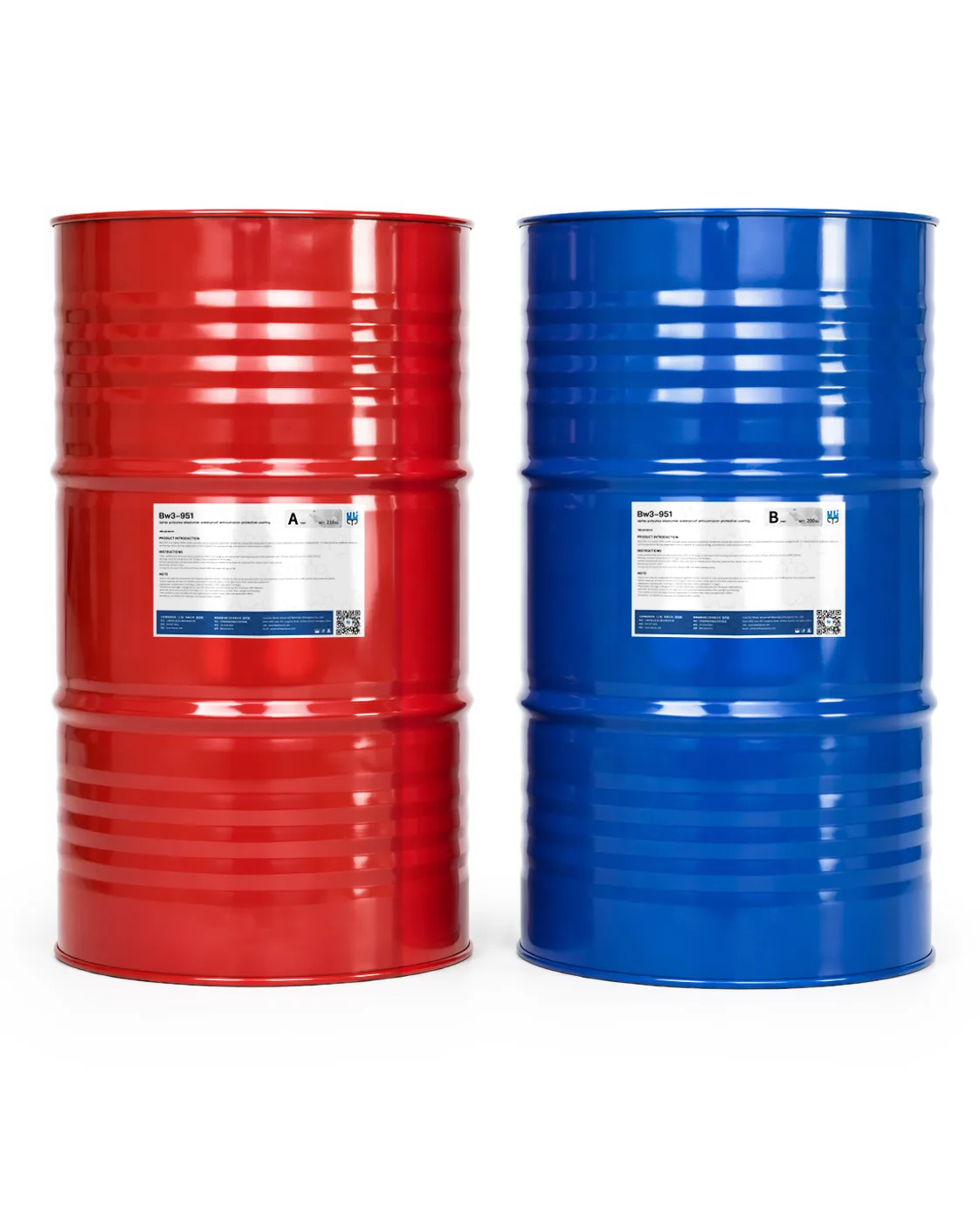
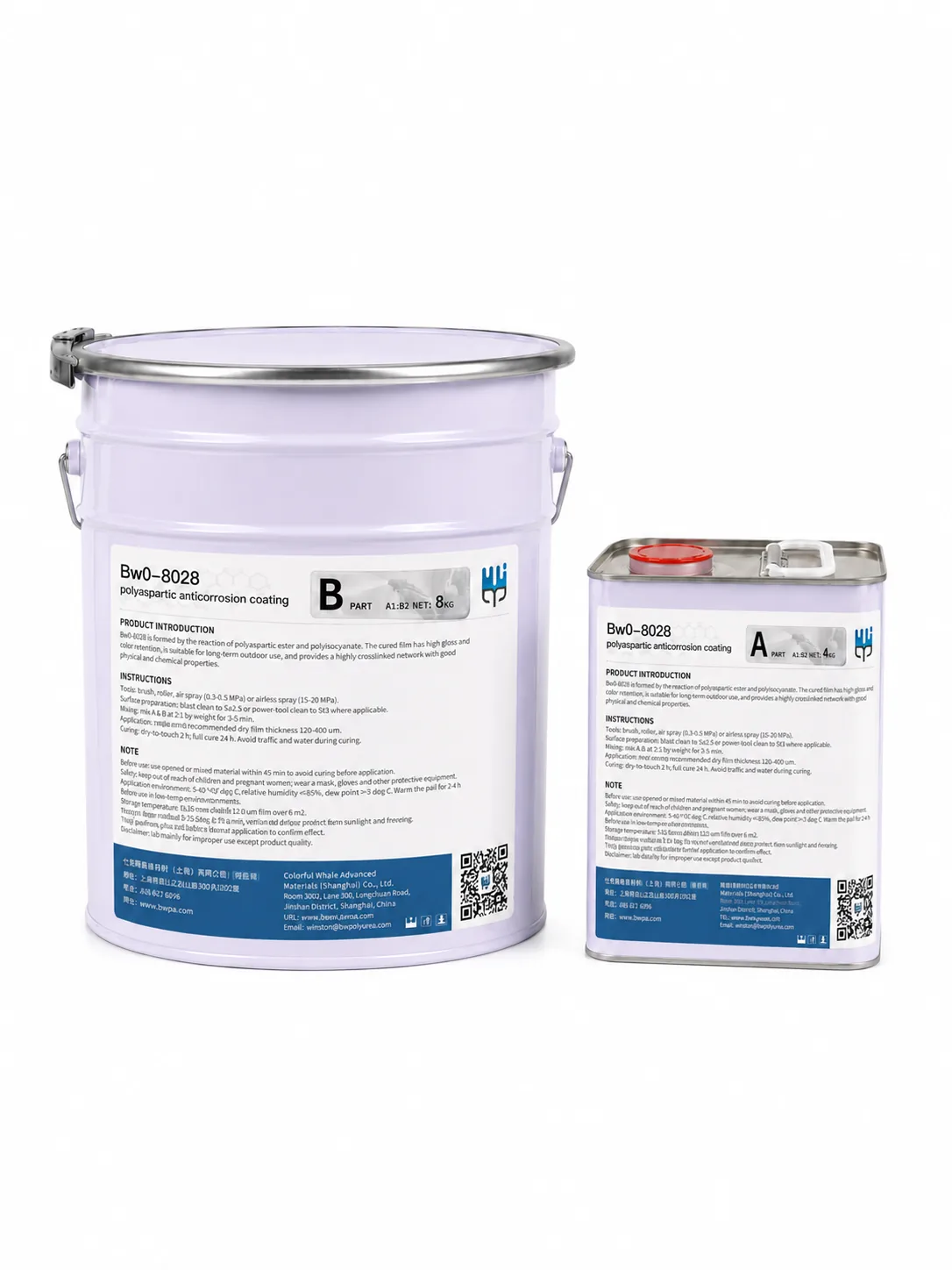
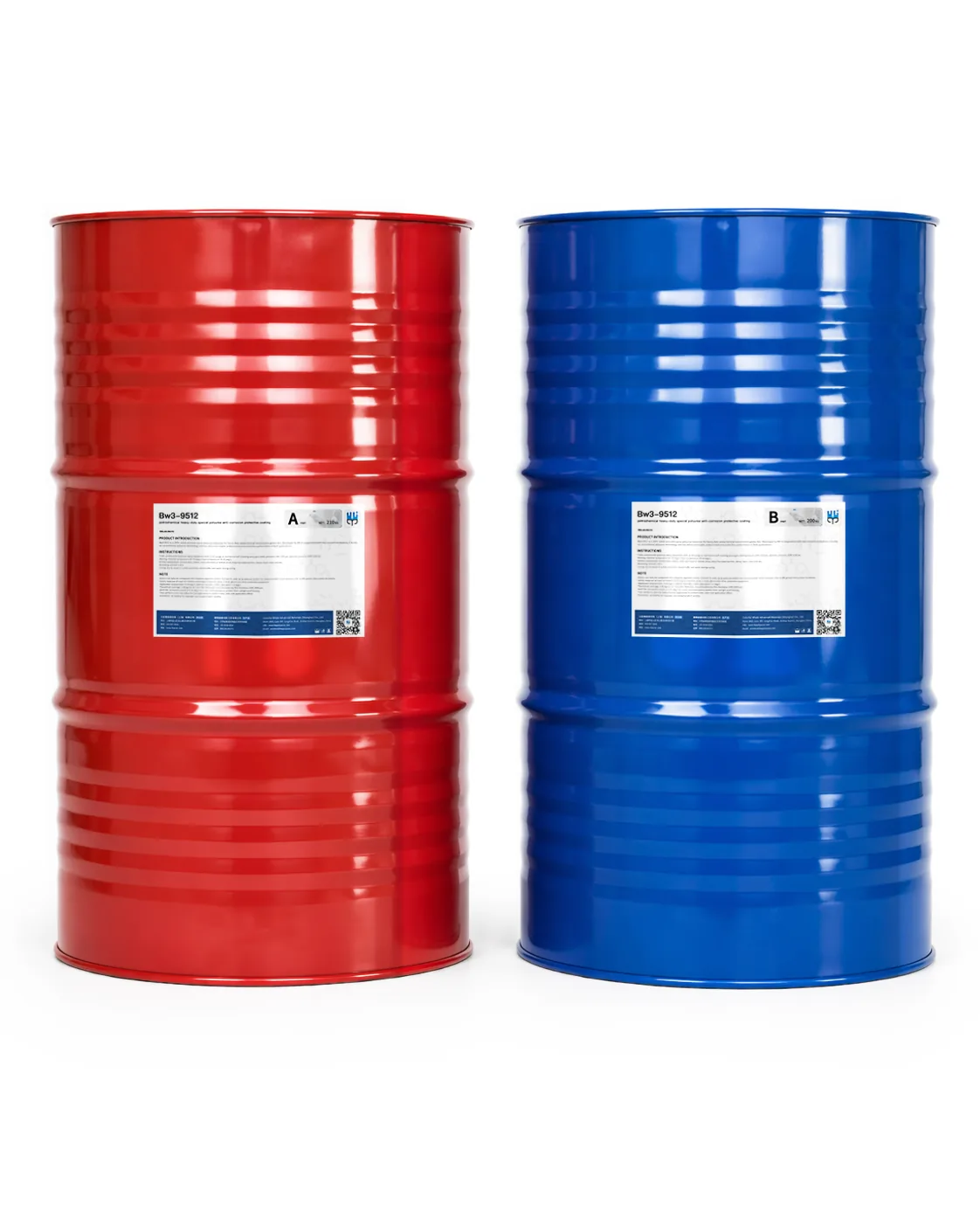
- External route with BW8008 + BW3-951 + BW0-8028, and internal route with BW8008 + BW3-9512
- Main Functions
- External weather-resistant anti-corrosion protection, internal heavy-duty lining protection and long-term tank surface protection
Project information is summarized for application reference. Some project details are not disclosed due to confidentiality requirements.

External and Internal Coating Routes for Storage Tank Protection
The photographs document both external and internal tank working conditions. Exterior views show cylindrical tank walls and rust-coloured surfaces; interior views show workers spraying, curved walls and scaffolding. Access differs between these locations, so external protection and internal lining need separate review. Outside, the work area includes the shell and surrounding fittings; inside, the review also includes access between the wall, floor and local members.
For a similar steel tank, first distinguish outdoor exposure from internal surfaces in contact with the stored medium, then review corrosion, existing coatings, welds, floor transitions and working access. Internal lining selection also requires the stored medium, concentration, temperature, cleaning method and shutdown conditions; exterior weathering requirements alone are not a basis for selecting the lining.
For this reason, this project used two different coating routes. The external tank surface used BW8008 + BW3-951, about 1.2 mm + BW0-8028. The internal tank lining route used BW8008 + BW3-9512, about 1.5 mm. This separation between external and internal coating routes is important because the tank exterior requires weather-resistant anti-corrosion protection, while the tank interior requires a heavier-duty lining-oriented anti-corrosion system.
External Tank Surface Protection
BW8008 Metal Primer + BW3-951 Spray Polyurea Anti-Corrosion Layer, about 1.2 mm + BW0-8028 Exposed Protective Topcoat
The external surface of a power plant storage tank must resist long-term outdoor exposure. Unlike an internal lining, the outer wall of the tank is directly exposed to rain, sunlight, moisture, temperature changes and industrial air. These conditions can accelerate surface aging and corrosion if the tank surface is not properly protected.
For the external route, BW8008 was used as the metal primer layer. In this project, the primer layer helps support the bonding interface before the following spray polyurea anti-corrosion layer is applied. A stable primer route is important because storage tank surfaces are not simple flat panels. They include curved walls, welded seams, edges, transition zones and local details where coating continuity and adhesion support are especially important.
After the primer layer, BW3-951 was applied as the main spray polyurea anti-corrosion protective layer at approximately 1.2 mm. This layer provides the main protective build for the external tank surface. Compared with ordinary thin coating systems, a spray-applied polyurea layer can form a more continuous protective membrane over large curved tank walls and local details. This helps improve the overall anti-corrosion protection of the tank exterior and reduces weak points caused by complex geometry, weld areas or surface transitions.
Because the tank exterior is exposed to outdoor service conditions, BW0-8028 was used as the exposed protective topcoat. The topcoat is not the main anti-corrosion build layer. Its role is to provide the external surface with additional outdoor protection, weather-resistant finish and long-term surface stability. For external tank surfaces, this is important because the coating system must not only resist corrosion risk, but also remain suitable for exposed industrial environments.
The advantage of this external route is that each layer has a clear function. BW8008 supports the metal primer interface, BW3-951 provides the main spray polyurea anti-corrosion build, and BW0-8028 completes the exposed protective finish. This makes the external tank coating route more suitable for large industrial storage tanks that need both anti-corrosion protection and outdoor surface durability.
Internal Tank Lining Protection
BW8008 Metal Primer + BW3-9512 Spray Polyurea Anti-Corrosion Lining, about 1.5 mm
The internal tank surface requires a different protection logic from the exterior. While the outside of the tank is mainly exposed to weather and industrial atmosphere, the inside of the tank must be protected against internal service conditions. These may include moisture, condensation, stored-medium exposure, corrosion risk and long-term lining stress.
For the internal route, BW8008 was used as the metal primer layer before the main lining application. The primer helps support the interface between the prepared tank surface and the following spray polyurea lining. This is important because internal tank protection depends heavily on adhesion stability, coating continuity and detail coverage. Welded seams, bottom transitions, curved walls, internal corners and local details can all become weak points if the lining system is not properly planned.
BW3-9512 was selected as the main internal spray polyurea anti-corrosion lining at approximately 1.5 mm. Compared with the external BW3-951 layer, the internal BW3-9512 route is more lining-oriented. Its purpose is to create a dense, continuous and seamless protective layer inside the tank. This lining route helps isolate the tank surface from the internal service environment and supports long-term anti-corrosion protection.
The use of approximately 1.5 mm BW3-9512 reflects the different protection priority of the internal area. The tank interior does not mainly require an exposed weather-resistant topcoat. Instead, it needs a stronger internal lining build with emphasis on corrosion protection, coating continuity, surface isolation and long-term service performance. The spray-applied method is also suitable for tank interiors because it can cover curved surfaces, welded areas and local details more continuously than sheet-type materials or conventional thin coatings.
The advantage of this internal route is that it is designed around the actual service condition inside the tank. BW8008 supports the metal primer interface, while BW3-9512 provides the main heavy-duty internal anti-corrosion lining. This route is more suitable for internal tank protection where lining continuity and anti-corrosion performance are more important than external weather resistance or color-retention finish.
Why the External and Internal Routes Are Different
This project used separate external and internal coating routes because the two sides of the storage tank face different risks.
The external tank surface needs protection against atmospheric corrosion, rain, sunlight, temperature changes and long-term outdoor exposure. Therefore, the external route uses a primer layer, a 1.2 mm BW3-951 spray polyurea anti-corrosion layer and BW0-8028 as the exposed protective topcoat. This route is designed to combine anti-corrosion protection with an outdoor protective finish.
The internal tank surface has a different priority. It requires a lining route that can help isolate the tank surface from the internal service environment. Therefore, the internal route uses a primer layer and a 1.5 mm BW3-9512 spray polyurea anti-corrosion lining. This route focuses on internal lining continuity, corrosion protection and detail coverage rather than exposed weathering resistance.
This difference is important for storage tank coating design. A tank should not always be treated as one uniform surface. The exterior and interior can have different exposure conditions, different coating requirements and different protection goals. For similar power plant storage tank projects, final product selection, surface preparation, coating thickness, topcoat requirement and local detail treatment should be reviewed according to the actual tank condition, service environment and project requirements.
This case helps distinguish external protection from internal lining within a tank project. For a similar enquiry, provide separate exterior, interior and floor-detail photographs, together with service media and the available application window. Confirm materials, preparation, detailing and inspection requirements for each side instead of selecting a route from appearance or a material name alone.
Related Products Used

Project Photo Gallery
The photographs include tank-group views, rust-coloured shell surfaces, internal spray work and scaffolding, allowing the access and curved-surface conditions of external and internal areas to be compared.