
Project case
Reservoir Polyurea Waterproofing Protection Case
A reservoir waterproofing protection case using BW8009 primer, BW6-9526 local detail reinforcement, approximately 1.2 mm BW3-900 spray polyurea membrane and BW0-8029 protective topcoat for seepage control support and exposed surface protection.
- Project Type
- Reservoir waterproofing protection
- Application Area
- Large concrete reservoir water-retaining surfaces, sloped areas, joints, cracks and local details
- Main Substrates
- Prepared concrete reservoir surfaces, sloped concrete panels, construction joints, cracks, edges and irregular details
- Service Environment
- Long-term water exposure, seepage pressure, outdoor weather, moisture, temperature change and hydraulic structure conditions
- Coating Approach
- BW8009 primer + BW6-9526 local detail repair + BW3-900 spray polyurea waterproofing membrane, about 1.2 mm + BW0-8029 protective topcoat
- Main Functions
- Substrate sealing, local detail reinforcement, seamless waterproofing, seepage control support and exposed surface protection
Project information is summarized for application reference. Some project details are not disclosed due to confidentiality requirements.

Why This Coating Route Was Used for Reservoir Waterproofing Protection
Reservoir waterproofing is different from ordinary roof waterproofing or small pool waterproofing. A reservoir is a large water-retaining hydraulic structure, and the waterproofing system must deal with long-term water exposure, seepage pressure, large concrete surfaces, sloped areas, irregular shapes, construction joints, cracks, edges and local detail areas. In this type of project, the performance of the waterproofing system depends not only on the main membrane material, but also on substrate preparation, joint treatment, local reinforcement and the continuity of the whole coating system.
One of the main challenges in reservoir waterproofing is seepage control over a large and complex surface. Water-retaining structures are exposed to continuous water pressure and moisture. If the waterproofing layer is discontinuous, poorly bonded or weak at joints and cracks, water may gradually enter through these weak areas. For this reason, the coating route must be designed to protect both broad surfaces and detail areas at the same time.
Another challenge is the geometry of the reservoir surface. The substrate is not a simple flat slab. It may include large concrete panels, sloped surfaces, rock-like irregular sections, drainage channels, construction joints, cracks, corners, edges and transition areas. These shapes can make sheet-type materials or discontinuous systems more difficult to install with consistent continuity. A reservoir waterproofing system therefore needs a material route that can adapt to large areas, slopes and irregular details without creating too many weak seams or overlaps.
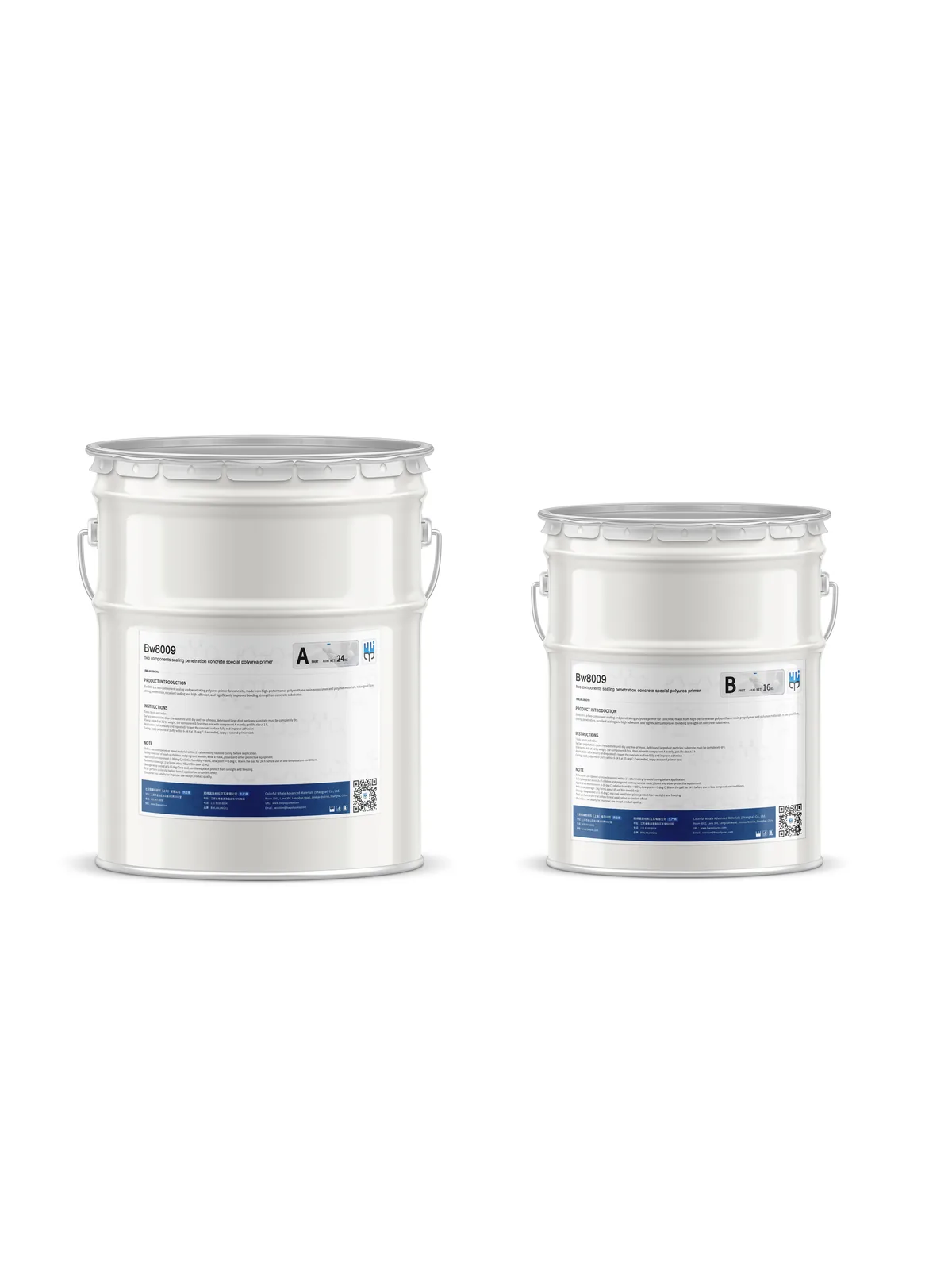
In this project, BW8009 was used as the primer layer. The primer route is important because large concrete reservoir surfaces can contain pores, surface dusting, small defects, uneven absorption and moisture pathways. BW8009 helps support substrate sealing and adhesion before the following waterproofing layers are applied. Its function is not to serve as the main waterproofing membrane, but to prepare the concrete surface and create a more stable bonding base for the spray polyurea system.
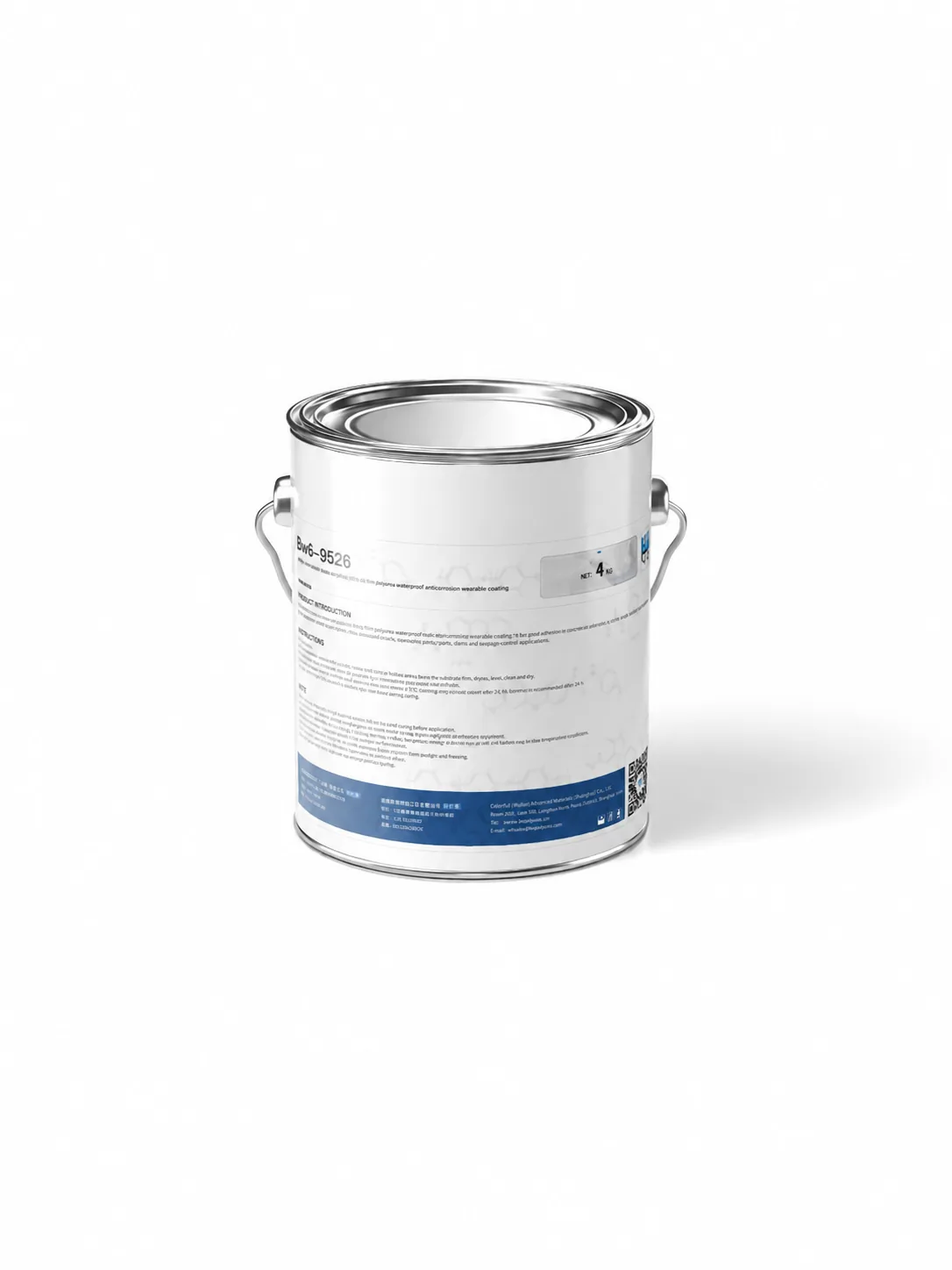
After the primer layer, BW6-9526 was used for local repair and reinforcement at joints, gaps and weak details. This step is especially important in reservoir waterproofing because seepage risks often begin from local weak points rather than from the middle of a large flat area. Construction joints, cracks, edges, corners, transitions and irregular surfaces may require targeted treatment before the main membrane is applied. BW6-9526 provides a hand-applied thick-film repair route for these local areas, helping improve the connection between weak details and the following spray polyurea waterproofing layer.
The role of BW6-9526 in this project is local detail reinforcement. It does not replace the main spray polyurea membrane. Instead, it helps treat the areas where waterproofing continuity is more difficult to maintain, such as cracks, gaps, joints, edges and irregular transitions. This local reinforcement step helps reduce the risk of weak-point leakage and prepares a more reliable base for the large-area spray application.
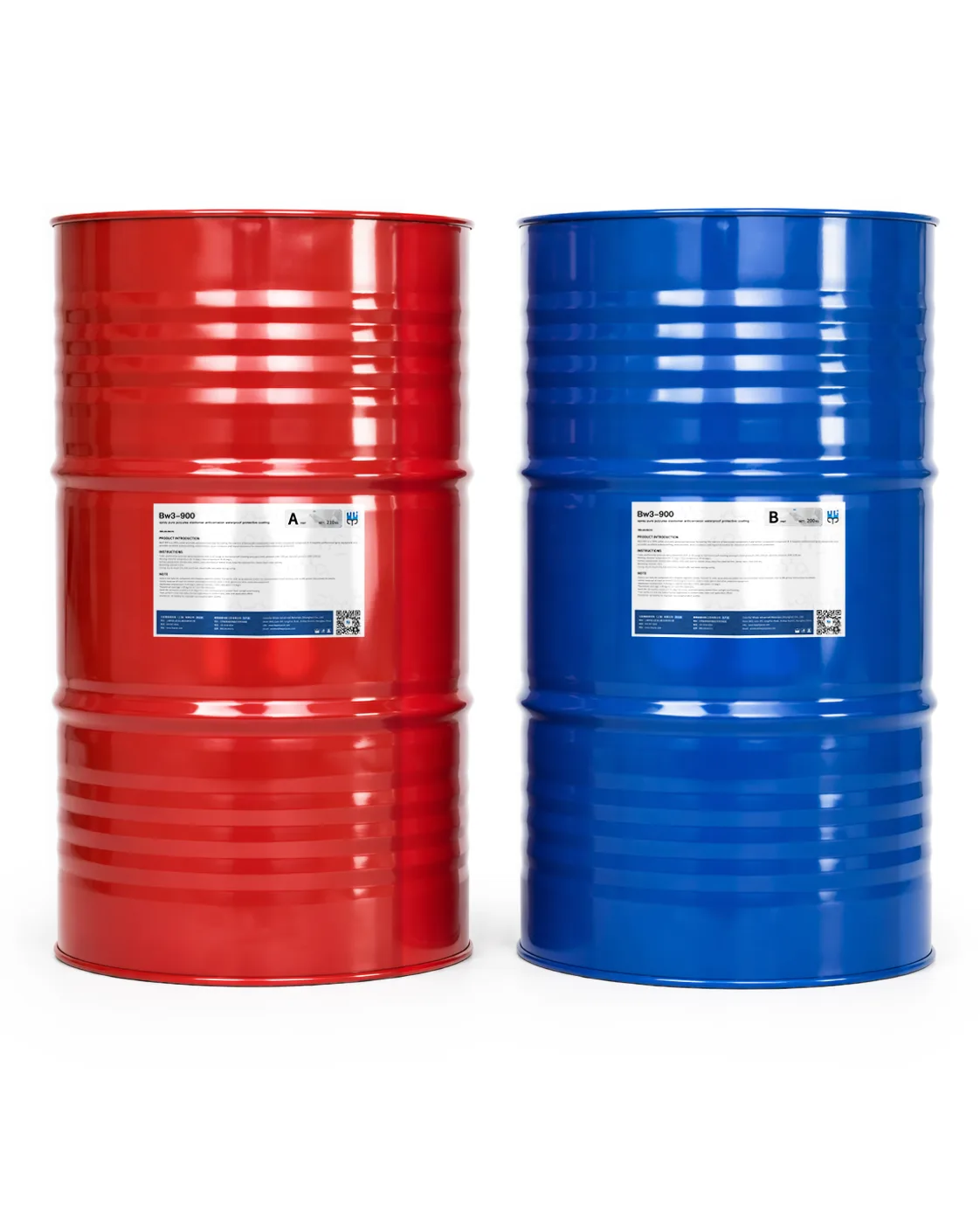
BW3-900 was then applied as the main spray polyurea waterproofing membrane at approximately 1.2 mm. This layer is the core waterproofing layer of the project. The main value of spray polyurea in reservoir applications is its ability to form a continuous, seamless and elastomeric membrane over large and complex surfaces. Compared with systems that depend heavily on seams, overlaps or prefabricated sheet shapes, spray polyurea can better follow slopes, curved areas, irregular contours and local transitions.
For a reservoir project, this continuity is very important. The waterproofing layer must cover broad water-retaining surfaces while also maintaining protection around joints, edges, slope transitions and local details. The approximately 1.2 mm BW3-900 spray polyurea membrane helps provide the main waterproofing build, supports seepage control and forms a protective layer over the prepared reservoir substrate.
Spray application also provides practical value for large hydraulic structures. Reservoir projects often involve wide construction areas and changing surface geometry. A spray-applied polyurea membrane can be applied over large surfaces with higher efficiency while still adapting to slopes, irregular rock-like areas and complex details. This makes it suitable for projects where both application efficiency and membrane continuity are important.
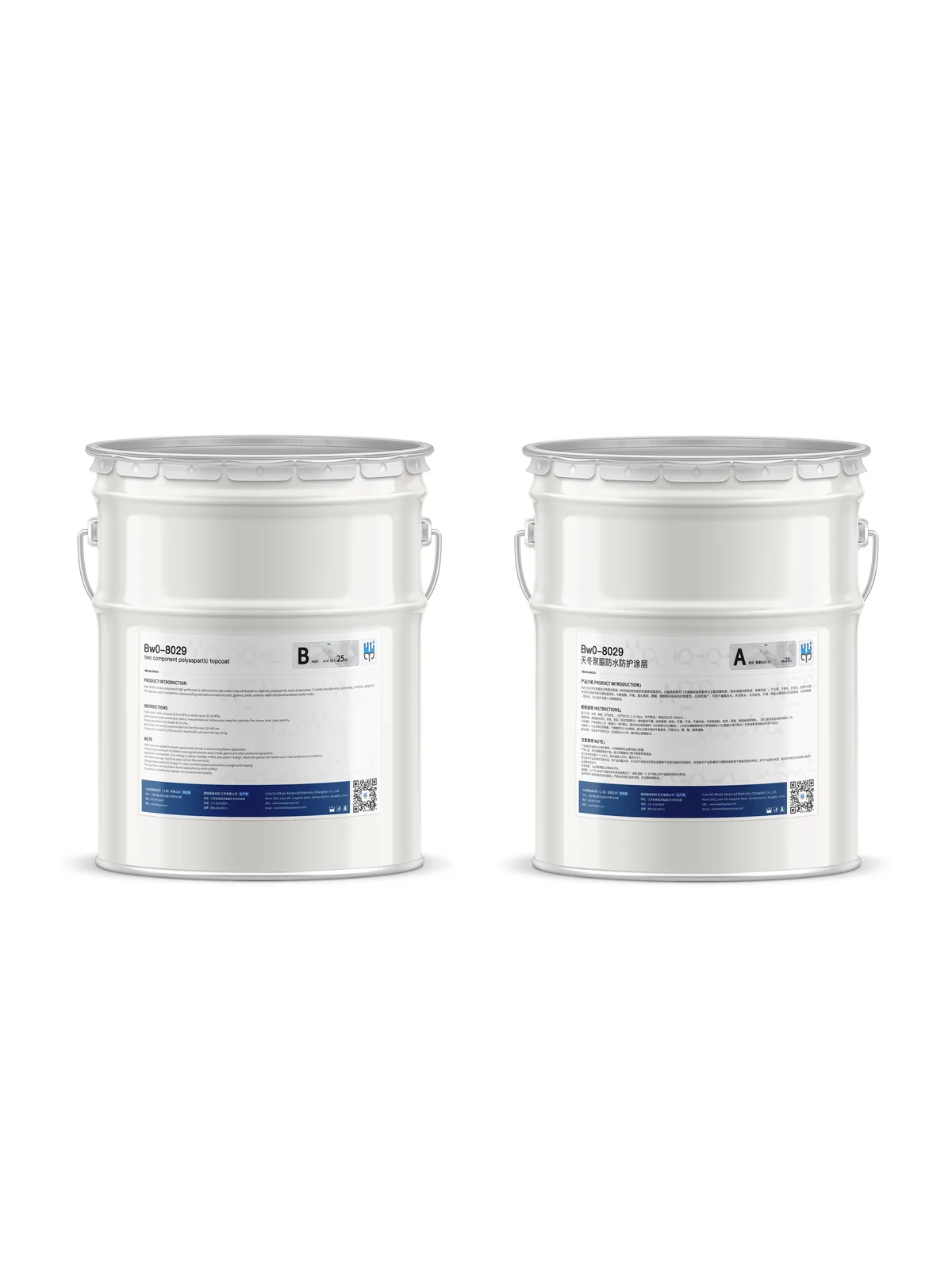
After the main waterproofing membrane was completed, BW0-8029 was used as the protective topcoat. Reservoir structures may be exposed to outdoor weather, sunlight, temperature changes, moisture and long-term environmental effects. The topcoat helps support exposed surface protection and improves the surface durability of the complete waterproofing system. In this coating route, BW0-8029 is not the main waterproofing membrane. Its role is to protect the spray polyurea layer and support the long-term exposed performance of the system.
The full coating route therefore has a clear division of function. BW8009 supports concrete substrate sealing and adhesion. BW6-9526 reinforces joints, gaps, cracks and local weak areas. BW3-900 forms the main continuous spray polyurea waterproofing membrane. BW0-8029 provides the exposed protective topcoat for surface protection and weathering support.
This route is suitable for reservoir waterproofing because it addresses both large-area and detail-area requirements. The broad reservoir surface needs a continuous waterproofing membrane, while joints, cracks, edges and irregular areas need local reinforcement. By combining primer, local repair material, spray polyurea membrane and protective topcoat, the system is better matched to the practical conditions of large water-retaining concrete structures.
The key advantage of this coating route is that it does not treat the reservoir as one simple flat surface. Instead, it separates the waterproofing logic into substrate preparation, local detail reinforcement, large-area membrane protection and exposed surface protection. This helps improve coating continuity and makes the system more practical for hydraulic structures with slopes, irregular geometry and long-term water exposure.
For similar reservoir, water-retaining or hydraulic structure projects, final product selection, local detail treatment, membrane thickness, topcoat arrangement and surface preparation should still be reviewed according to the actual substrate condition, joint condition, water exposure, outdoor environment and project requirements. This case provides an application reference for using a primer-supported, locally reinforced spray polyurea waterproofing system to improve seepage control support and surface protection on large reservoir structures.
Related Products Used

Project Photo Gallery
Project photos show reservoir concrete surfaces, sloped areas, local detail work, spray polyurea application, finished waterproofing membrane areas and field inspection references.