
Project case
Shanghai Bund Tunnel Roof Deck Spray Polyurea Waterproofing Case
A 2009 tunnel roof deck waterproofing case using BW8009 primer and approximately 1.2 mm BW3-951 spray polyurea membrane for waterproofing continuity, concrete top slab protection and underground structure seepage control support.
- Project Type
- Tunnel roof deck waterproofing protection
- Application Area
- Urban tunnel roof deck, underground structure top slab and concrete waterproofing area
- Main Substrates
- Prepared concrete roof deck surface, top slab areas, edges, construction joints, cracks and local details
- Service Environment
- Underground structure moisture, rainwater infiltration, seepage risk, later covering works, construction disturbance and long-term concealed service conditions
- Coating Approach
- BW8009 primer + BW3-951 spray polyurea waterproofing membrane, about 1.2 mm
- Main Functions
- Waterproofing continuity, seepage control support, concrete top slab protection, crack-bridging support and concealed roof deck waterproofing protection
Project information is summarized for application reference. Some project details are not disclosed due to confidentiality requirements.
Why This Coating Route Was Used for Tunnel Roof Deck Waterproofing Protection
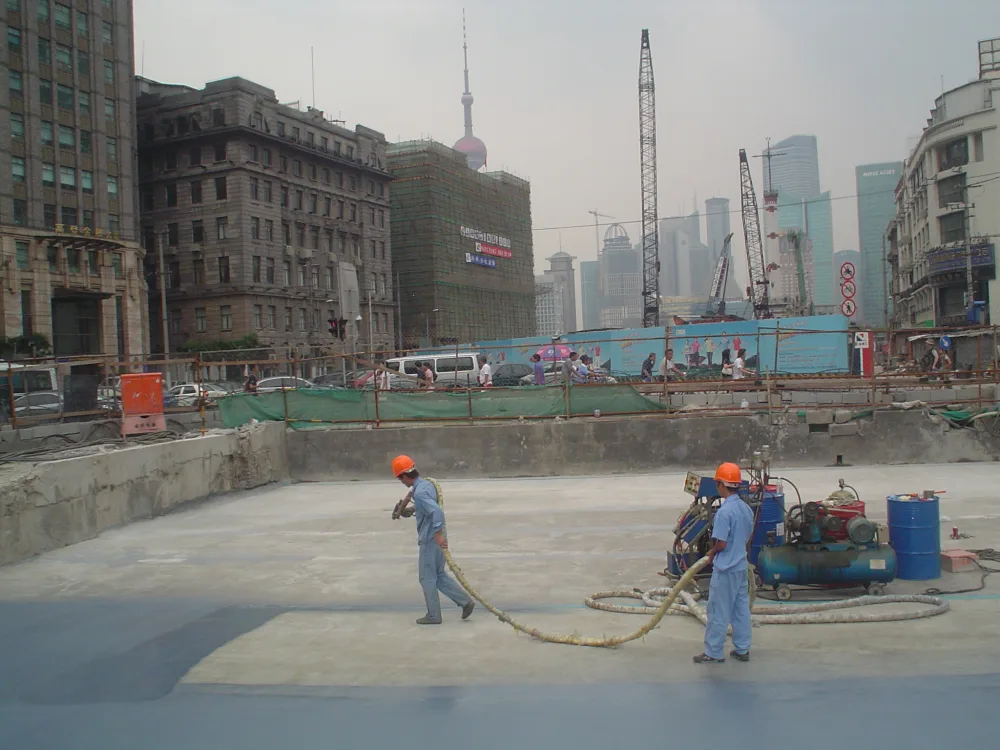
The site photographs show an open roof-deck work area between urban buildings, with spray equipment and hoses positioned on the slab. A grey coating covers the broad surface and turns up at low perimeter faces. Several views also show the boundary between coated and adjacent work areas. The visible details focus the review on broad-area coverage, horizontal-to-vertical transitions and access for workers and equipment.
For a similar tunnel roof deck, transitions between the slab and perimeter faces require separate review from the broad surface. Confirm preparation and local detailing against the site joints, cracks, terminations and planned covering works, and include film thickness, adhesion and handover conditions in the site inspection.
Another challenge is that tunnel roof deck waterproofing is usually completed before backfilling or upper-layer construction. This means the waterproofing system may also need to tolerate construction traffic, temporary equipment movement, local impact, dust, contamination and later covering works. A weak or discontinuous waterproofing layer can be damaged before the project is fully closed, especially around corners, upturns, construction joints and local detail areas.
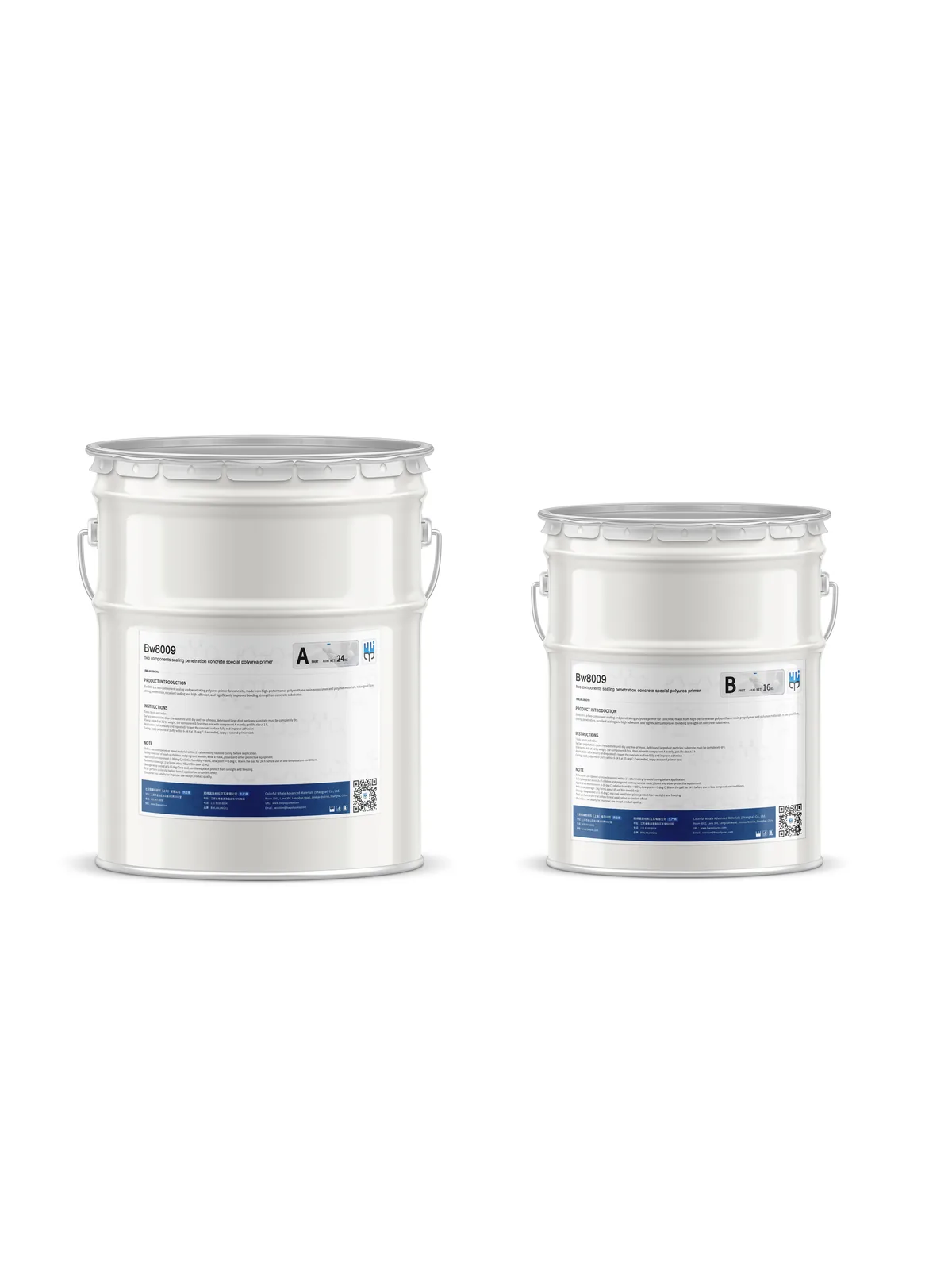
In this project, BW8009 was used as the primer layer. The role of BW8009 is to support concrete substrate sealing and adhesion before the main spray polyurea waterproofing layer is applied. Concrete roof deck surfaces may contain pores, dusting areas, small cracks, surface defects, moisture pathways and uneven absorption. A suitable primer helps prepare the concrete surface and creates a more stable bonding base for the following spray polyurea membrane.
The primer layer is especially important for tunnel roof deck applications because the waterproofing membrane must bond reliably to the prepared concrete substrate. If the interface between concrete and waterproofing layer is unstable, water may travel along weak areas beneath the membrane after the structure is covered. BW8009 helps support the bonding interface and improves the base condition before the main membrane is formed.
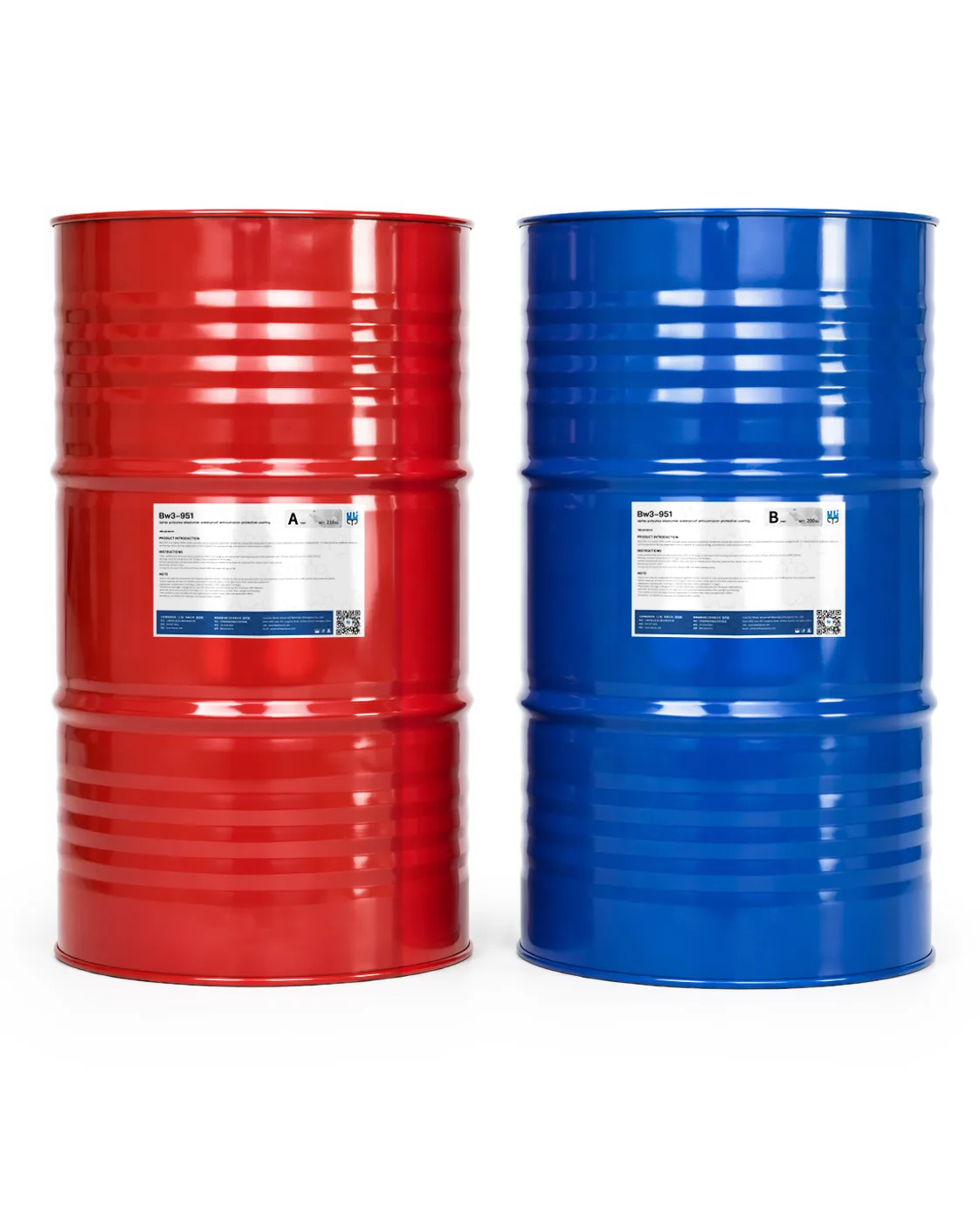
After primer application, BW3-951 was applied as the main spray polyurea waterproofing and protective layer at approximately 1.2 mm. This layer is the core waterproofing membrane of the project. The value of spray polyurea in a tunnel roof deck application is that it can form a continuous, seamless and elastomeric membrane over the prepared concrete surface. Compared with systems that rely heavily on sheet overlaps or many field seams, a spray-applied membrane can reduce seam-related weak points and better follow the surface geometry of the structure.
For a tunnel roof deck, membrane continuity is critical. Water leakage often starts from local areas such as construction joints, cracks, concrete edges, upturns, pipe openings and irregular details. A spray-applied polyurea layer can cover broad deck areas and local details more continuously, helping improve waterproofing integrity over the entire top slab surface. The approximately 1.2 mm BW3-951 layer provides the main waterproofing build and supports protection against moisture intrusion before the upper construction layers are completed.
The elastomeric property of the spray polyurea layer is also useful for tunnel roof deck waterproofing. Concrete structures may experience minor movement, temperature variation, shrinkage cracks or local stress changes. A flexible waterproofing membrane can better accommodate small substrate movement than a rigid coating layer. This helps support crack-bridging performance and reduces the risk of brittle failure at local stress points.
Another advantage of this route is application efficiency. Urban tunnel projects often have strict application schedules and limited working windows. Spray polyurea can be applied rapidly over large areas, and its fast curing characteristic helps reduce waiting time between application and follow-up work. This is valuable for tunnel roof decks where waterproofing needs to be completed before subsequent protection, backfill or structural covering work.
The coating route used in this project has a clear division of function. BW8009 supports concrete substrate sealing and adhesion. BW3-951 forms the main spray-applied waterproofing and protective membrane at approximately 1.2 mm. Together, they create a primer-supported spray polyurea waterproofing route suitable for concrete tunnel roof deck applications.
Before subsequent covering works on a similar project, review the broad surface, perimeter upturns, boundaries between work areas and equipment access routes, and record any locations requiring repair or protection. This helps coordinate spray application with the following trades and define the handover area while the coating remains accessible. Inspection methods and acceptance requirements should follow the project design and application specification.
For similar tunnel roof decks, underground structure top slabs, transportation infrastructure decks or urban underground projects, the final coating route should still be reviewed according to concrete condition, joint design, crack treatment, moisture condition, construction sequence, protection layer design and project requirements. This case provides an application reference for using BW8009 primer and approximately 1.2 mm BW3-951 spray polyurea membrane to support waterproofing continuity and concrete roof deck protection in tunnel infrastructure projects.
Related Products Used

Project Photo Gallery
The photographs show broad-area spraying, equipment and hose placement, slab-to-perimeter transitions, boundaries between work areas and wider views of the grey coated surface. They provide a reference for site access and the location of details.