
Project case
Subway Tunnel Steel Plate Spray Polyurea Protection Case
A subway tunnel steel plate protection case using BW8008 metal primer and approximately 2 mm BW3-9007 spray polyurea coating after Sa 2.5 abrasive blasting for corrosion protection, coating continuity and steel surface durability in underground tunnel conditions.
- Project Type
- Subway tunnel steel plate anti-corrosion protection
- Application Area
- Underground tunnel steel plates, steel liner panels and enclosed steel protection areas
- Main Substrates
- Prepared steel plates, curved steel panels, edges, bolt holes, seams and local steel details
- Service Environment
- Underground humidity, seepage risk, condensation, poor ventilation, vibration, maintenance contact and tunnel service conditions
- Coating Approach
- BW8008 metal primer + BW3-9007 spray polyurea protective coating, about 2 mm
- Main Functions
- Steel plate corrosion protection, coating continuity, moisture barrier support, impact and abrasion resistance, and tunnel steel surface durability
Project information is summarized for application reference. Some project details are not disclosed due to confidentiality requirements.

Why This Coating Route Was Used for Subway Tunnel Steel Plate Protection
Subway tunnel steel plate protection is different from ordinary exterior steel coating. Tunnel environments can be humid, enclosed and difficult to maintain. Steel plates in this type of project may face groundwater seepage, condensation, moisture accumulation, poor ventilation, chloride-containing contamination, dust, vibration and long-term service stress. If the steel plate surface is not properly protected, corrosion can develop from exposed areas, edges, bolt holes, welds, seams and damaged coating points.
One of the main pain points in tunnel steel plate protection is water-related corrosion. In underground tunnel environments, leakage or moisture intrusion may be difficult to eliminate completely. Water can reach steel surfaces through joints, cracks or local defects, and moisture can remain in hidden or poorly ventilated areas. Over time, this can accelerate rusting, coating peeling and local steel plate deterioration. For a subway tunnel project, this type of corrosion is not only a surface appearance problem; it may increase maintenance difficulty and reduce the reliability of the steel protection layer.
Another challenge is the condition of the steel plate surface before coating. The uploaded project photos show steel plates with mill scale and oxidized surface condition before blasting, followed by a surface preparation stage reaching Sa 2.5. This step is critical. If mill scale, rust, oil, dust or loose contamination remains on the steel surface, the coating system may not bond properly. A high-performance coating route cannot compensate for unstable surface preparation. For this reason, abrasive blasting to a suitable cleanliness level is an important part of the protection system, not just a cleaning step.
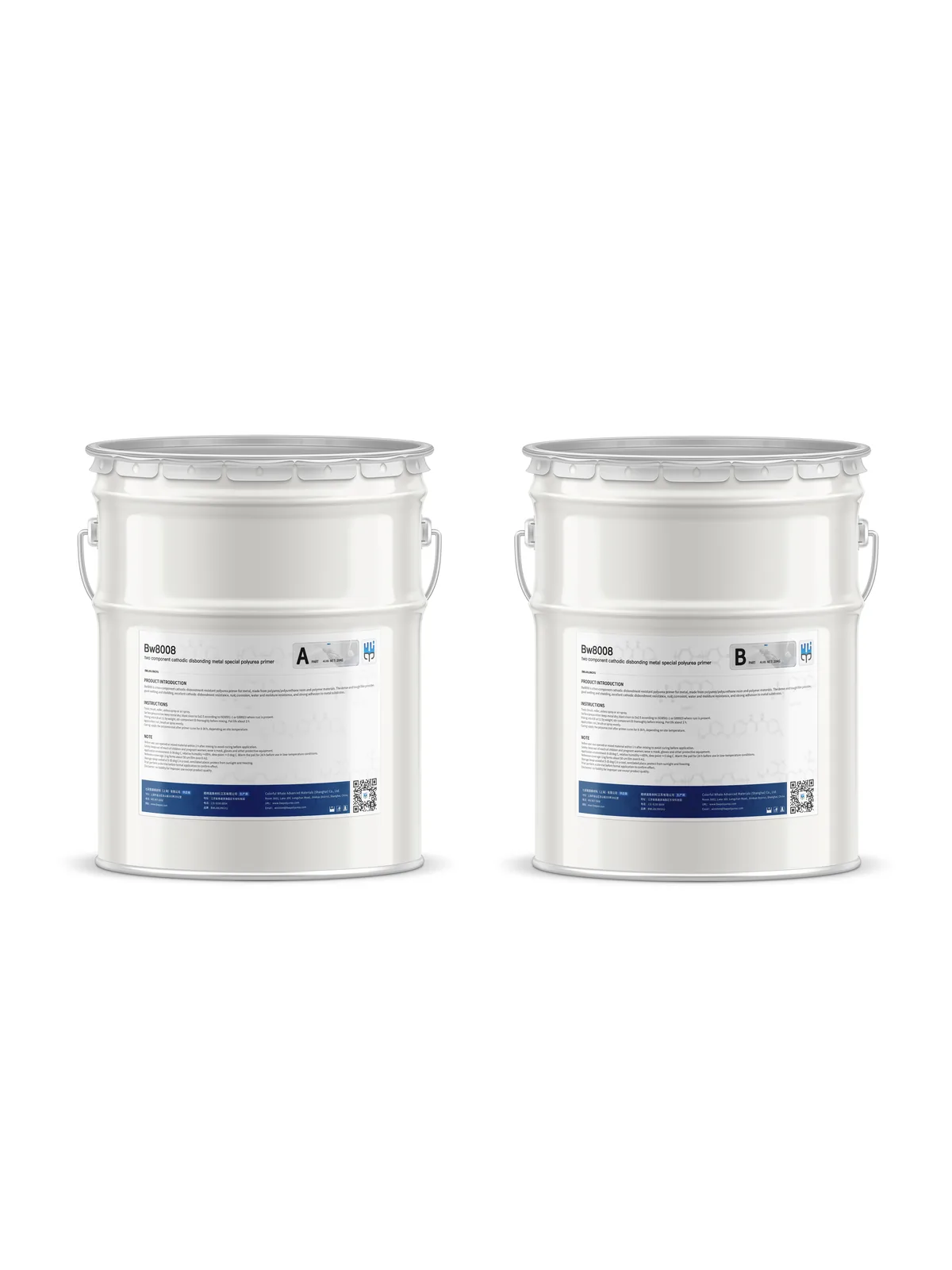
In this project, BW8008 was used as the metal primer after steel surface preparation. The role of BW8008 is to support adhesion between the prepared steel plate and the following spray polyurea protective coating. For tunnel steel plates, a stable primer interface is especially important because the coating system must perform in a humid, enclosed and vibration-prone environment. The primer helps provide a more suitable bonding base before the thicker polyurea layer is applied.
BW8008 is not the main protective build in this route. Its value is at the steel interface. It helps connect the cleaned steel substrate with the following BW3-9007 spray polyurea coating, supporting adhesion and helping the full system work more reliably on curved steel plates, edges, bolt holes and local details.
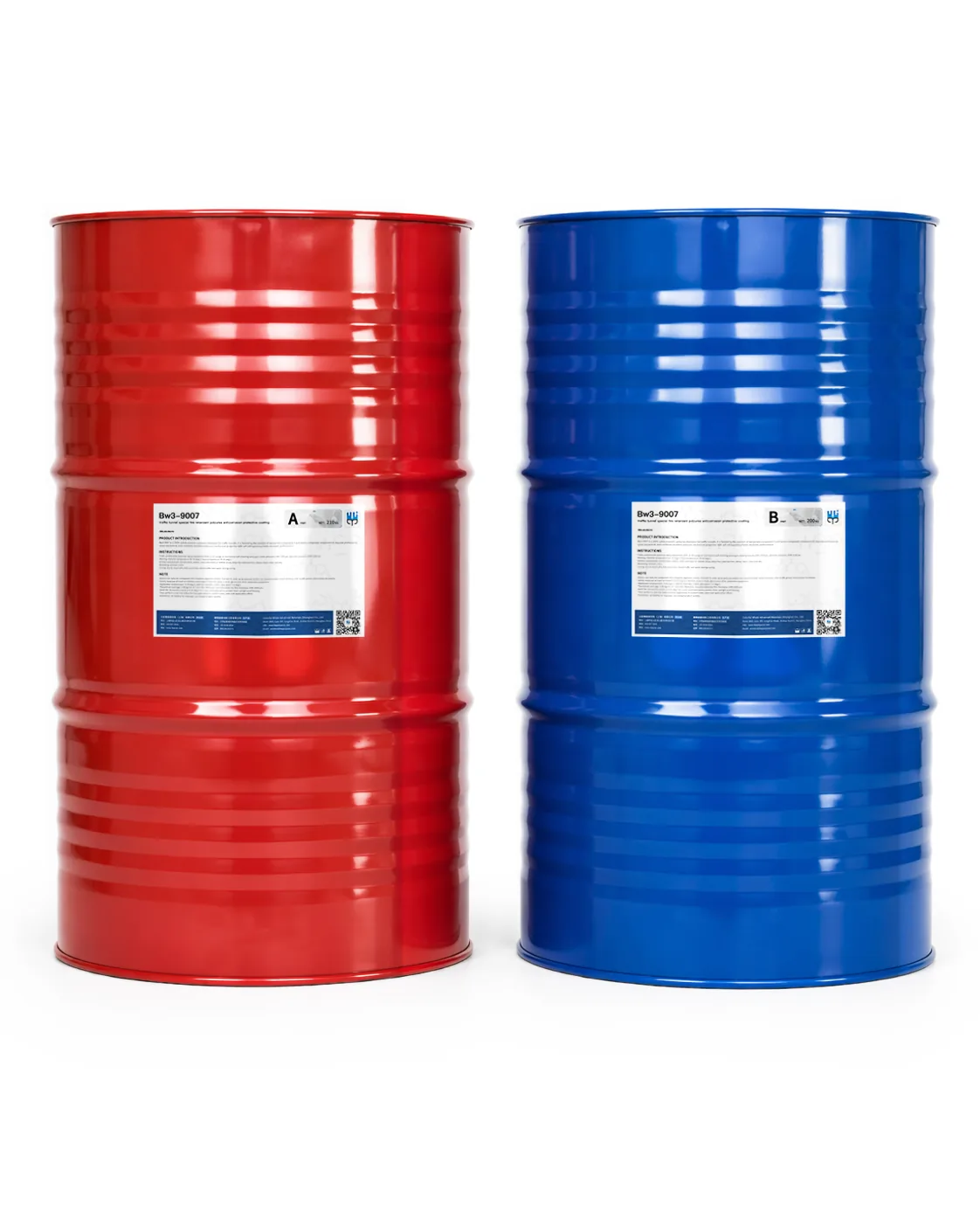
After the primer layer, BW3-9007 was applied as the main spray polyurea protective coating at approximately 2 mm. This layer is the main protection build of the system. Compared with ordinary thin coating systems, a 2 mm spray polyurea layer provides a thicker, seamless and more functional protective barrier over the prepared steel plates. In a tunnel environment, this is valuable because the coating must help isolate steel from moisture, condensation and corrosive environmental influences.
The spray-applied nature of BW3-9007 is important for tunnel steel plates because the substrate is not always a simple flat panel. The steel plates may include curved shapes, cut edges, bolt holes, lap areas, seams and local repair zones. A spray polyurea coating can better follow these shapes and form a continuous protective layer, reducing weak points caused by joints, gaps, incomplete coverage or coating discontinuity around details.
The approximately 2 mm BW3-9007 layer also helps improve mechanical protection. Tunnel steel plates may experience vibration, maintenance contact, equipment movement, local abrasion or installation-related impact. A thicker spray polyurea coating helps provide better impact and abrasion resistance than a normal thin paint layer, while also maintaining a continuous protective film over the steel surface.
This coating route is therefore organized around three key requirements: surface preparation, primer bonding and thick-film protection. The steel plate is first prepared to a suitable cleanliness level, then BW8008 is used as the metal-primer route, and BW3-9007 forms the main 2 mm spray polyurea protective layer. Each step has a clear function and supports the next layer.
The key advantage of this route is that it addresses the real risks of subway tunnel steel plate service. The system is designed for steel surfaces that may be exposed to moisture, leakage, condensation, corrosion risk and complex tunnel geometry. BW8008 supports bonding to the prepared steel substrate, while BW3-9007 provides the main continuous protective barrier and mechanical protection.
For similar subway tunnel steel plate, underground structure, steel liner or enclosed steel protection projects, the final coating route should still be reviewed according to steel surface condition, blasting grade, moisture condition, ventilation, leakage risk, service environment and project specification. This case provides an application reference for using BW8008 metal primer and approximately 2 mm BW3-9007 spray polyurea coating to improve corrosion protection, coating continuity and steel surface durability in tunnel steel plate applications.
Related Products Used
Project Photo Gallery
Project photos show steel plate surface condition, Sa 2.5 abrasive blasting, primer application, spray polyurea coating work and finished steel plate protection references from the subway tunnel project.