
Project case
Hangzhou Guodian Dam Equipment Spray Polyurea Protection Case
A dam equipment protection case using BW6-9526 local detail reinforcement and BW3-319 spray polyurea protective coating to support corrosion protection, impact resistance, abrasion resistance and continuous surface protection for hydraulic steel components.
- Project Type
- Dam equipment spray polyurea protection
- Application Area
- Hydraulic steel components, dam equipment parts, curved steel sections, welded details and water conservancy equipment surfaces
- Main Substrates
- Prepared steel equipment surfaces, curved steel components, welded joints, edges, corners, seams and local irregular details
- Service Environment
- Moisture, water splash, wet-dry cycles, sediment abrasion, impact, vibration, outdoor exposure and equipment maintenance conditions
- Coating Approach
- BW6-9526 local detail reinforcement + BW3-319 spray polyurea protective coating
- Main Functions
- Local detail reinforcement, corrosion protection, impact resistance, abrasion resistance, coating continuity and hydraulic equipment surface durability
Project information is summarized for application reference. Some project details are not disclosed due to confidentiality requirements.

Why This Coating Route Was Used for Dam Equipment Spray Polyurea Protection
Dam equipment and hydraulic steel components work in a much harsher service environment than ordinary industrial steel parts. These components may be exposed to moisture, water flow, splash water, sediment abrasion, impact, vibration, outdoor weather, temperature change and long-term maintenance stress. If the protective coating is weak or discontinuous, corrosion and wear may begin from local exposed areas and gradually affect the durability of the equipment surface.
One of the main pain points in dam equipment protection is the combination of corrosion and mechanical damage. Water-related equipment may face wet-dry cycles, water splash, high humidity and possible sediment contact. At the same time, maintenance tools, lifting work, equipment operation and water-borne particles can create local abrasion, impact or surface damage. For this reason, the coating route needs to provide more than basic anti-corrosion color protection. It must support corrosion resistance, impact resistance, abrasion resistance and coating continuity.
Another challenge is the complex shape of hydraulic equipment components. The project photos show prefabricated curved steel parts, welded transitions, edges, corners, lap areas and irregular equipment details. These areas are difficult to protect with a simple thin coating. If edges, welds or curved transition zones are not reinforced properly, the coating may become thin, damaged or discontinuous, allowing moisture to reach the steel substrate.
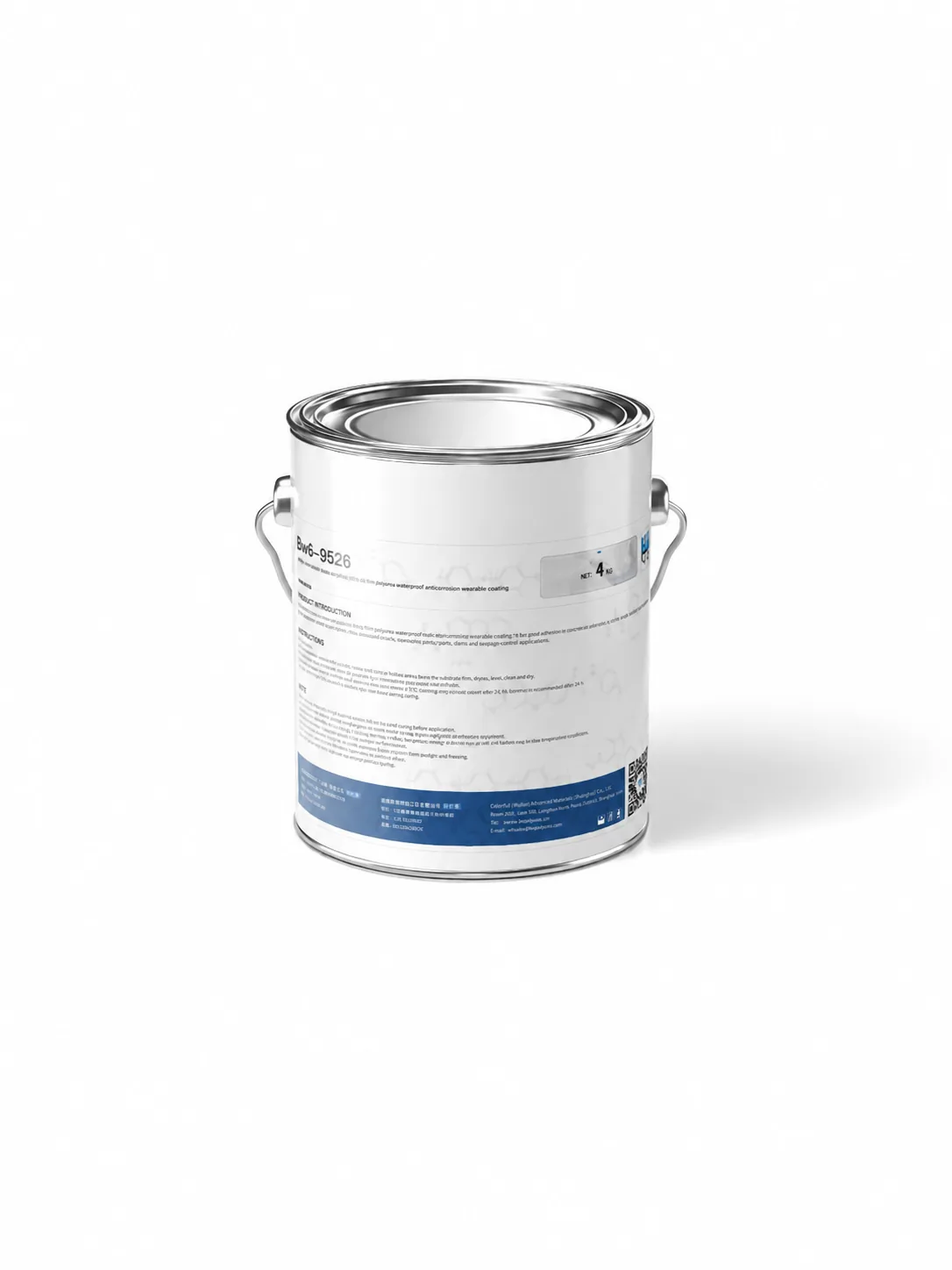
In this project, BW6-9526 was used for local detail reinforcement before the main spray polyurea layer. The role of BW6-9526 is to strengthen weak details such as edges, welds, joints, corners, seams, curved transitions and local irregular areas. These are the positions where coating stress, moisture retention and mechanical damage are more likely to occur. By treating these details first, the system can improve local continuity before the large-area spray coating is applied.
BW6-9526 is especially useful for local reinforcement because it can be applied by hand to areas that need extra build or careful shaping. On dam equipment parts, not every surface has the same geometry. Some areas are flat, while others include curved steel shells, saddle-like shapes, raised intersections and difficult edge details. A local reinforcement material helps make these details more suitable for the following spray polyurea protection layer.
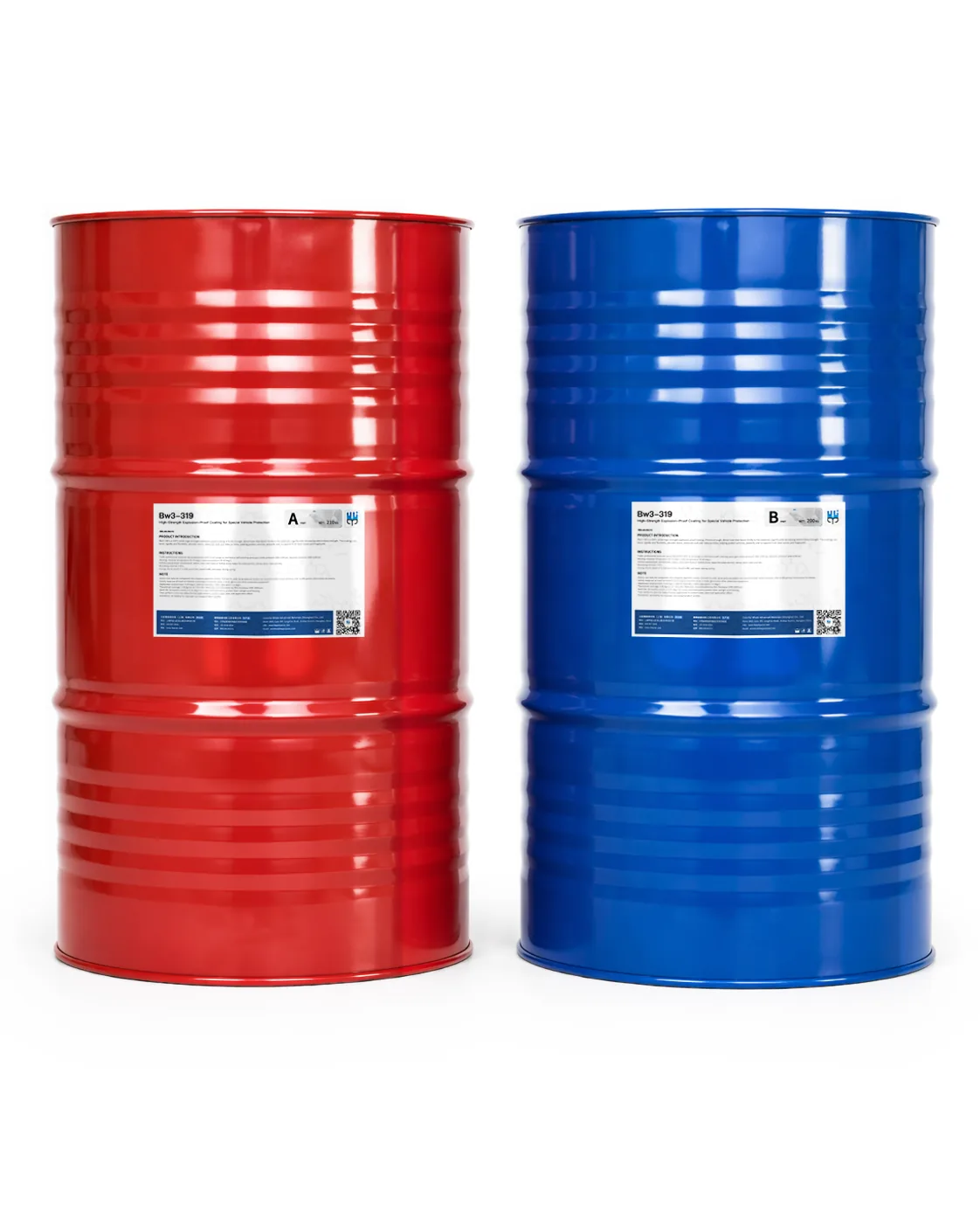
After the local reinforcement work, BW3-319 was applied as the main spray polyurea protective coating. The purpose of BW3-319 in this project is to form a continuous, tough and elastomeric protective layer over the prepared equipment surface. Compared with ordinary thin paint systems, a spray polyurea coating can provide a thicker and more functional protective membrane for components that may face impact, abrasion, moisture and industrial service conditions.
The spray-applied nature of BW3-319 is important for dam equipment because the surface is not a simple flat steel plate. The coating needs to follow curved parts, welded details, local reinforcement zones and repeated shaped components. A spray polyurea layer can better cover these geometries and reduce weak points caused by seams, gaps or incomplete coating coverage.
The high-strength protective character of BW3-319 is also suitable for equipment that may experience handling, installation, maintenance and operating stress. Dam-related components can be moved, lifted, assembled, inspected and repaired before or during service. A tougher protective coating helps reduce the risk of surface damage during these processes and provides a more durable protective surface than a simple decorative coating.
The full coating route has a clear division of function. BW6-9526 is used first for local detail reinforcement, helping strengthen edges, welds, corners and complex transitions. BW3-319 then forms the main spray-applied polyurea protective layer over the equipment surface. Together, the two materials create a protection route focused on local detail reliability, continuous coating coverage, impact resistance, abrasion resistance and corrosion protection.
This route is suitable for dam equipment because it addresses the real weak points of hydraulic steel components. The main risk is not only broad-surface corrosion, but also local coating failure around welds, edges, curves and joints. By reinforcing these details first and then applying a continuous spray polyurea protective coating, the system is better matched to complex steel equipment used in water conservancy and hydropower-related environments.
Surface preparation and application control remain critical. Rust, dust, oil contamination, loose coating, welding residue and unstable surface layers should be removed or treated before coating work. Edges, welds, corners and curved transition areas should be carefully reviewed because these locations often determine the long-term performance of the protective coating system.
The key value of this case is that the coating route does not treat dam equipment as a simple painted object. It considers the actual service risks: moisture, corrosion, abrasion, impact, complex steel geometry and local detail failure. BW6-9526 provides targeted reinforcement for vulnerable areas, while BW3-319 provides the main spray polyurea protective layer for the whole equipment surface.
For similar dam equipment, hydraulic steel components, water conservancy equipment, hydropower facility parts or heavy-duty industrial steel protection projects, the final coating route should still be reviewed according to steel surface condition, water exposure, abrasion level, impact risk, equipment geometry, installation process and project requirements. This case provides an application reference for using BW6-9526 local reinforcement and BW3-319 spray polyurea coating to improve equipment surface durability, corrosion protection and mechanical protection in demanding hydraulic equipment environments.
Related Products Used
Project Photo Gallery
Project photos show dam equipment component preparation, local BW6-9526 detail reinforcement, BW3-319 spray polyurea coating work, curved steel component coverage and finished protective coating references.
