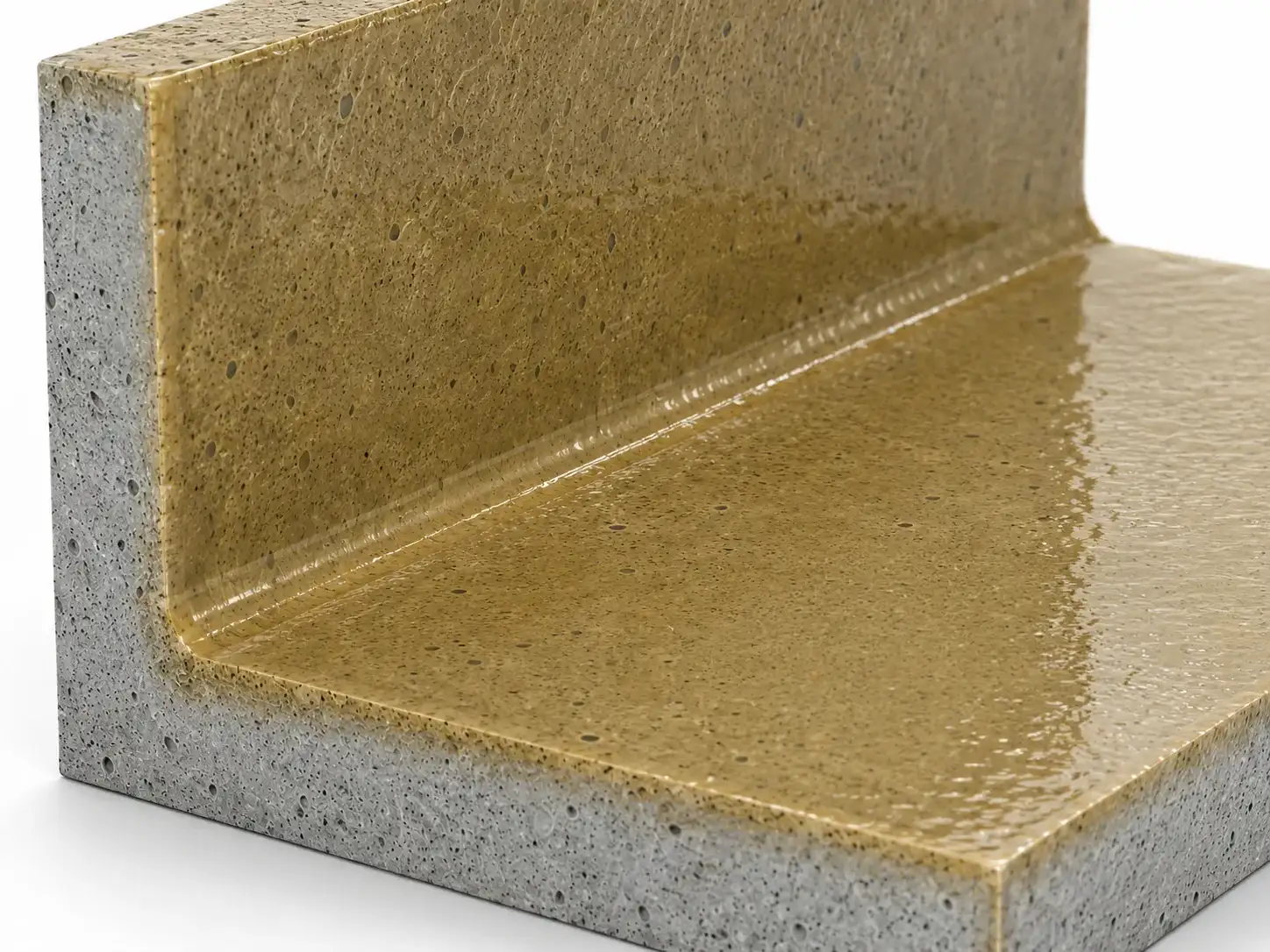
Concrete Wastewater Basin Spray Polyurea Anti-Corrosion System

Spray Polyurea
Wastewater Tank Anti-Corrosion Protection System

A spray polyurea anti-corrosion protection system for prepared concrete wastewater basins, sewage tanks, treatment tanks and chemical collection pits exposed to immersion, corrosive wastewater, pH variation and cleaning conditions.

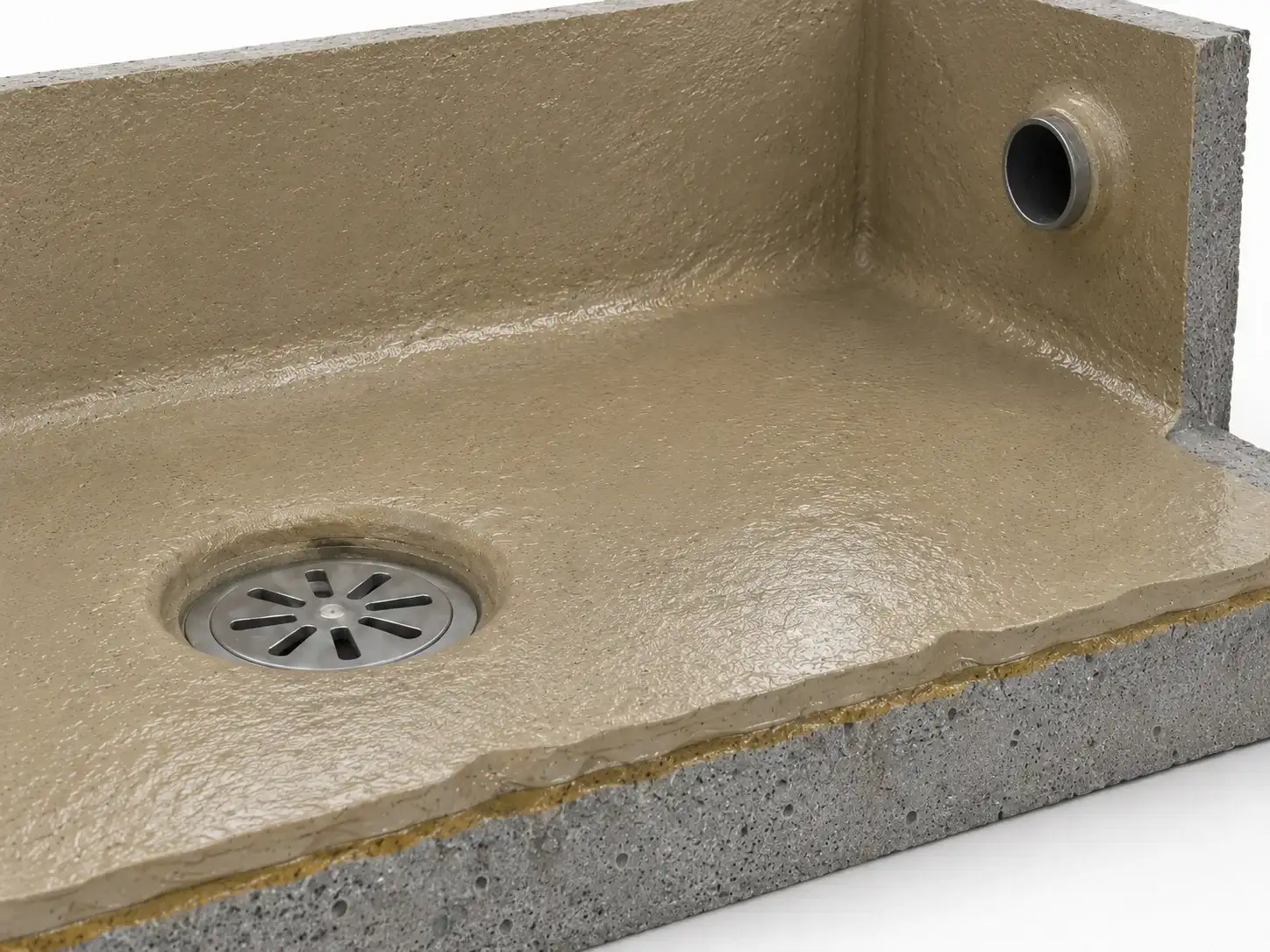
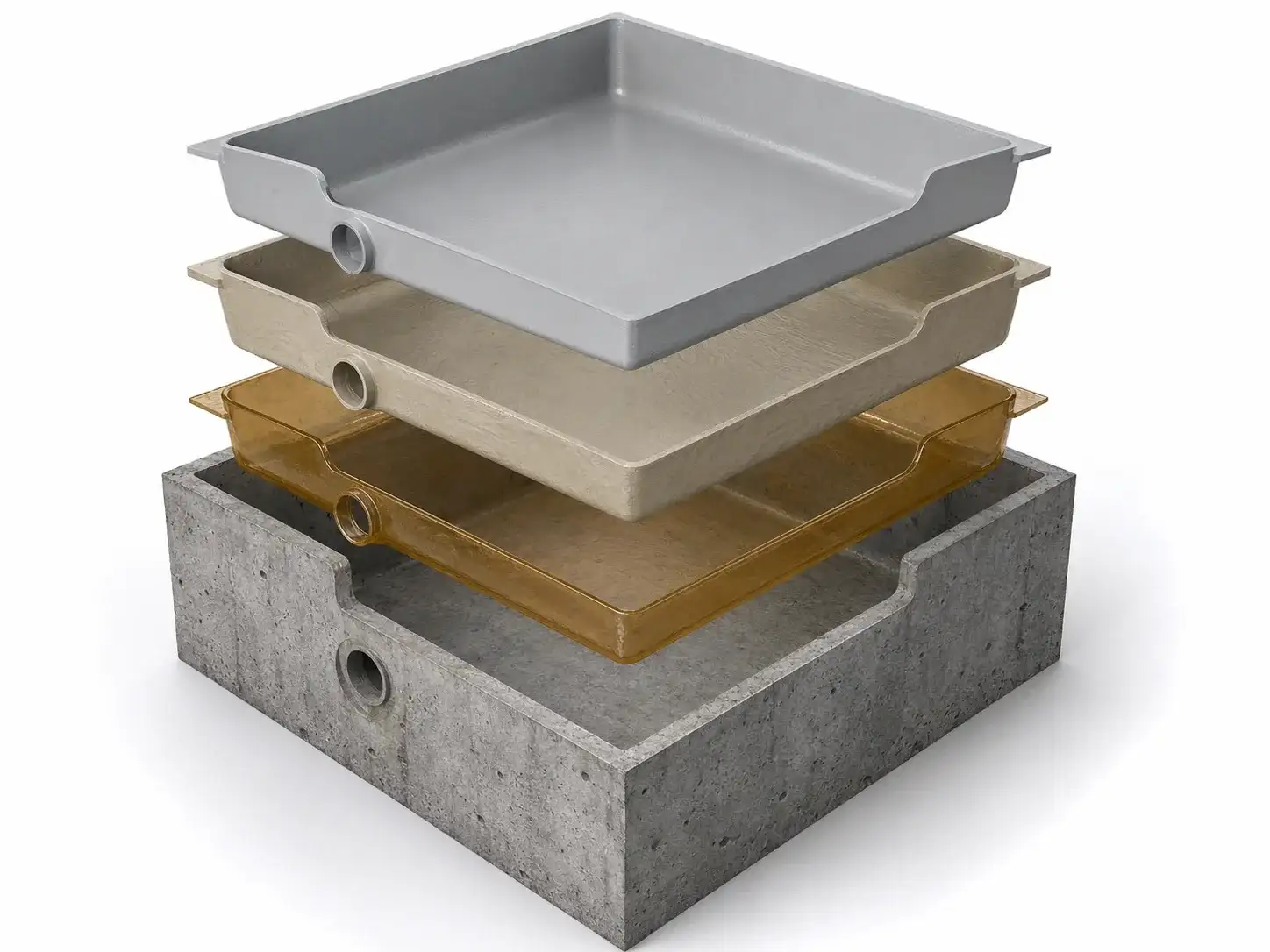
Wastewater tank anti-corrosion protection system overview with primer repair leveling and BW3-951 protective layer

System build-up

Wastewater Tank Anti-Corrosion Build-Up

BW8010 concrete primer, BW8010 quartz-sand repair / leveling layer and BW3-951 spray polyurea main anti-corrosion protective layer are reviewed as the coating build-up.

  1. 01
    BW8010 Concrete Primer

    Seals concrete pores and supports adhesion.

  2. 02
    BW8010 + Quartz Sand Repair / Leveling Layer

    Fills pores, honeycombs, pits and uneven concrete areas before main anti-corrosion coating.

  3. 03
    BW3-951 Spray Polyurea Main Anti-Corrosion Protective Layer

    Forms the main spray polyurea anti-corrosion protective lining for wastewater tank exposure.

Layer function

What Each Layer Solves

Each product layer has a specific job: BW8010 seals the concrete wastewater tank substrate, BW8010 blended with quartz sand repairs local defects, and BW3-951 forms the main spray polyurea anti-corrosion protective lining.

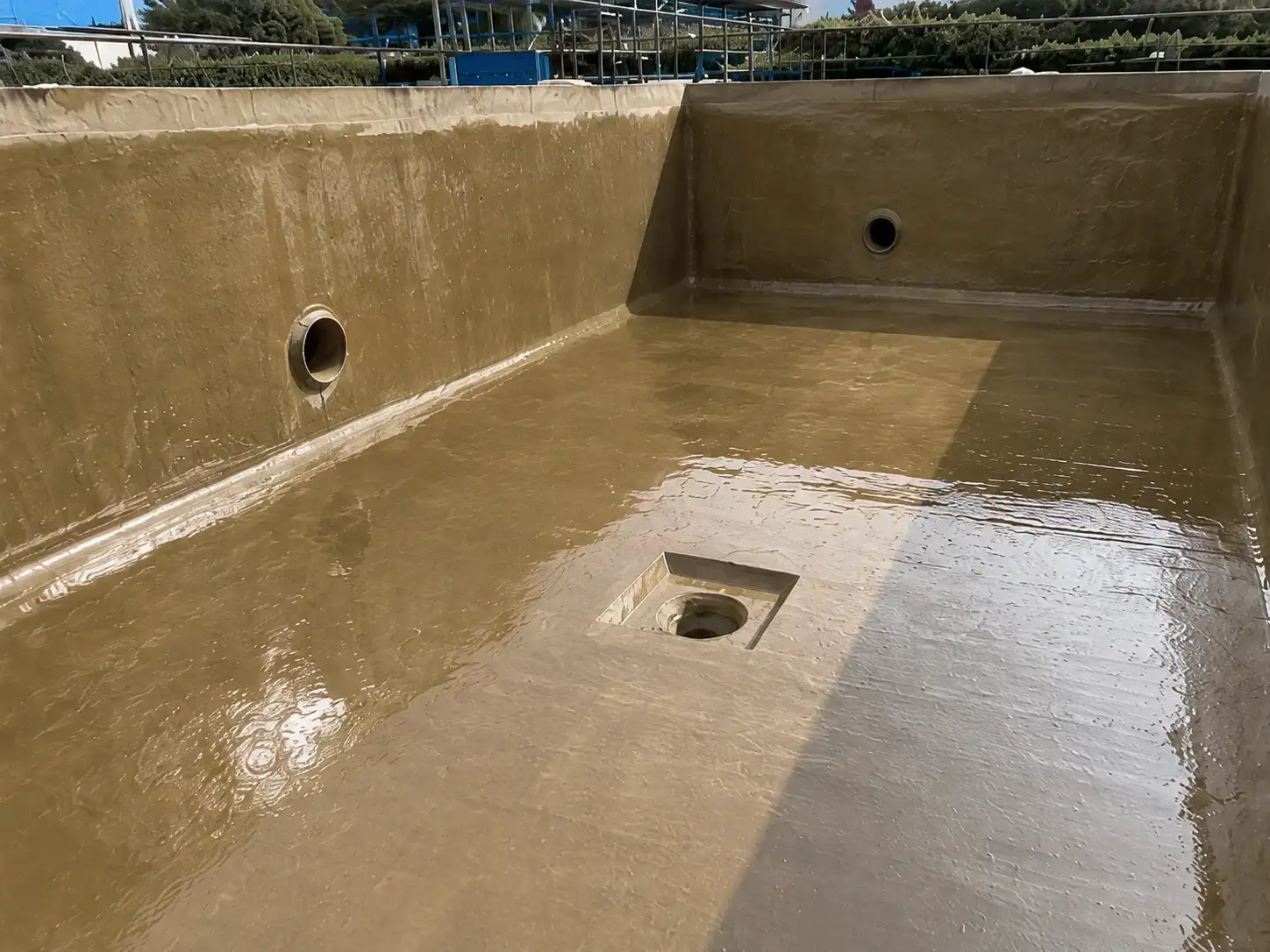
BW8010 concrete primer layer for wastewater tank anti-corrosion system
01

BW8010 Concrete Primer

Seals concrete pores and supports adhesion.

Main Function
Seals the prepared concrete tank substrate and supports adhesion for the repair layer and main spray polyurea anti-corrosion lining.
What It Solves
Concrete pore absorption, surface dusting, uneven primer penetration, weak bonding and unstable mineral surfaces inside wastewater tanks.
Key Advantage
Helps create a stable bonding base before quartz-sand repair and BW3-951 spray polyurea anti-corrosion coating application.
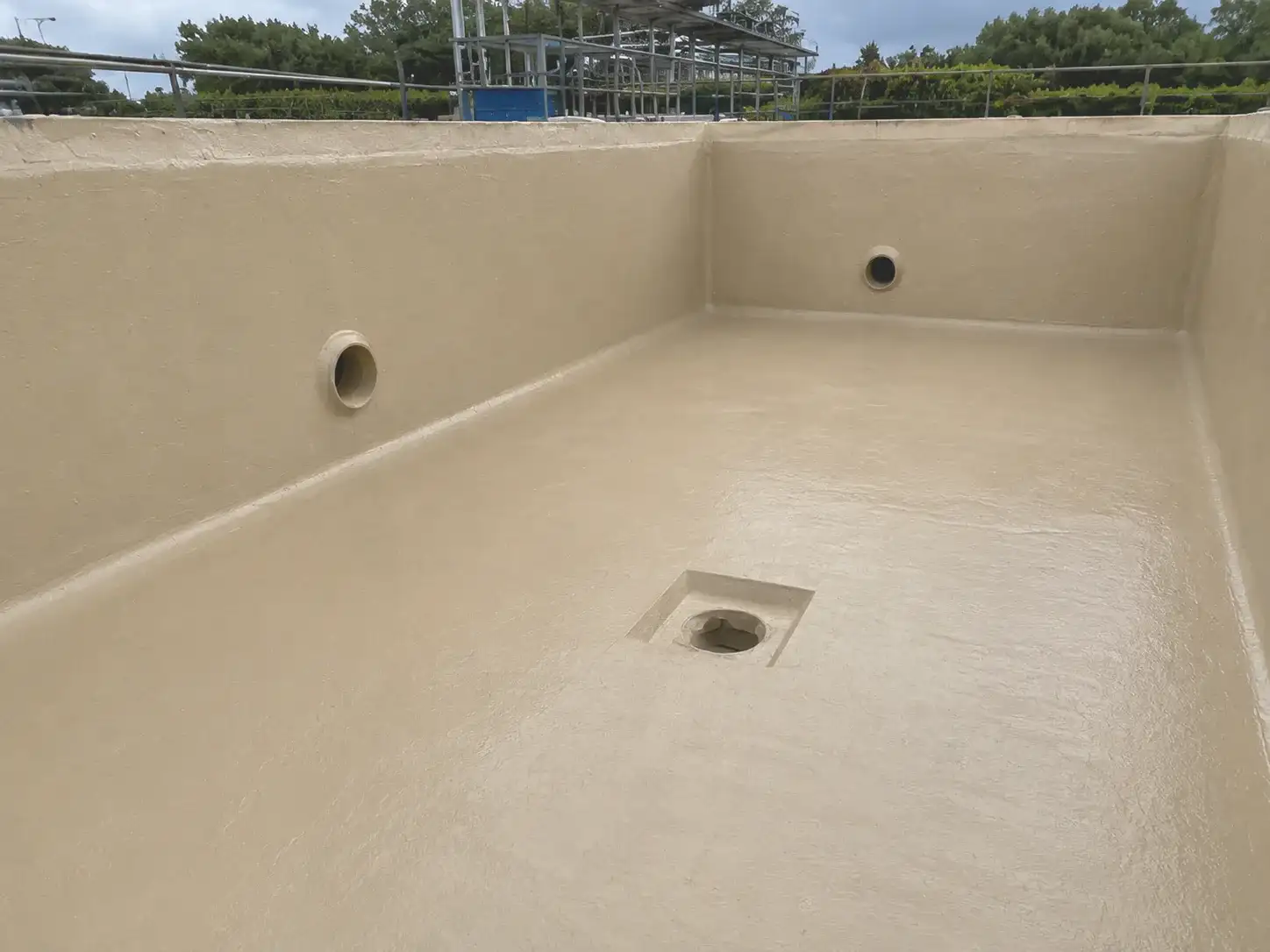
BW8010 quartz sand repair and leveling layer for concrete wastewater tank defects
02

BW8010 + Quartz Sand Repair / Leveling Layer

Repairs weak concrete areas before lining.

Main Function
Fills pores, honeycombs, pits, bug holes and local uneven areas before the main spray polyurea anti-corrosion lining is applied.
What It Solves
Concrete surface defects, small voids, rough areas, local low spots and weak repair zones that may affect lining continuity.
Key Advantage
Helps create a smoother and more continuous base so the BW3-951 spray polyurea anti-corrosion layer can cover wastewater tank surfaces more reliably.
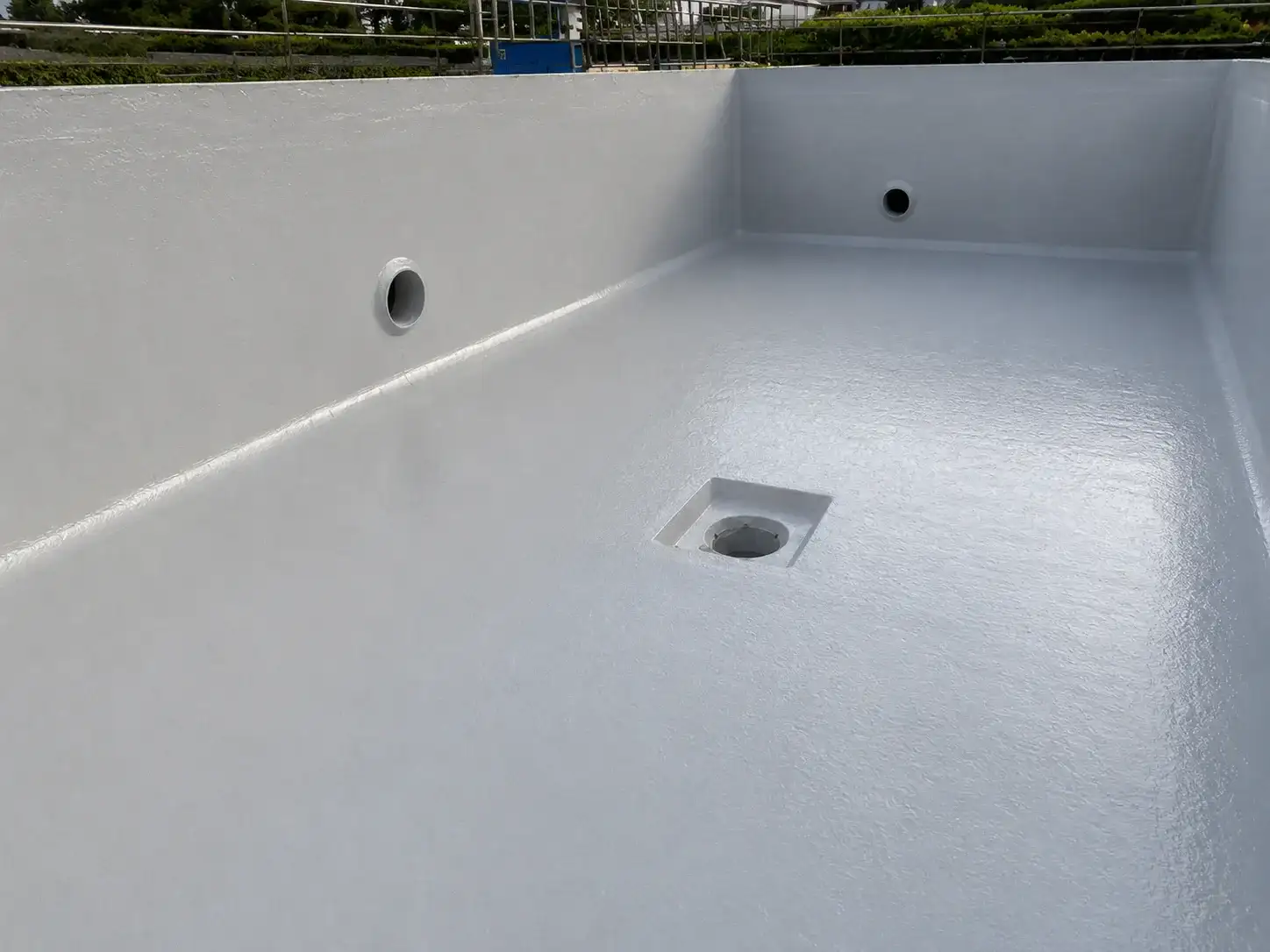
BW3-951 anti-corrosion protection layer for wastewater tank concrete lining
03

BW3-951 Spray Polyurea Main Anti-Corrosion Protective Layer

Forms the main spray polyurea anti-corrosion lining.

Main Function
Forms the main spray polyurea anti-corrosion protective lining over the prepared and repaired concrete wastewater tank surface.
What It Solves
Corrosive wastewater exposure, immersion, pH variation, chemical attack, surface erosion, seepage risk and lining discontinuity.
Key Advantage
Provides a continuous spray polyurea protective lining designed for wastewater tank and concrete treatment basin anti-corrosion service.

Application stages

How This System Helps Reduce Wastewater Tank Corrosion Risks

Wastewater tank anti-corrosion risks often come from concrete pores, honeycombs, bug holes, wall-floor corners, pipe penetrations, inlet and outlet areas, sedimentation zones, immersion exposure, corrosive wastewater, pH variation, cleaning chemicals, humid corrosive vapor, weak repair zones and coating pinholes. This system uses BW8010 primer and quartz-sand repair support before BW3-951 is spray-applied as the main anti-corrosion protective lining to help improve adhesion, surface continuity and corrosion protection on prepared concrete wastewater structures.

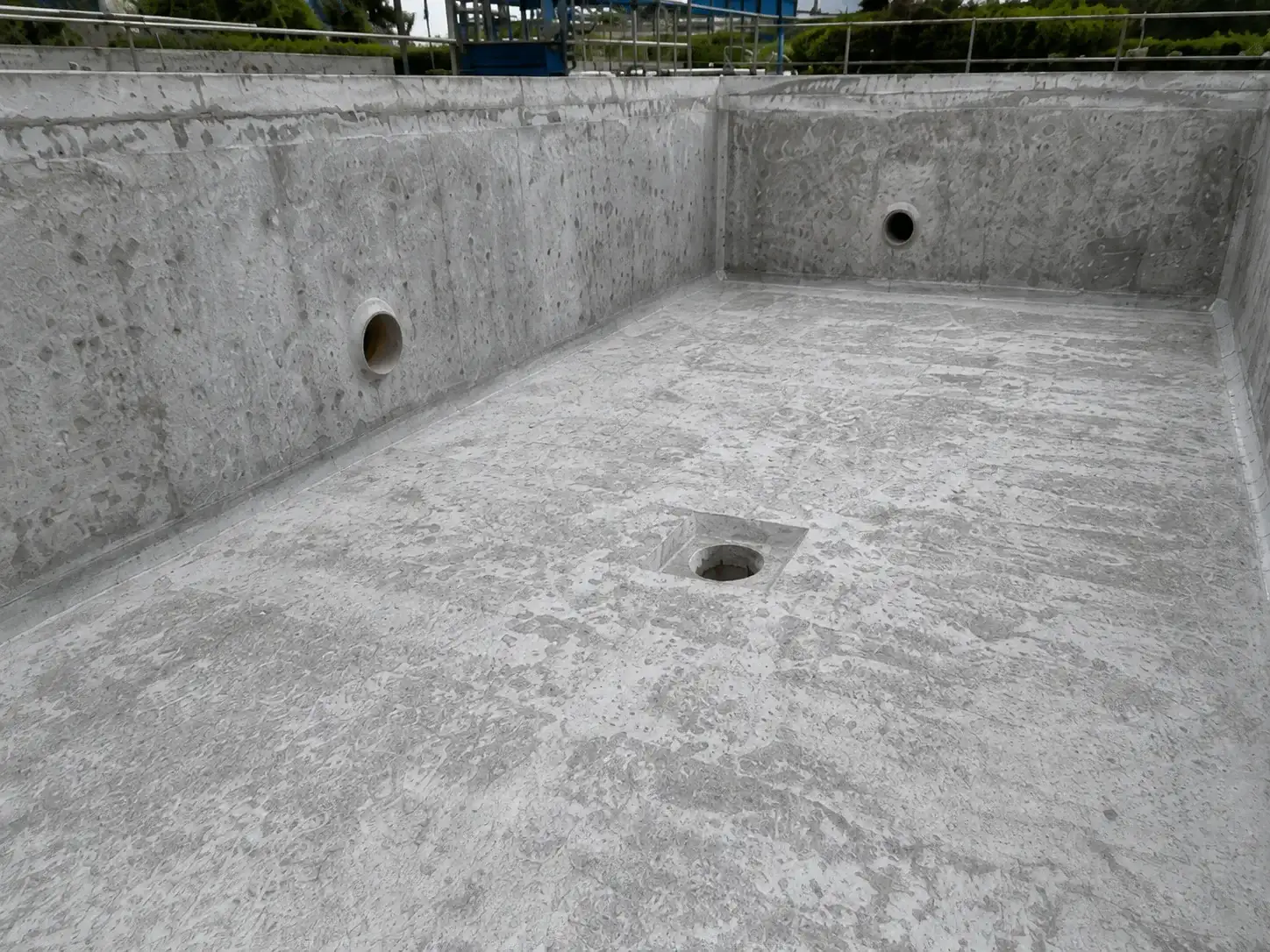
Concrete wastewater tank surface preparation before anti-corrosion protection
01

Substrate Requirements

Concrete wastewater tank substrate should be solid, clean, dry and stable. Loose concrete, laitance, dust, oil, standing water, weak surface layers and contaminated areas should be removed before primer application.

Reference: confirm surface strength, dryness, cleanliness, contamination removal, detail repair scope and coating readiness before primer application.
02

BW8010 Concrete Primer

Apply BW8010 as the concrete primer to seal capillary pores, improve adhesion and reduce absorption differences before repair leveling and anti-corrosion coating.

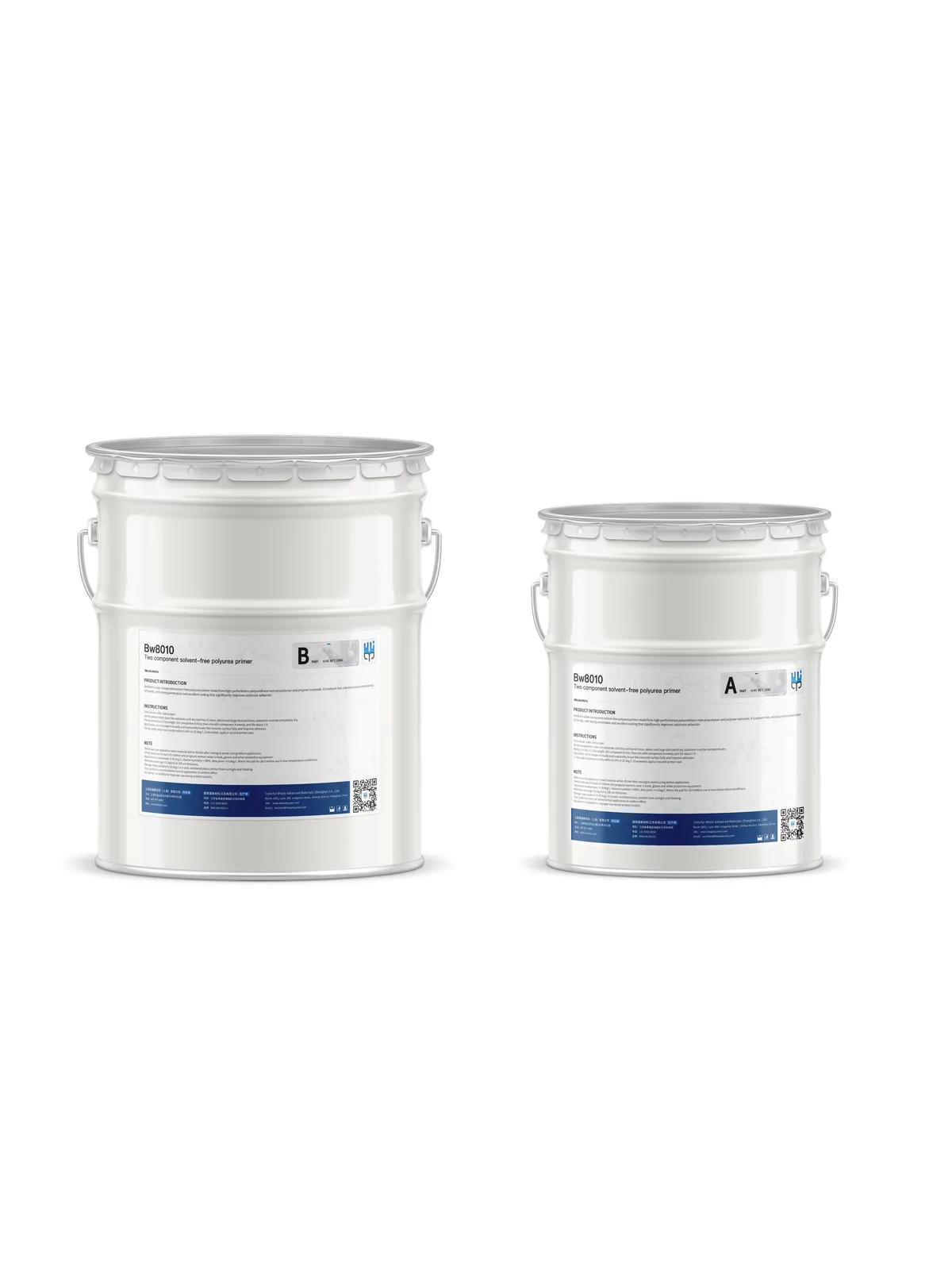
System reference: about 100 um / about 0.20 kg/m2 from BW8010 product data. Final primer consumption depends on concrete porosity, absorption and surface condition. BW8010 Solvent-Free Polyurea Primer official product packaging image Product usedView BW8010 ->
BW8010 concrete primer application inside wastewater tank
Quartz sand repair and leveling application before wastewater tank anti-corrosion coating
03

BW8010 Quartz Sand Repair / Leveling Layer

Use BW8010 blended with quartz sand for pore filling, honeycomb repair, scrape leveling and local defect treatment. This repair / leveling layer helps prepare the base before BW3-951 and is not the main anti-corrosion layer.

System reference: thickness and consumption are project-specific based on pores, honeycombs, pits, void depth, repair scope and site requirements. BW8010 Solvent-Free Polyurea Primer official product packaging image for quartz sand repair use Product usedView BW8010 ->
04

BW3-951 Spray Polyurea Main Anti-Corrosion Protective Layer

Spray-apply BW3-951 as the main anti-corrosion protective lining for wastewater tank immersion, corrosive wastewater, pH variation, humid corrosive vapor and cleaning condition exposure.

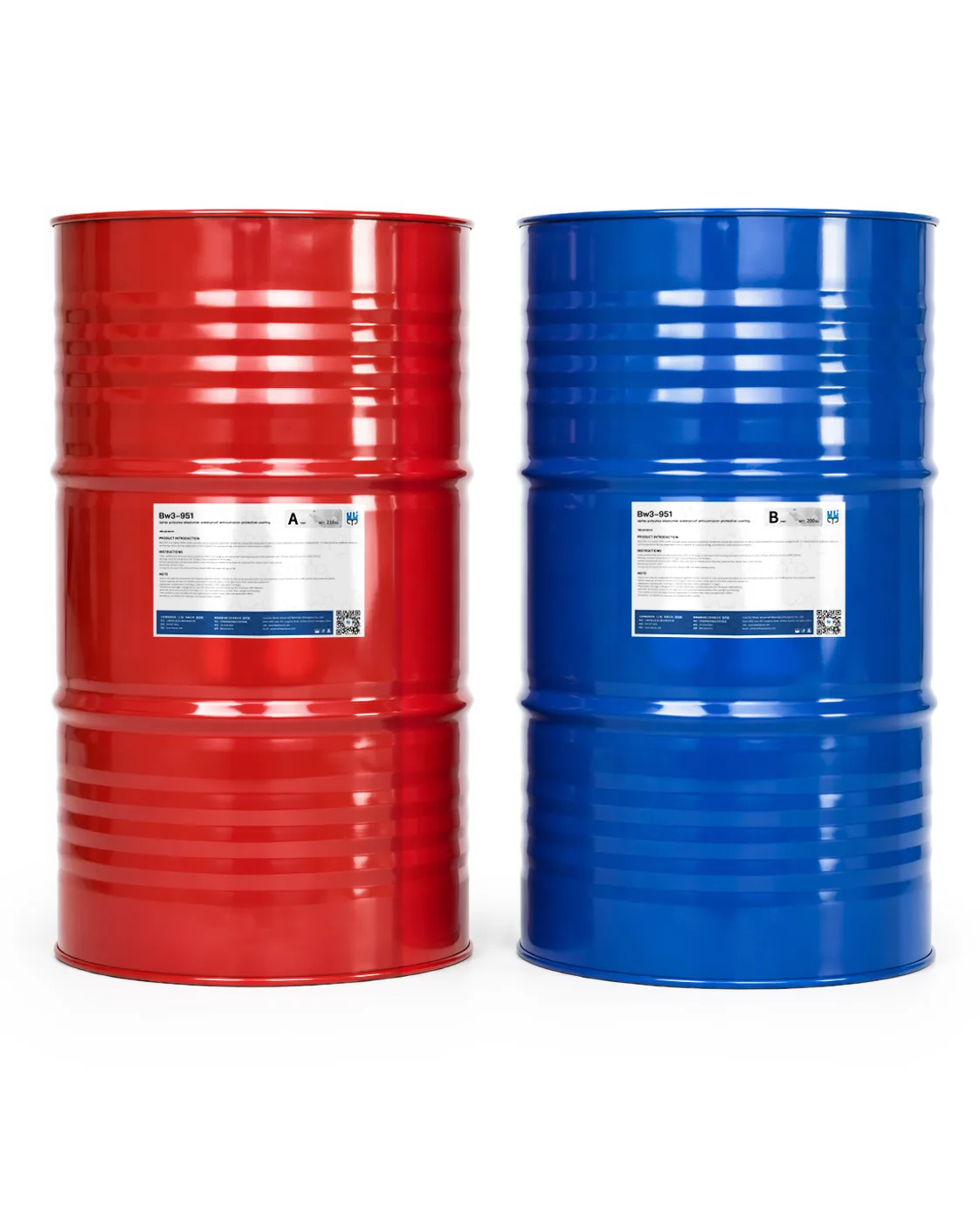
System reference: about 1.5 mm main anti-corrosion layer thickness / about 1.62 kg/m2 planning consumption, calculated from BW3-951 product data theoretical coverage of about 1.08 kg/m2 at 1 mm film thickness. Final thickness should be confirmed according to wastewater chemistry, immersion condition and project specification. BW3-951 Spray Polyurea Anticorrosion Coating official product packaging image Product usedView BW3-951 ->
Finished BW3-951 anti-corrosion surface inside concrete wastewater tank

Technical data center

Technical Data Center

Wastewater tank anti-corrosion planning data for BW8010 concrete primer, BW8010 quartz-sand repair use and BW3-951 spray polyurea main anti-corrosion protective lining.

BW8010 Concrete Primer Key Data

ItemTest standard / referenceResult
Product role System planning Concrete primer, pore sealing and adhesion support
Theoretical coverage 100 um film thickness 0.20 kg/m2
Solid content Product data reference >=98%
Mixing ratio By weight A:B = 1:2
Adhesive strength ASTM D-3359 3.5 MPa or substrate broken
Chemical resistance support Product data reference 30% H2SO4 or 10% HCl, 50% NaOH, 50 g/L salt and 2000 h salt spray references are listed in product data

BW8010 Quartz Sand Repair / Leveling Key Data

ItemTest standard / referenceResult
Product role System planning Repair and leveling before the main anti-corrosion layer
Consumption basis Site planning Depends on void depth, repair scope, substrate defects and site requirements
Application purpose System planning Honeycomb repair, pore filling, scrape leveling, bug hole filling and pit repair
Thickness planning System planning Project-specific; do not use a fixed thickness before substrate inspection
Layer role System planning Repair / leveling transition layer, not the main anti-corrosion lining

BW3-951 Anti-Corrosion Layer Key Data

ItemTest standard / referenceResult
Product role System planning Spray polyurea main anti-corrosion protective lining
Solid content Part A / Part B 100% / 100%
Mixing ratio By volume 1 : 1
Gel time @ 25 deg C Product data reference 3-5 s
Product data film thickness Product data reference 1000-3000 um
Wastewater tank system recommended thickness System planning About 1.5 mm
Product data coverage Product data reference About 1.08 kg/m2 at 1 mm film thickness
Planning consumption System calculation About 1.62 kg/m2 at 1.5 mm
Tensile strength Product data 20 MPa
Elongation rate Product data 460%
Impermeability Product data 0.4 MPa / 2 h, impermeable
Chemical resistance Product data reference 10% H2SO4 or 10% HCl, 10% NaOH, 30 g/L salt, 2000 h salt spray and oil resistance references are listed in product data
Wastewater service review System planning Review wastewater composition, pH variation, immersion condition, cleaning chemicals and ventilation before final specification

Technical values are planning references from current product data. Final material selection, repair scope, film thickness, wastewater chemistry, immersion condition, cleaning method and application conditions should be confirmed according to project specification and the latest technical data sheet.

Quality control

Application & Quality Control

Quality control should focus on wastewater tank concrete readiness, primer sealing, repair continuity and BW3-951 protective-lining integrity before handover.

01

Concrete Readiness

Confirm the tank or basin is ready for primer application.

  • Surface strength
  • Dryness and cleanliness
  • Void and honeycomb repair scope
  • Wall-floor corner and penetration readiness
02

Primer and Repair Control

Review BW8010 primer coverage and quartz-sand repair quality.

  • Continuous primer film
  • Absorption control
  • Repair continuity
  • No loose repair areas
03

Main Protective Lining

Check BW3-951 application before wastewater service.

  • Continuous lining film
  • Target thickness
  • Detail coverage
  • Pinholes and missed areas inspection
Inspection focus
  • Concrete sealing
  • Repair continuity
  • Main anti-corrosion lining
  • Immersion and corrosive media review

Suitable conditions

Suitable Wastewater Structure Conditions

Use this section to check whether the project fits a BW8010 primer / repair layer + BW3-951 spray polyurea anti-corrosion system before final specification.

  1. 01

    Wastewater Treatment Basins

    Treatment basins can be reviewed when concrete sealing, defect repair and anti-corrosion protection are required.

    Check before specification: pores / repair / corrosive exposure

  2. 02

    Equalization and Sedimentation Tanks

    Tank interiors can be reviewed when immersion and corrosive media exposure drive coating selection.

    Check before specification: immersion / media / DFT

  3. 03

    Aeration Tanks and Channels

    Channels and aeration zones need continuous protection when water flow, chemical exposure and surface wear are present.

    Check before specification: flow / chemical exposure / wear

  4. 04

    Chemical Collection Pits

    Chemical wastewater collection areas require project-specific review of medium, concentration, temperature and cleaning method.

    Check before specification: medium / concentration / temperature

Do not finalize material consumption from area alone. Confirm concrete condition, wastewater chemistry, pH variation, immersion condition, target DFT and inspection standard before ordering.

Before you request a quote

Before You Request a Quote

Share the wastewater structure condition and corrosive exposure target so the BW8010 + BW3-951 system can be reviewed before material planning.

Prepare the project basics first.

A useful anti-corrosion quotation starts with structure condition, wastewater chemistry, repair scope and target film thickness.

Photos or drawings of tank walls, wall-floor corners, pipe penetrations, inlet and outlet areas, channels, pits and damaged concrete areas can help review the build-up faster.

  • Coating area
  • Tank or basin type
  • Concrete condition
  • Void or honeycomb scope
  • Chemical exposure
  • Immersion condition
  • Target DFT
  • Operating temperature
  • Cleaning method
  • Project location
  • Construction timeline
  • Required inspection standard

After these details are ready, use the inquiry form below for a wastewater anti-corrosion system inquiry.

FAQ

FAQ About Wastewater Tank Anti-Corrosion Protection

Common questions about using BW8010 and BW3-951 for wastewater tank anti-corrosion protection.

What is this spray polyurea wastewater tank anti-corrosion system used for?

It is used for prepared concrete wastewater basins, sewage tanks, treatment tanks, wastewater channels and chemical collection pits that require spray polyurea anti-corrosion protection under immersion, corrosive wastewater and pH variation conditions.

What role does BW8010 play in this system?

BW8010 is used as the concrete primer. It seals capillary pores, improves adhesion and helps control surface absorption before quartz-sand repair and BW3-951 application.

Why is BW8010 blended with quartz sand?

BW8010 can be blended with quartz sand for pore filling, honeycomb repair, bug hole treatment, scrape leveling and local defect repair before the main spray polyurea anti-corrosion lining is applied.

Which product forms the main anti-corrosion lining?

BW3-951 forms the main spray polyurea anti-corrosion protective lining in this wastewater tank system. BW8010 and the quartz-sand repair layer support adhesion and surface continuity but are not the main anti-corrosion lining.

What wastewater tank details need special attention?

Wall-floor corners, pipe penetrations, inlet and outlet areas, sedimentation zones, wastewater channels, chemical collection pits, cracks, honeycombs, bug holes and local weak concrete should be checked before coating work.

Can the exact repair layer thickness be fixed before inspection?

No. The BW8010 quartz-sand repair / leveling layer is project-specific because thickness and consumption depend on pores, honeycombs, pits, void depth and repair scope.

What film thickness is recommended for BW3-951?

BW3-951 product data lists a recommended film thickness range of 1000-3000 um. For this spray polyurea wastewater tank anti-corrosion system, BW3-951 is recommended at about 1.5 mm as the main anti-corrosion protective lining. Final thickness should be confirmed according to wastewater chemistry, immersion condition and project specification.

What information is needed before specifying the system?

Share the structure type, concrete condition, repair scope, wastewater composition, pH variation, immersion condition, cleaning method, target DFT, operating temperature and inspection requirements before final selection.