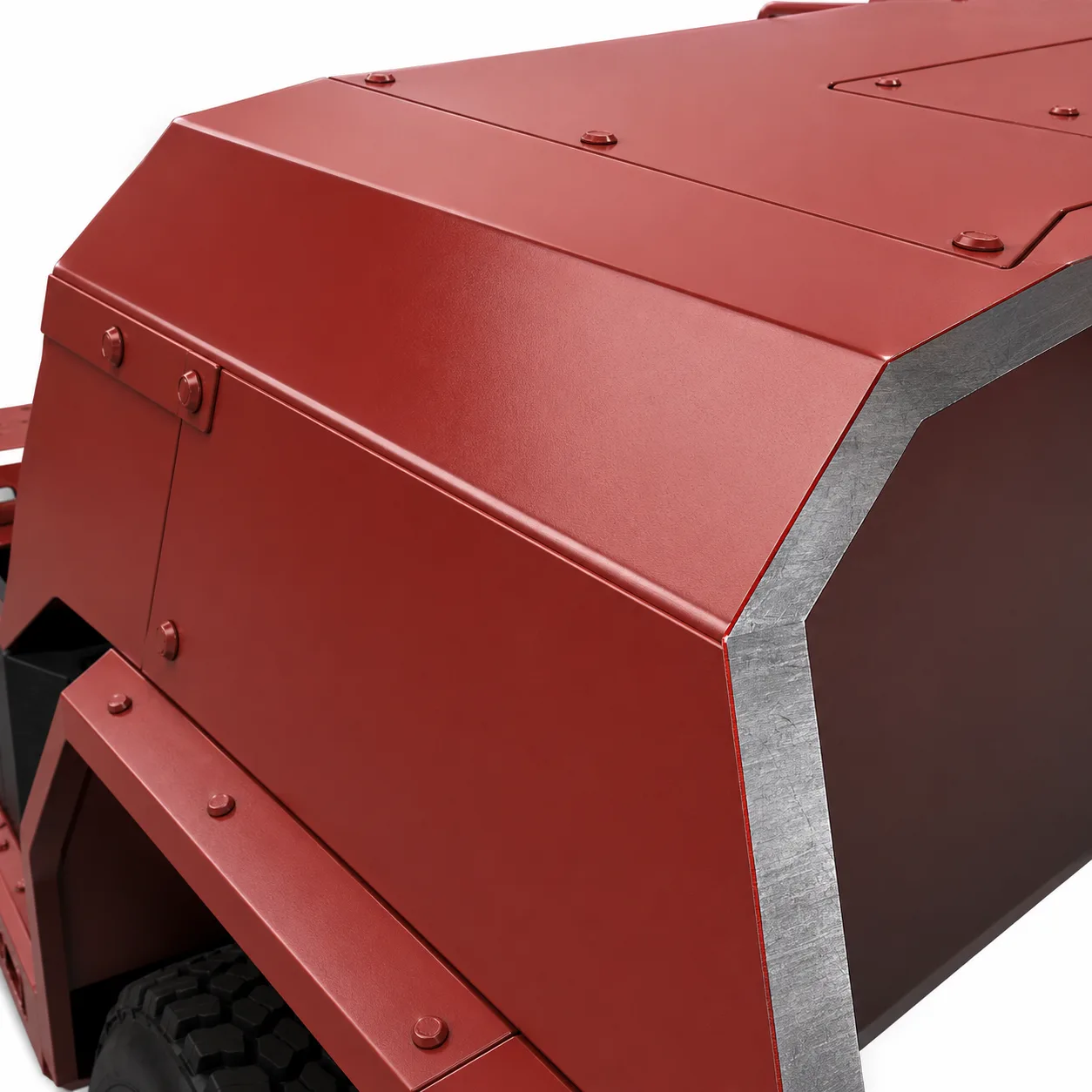
Vehicle Spray Polyurea Protection System

Vehicle Explosion-Resistant Wear-Resistant
Decorative Spray Polyurea Protection System

A vehicle spray polyurea protection system using BW8008 metal primer, BW3-319 high-strength spray polyurea protective coating and BW0-8029 polyaspartic protective topcoat for prepared vehicle metal substrates, cargo beds, chassis, equipment shells and special vehicle protection projects.

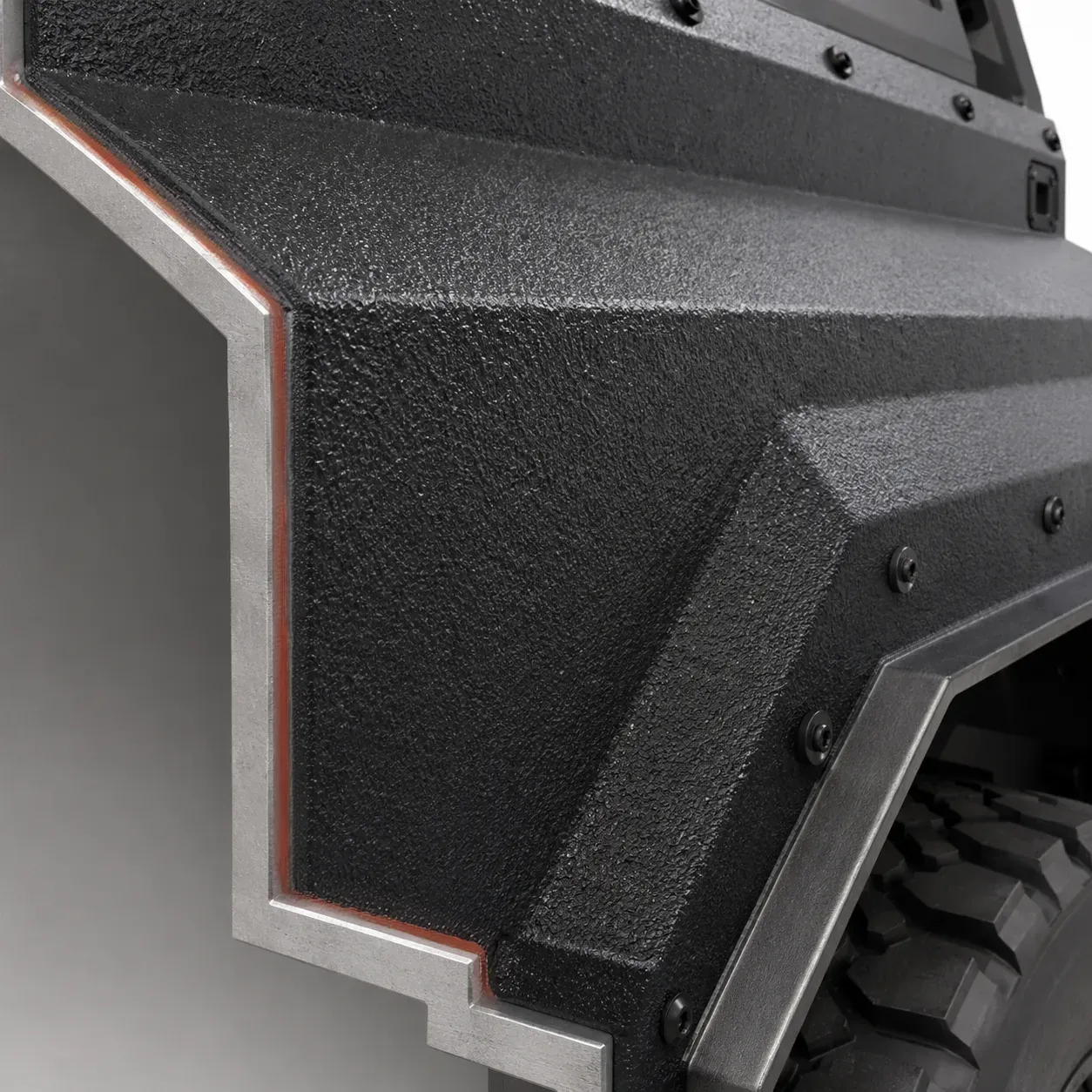
Vehicle spray polyurea protection system overview with BW8008 metal primer, BW3-319 high-strength spray polyurea and BW0-8029 protective topcoat

System build-up

System Build-Up

Three real coating layers: metal primer, high-strength spray polyurea protective coating and exposed polyaspartic protective topcoat.

  1. 01
    Metal Primer BW8008

    Supports adhesion on prepared vehicle metal and helps create the anti-corrosion bonding interface before spray polyurea.

  2. 02
    Main Spray Polyurea Protective Coating BW3-319

    Forms the main high-strength spray polyurea layer for vehicle impact, abrasion, wear and blast-mitigation review.

  3. 03
    Protective Decorative Topcoat BW0-8029

    Provides the exposed protective and decorative finish for weathering, surface wear and appearance retention.

Layer problem solving

What Each Layer Solves

Each layer has a defined role in vehicle metal bonding, high-strength spray polyurea protection and exposed decorative surface durability.

BW8008 metal primer layer detail for vehicle spray polyurea protection system
01

BW8008 Metal Primer

Primes prepared vehicle metal for stronger bonding.

Main Function
Primes prepared steel, aluminum or vehicle metal surfaces before the high-strength spray polyurea layer.
What It Solves
Weak bonding on metal, corrosion-interface risk, residual surface activity after preparation and early adhesion loss before the main protective coating.
Key Advantage
Helps create a stable metal primer interface for BW3-319 on prepared vehicle metal surfaces.
BW3-319 high-strength spray polyurea protective layer detail for vehicle wear and impact protection
02

BW3-319 High-Strength Spray Polyurea

Builds the main high-strength protective layer.

Main Function
Forms the main high-strength, fast-curing spray polyurea protective coating over the primed vehicle metal surface.
What It Solves
Cargo-bed wear, chassis abrasion, equipment-shell impact, vibration, water exposure, chemical splash and project-specific blast-mitigation review needs.
Key Advantage
100% solids spray polyurea supports rapid high-build application, seamless coverage and strong wear-protection performance.
BW0-8029 protective decorative topcoat layer stack for vehicle spray polyurea coating system
03

BW0-8029 Protective Decorative Topcoat

Protects the exposed finish and appearance.

Main Function
Provides an exposed polyaspartic protective and decorative topcoat over the BW3-319 spray polyurea layer.
What It Solves
UV exposure, color aging, surface wear, cleaning demand, weathering and long-term appearance requirements on exposed vehicle surfaces.
Key Advantage
Helps improve weathering resistance, finish retention, surface protection and maintainability of the vehicle coating system.

Application stages

Application Stages

Vehicle metal preparation, BW8008 metal primer, BW3-319 high-strength spray polyurea protective coating and BW0-8029 protective decorative topcoat are reviewed as separate application stages.

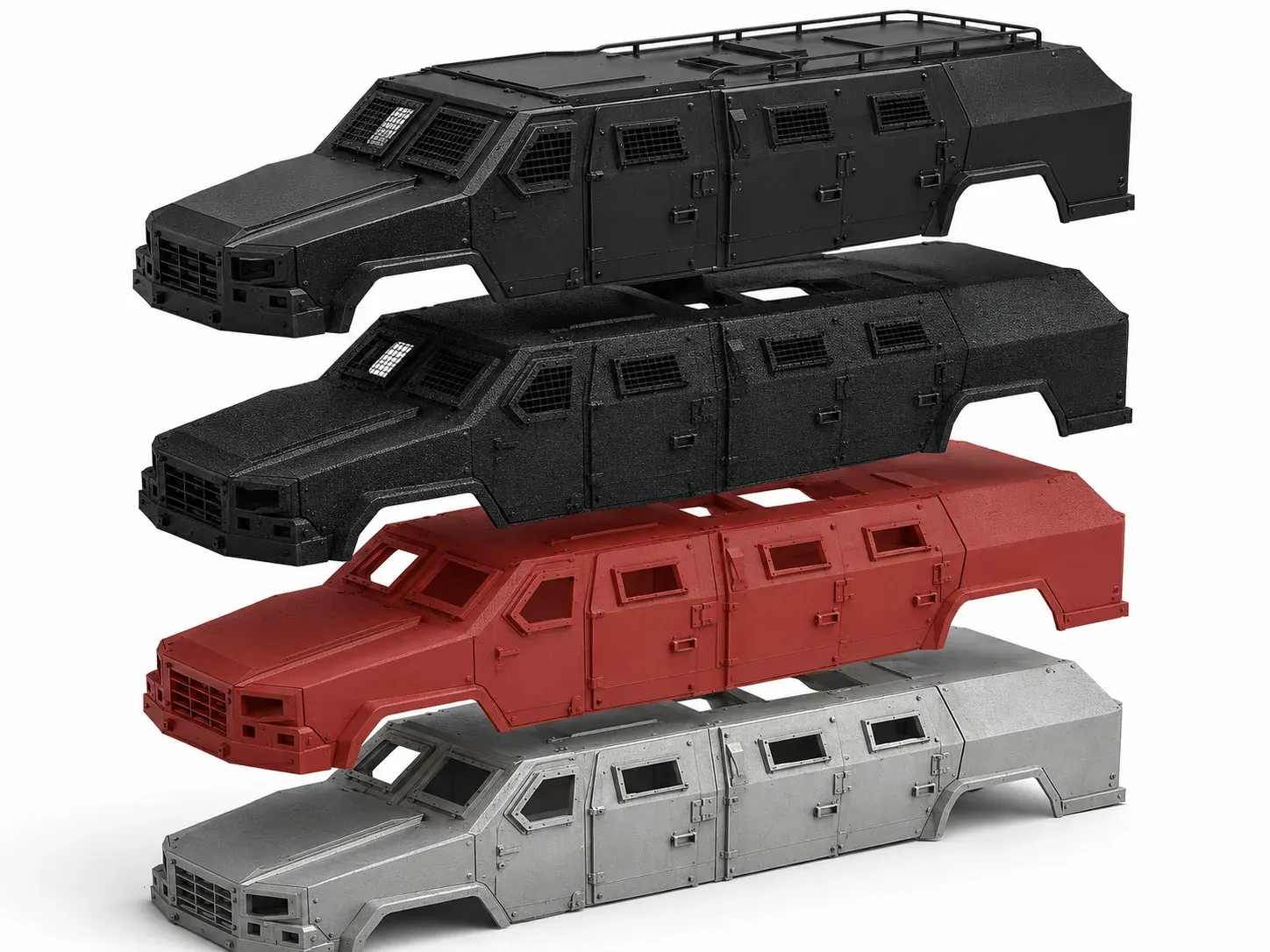
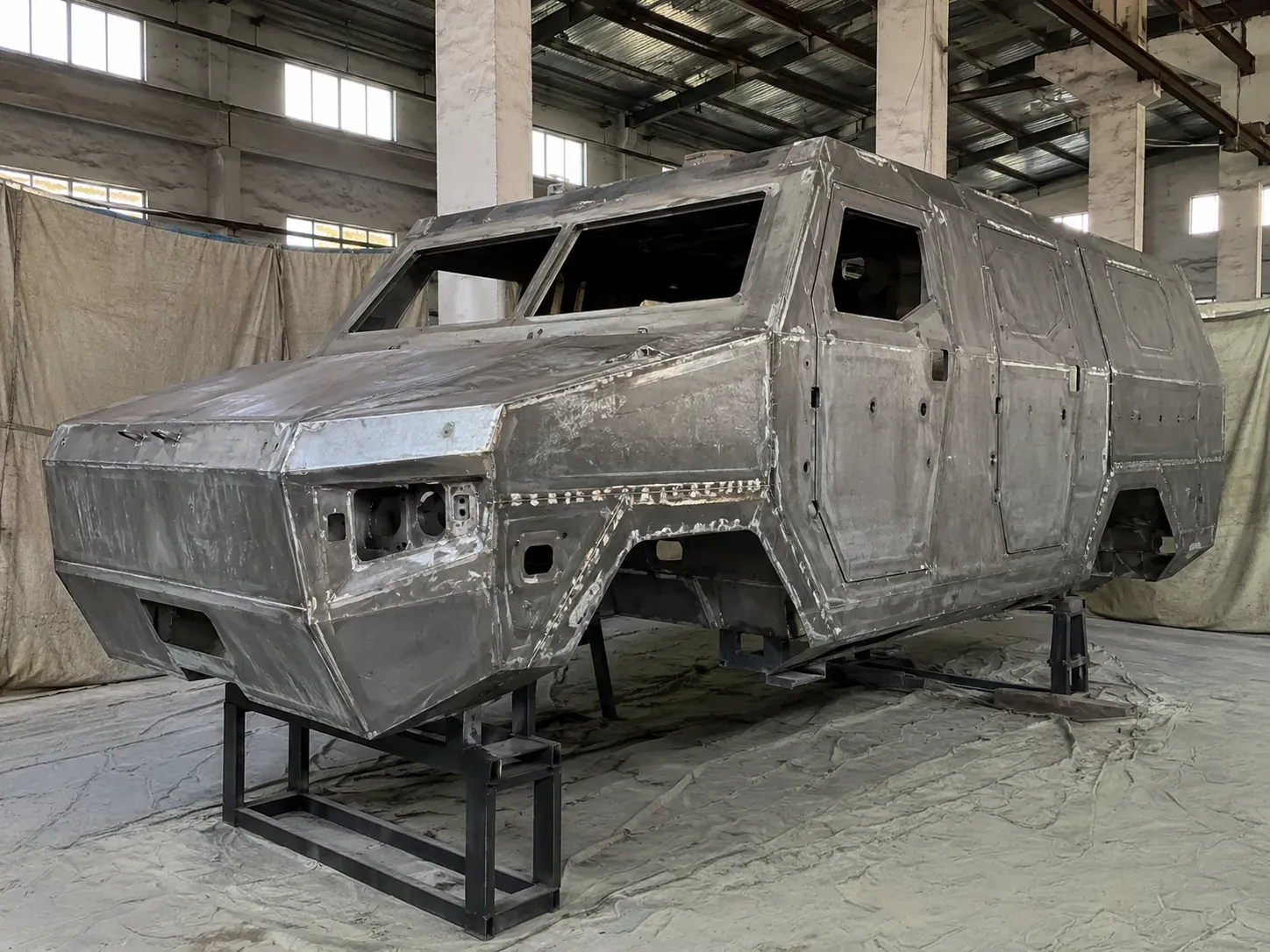
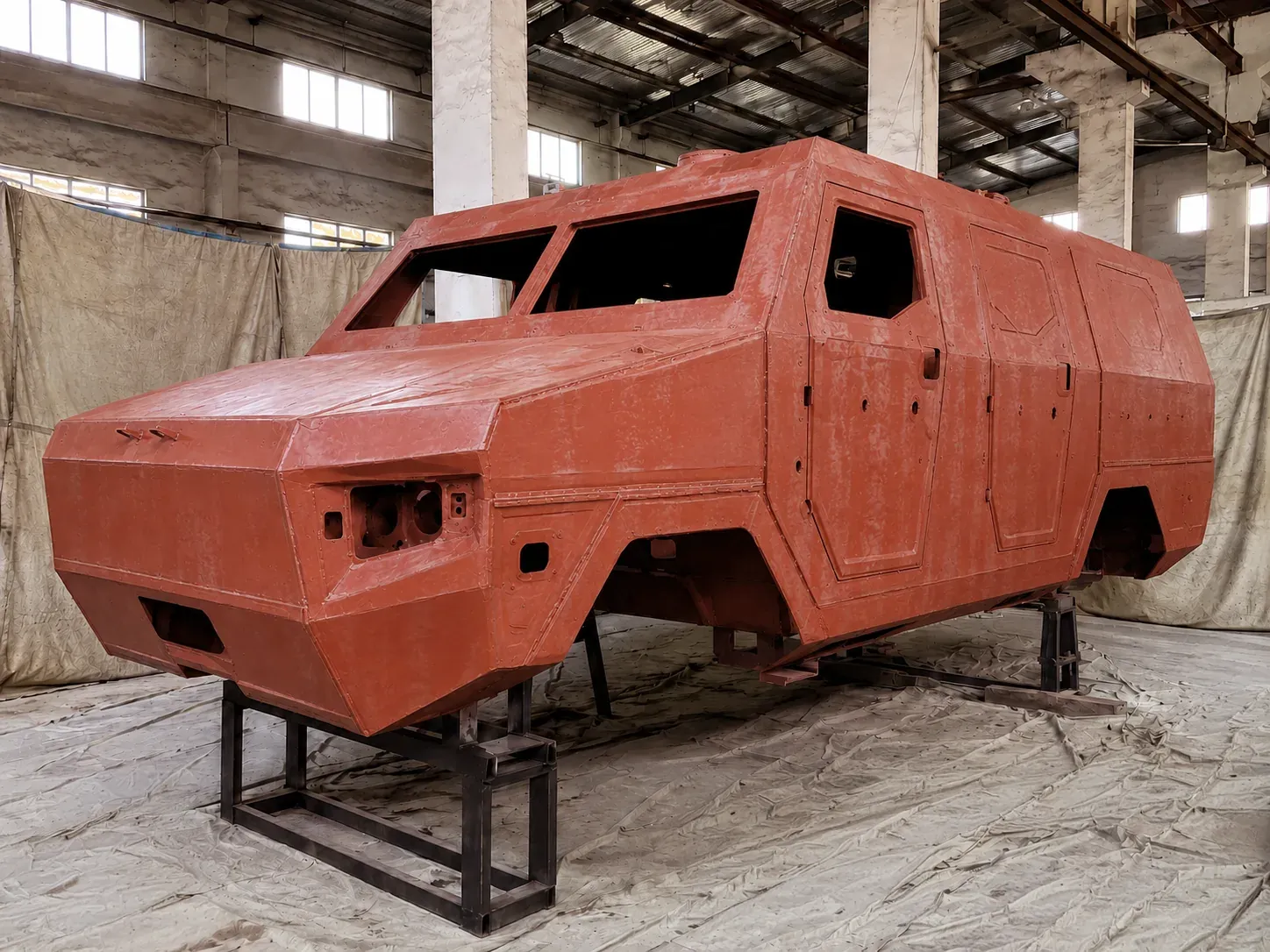
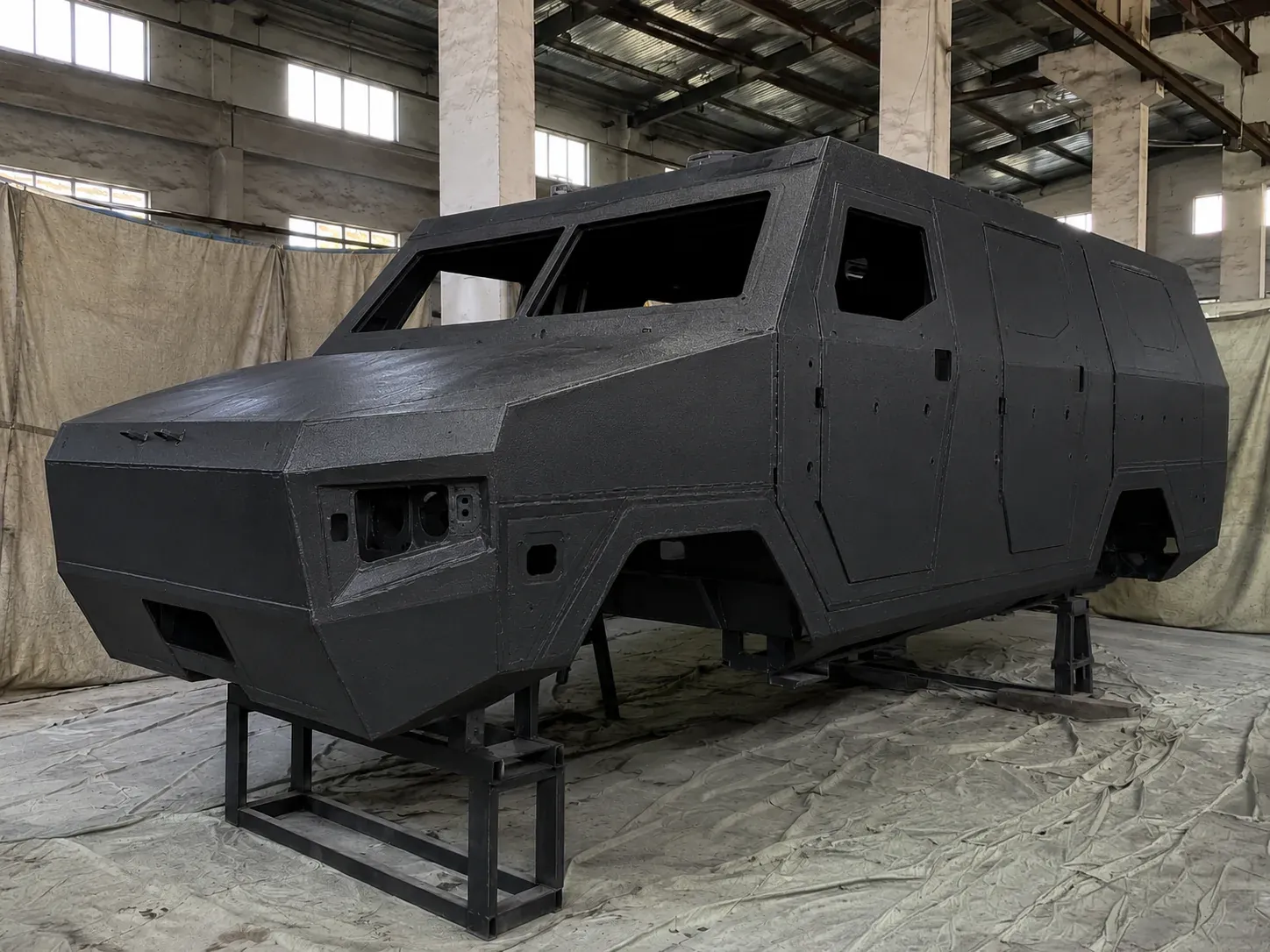
Self-built vehicle frame prepared as a metal substrate reference before BW8008 primer application
Self-built vehicle frame for coating-system visualization
01

Vehicle Metal Surface Preparation

Prepare the vehicle metal surface by removing oil, dust, rust, loose coating and weak surface contamination. Blasting, grinding or other preparation methods should follow the vehicle substrate and project specification.

Preparation stage: confirm metal type, weld seams, edges, bolt holes, cargo-bed wear zones, existing coating condition, surface profile and dew point margin before primer application. Image note: the vehicle frame shown is a self-built vehicle frame for coating-system visualization, not a customer vehicle.
02

BW8008 Metal Primer

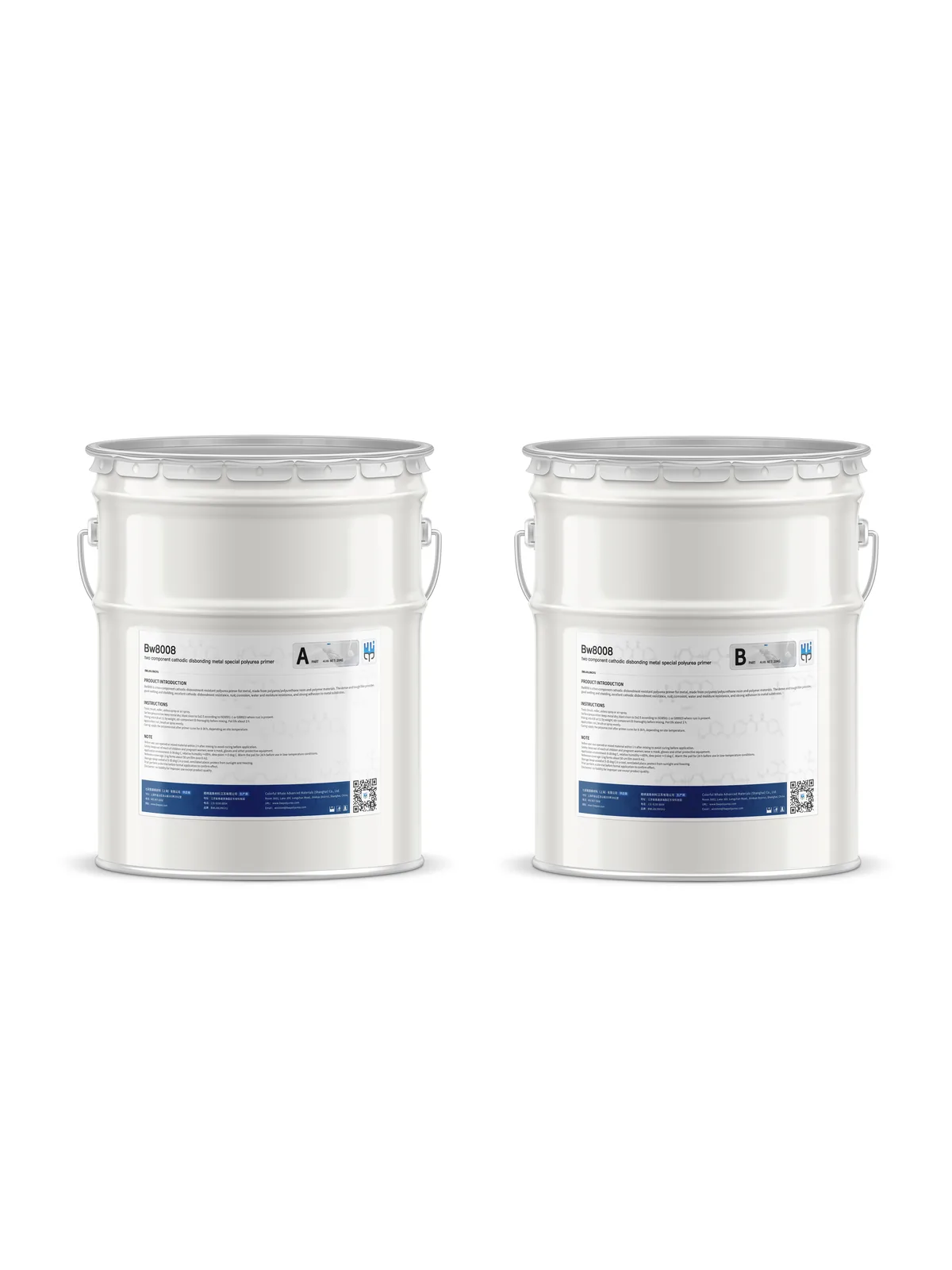
Apply BW8008 as the metal primer to support adhesion on prepared vehicle metal and build the anti-corrosion bonding interface before spray polyurea application.

Product used: BW8008. Product data lists 30-50 um recommended DFT and about 0.12 kg/m2 at 50 um film thickness. Image note: the application photo uses a self-built vehicle frame for coating-system visualization. BW8008 Metal Anticorrosion Primer official product packaging image Product usedView BW8008 ->
Self-built vehicle frame after BW8008 metal primer application for vehicle spray polyurea system visualization
Self-built vehicle frame for coating-system visualization
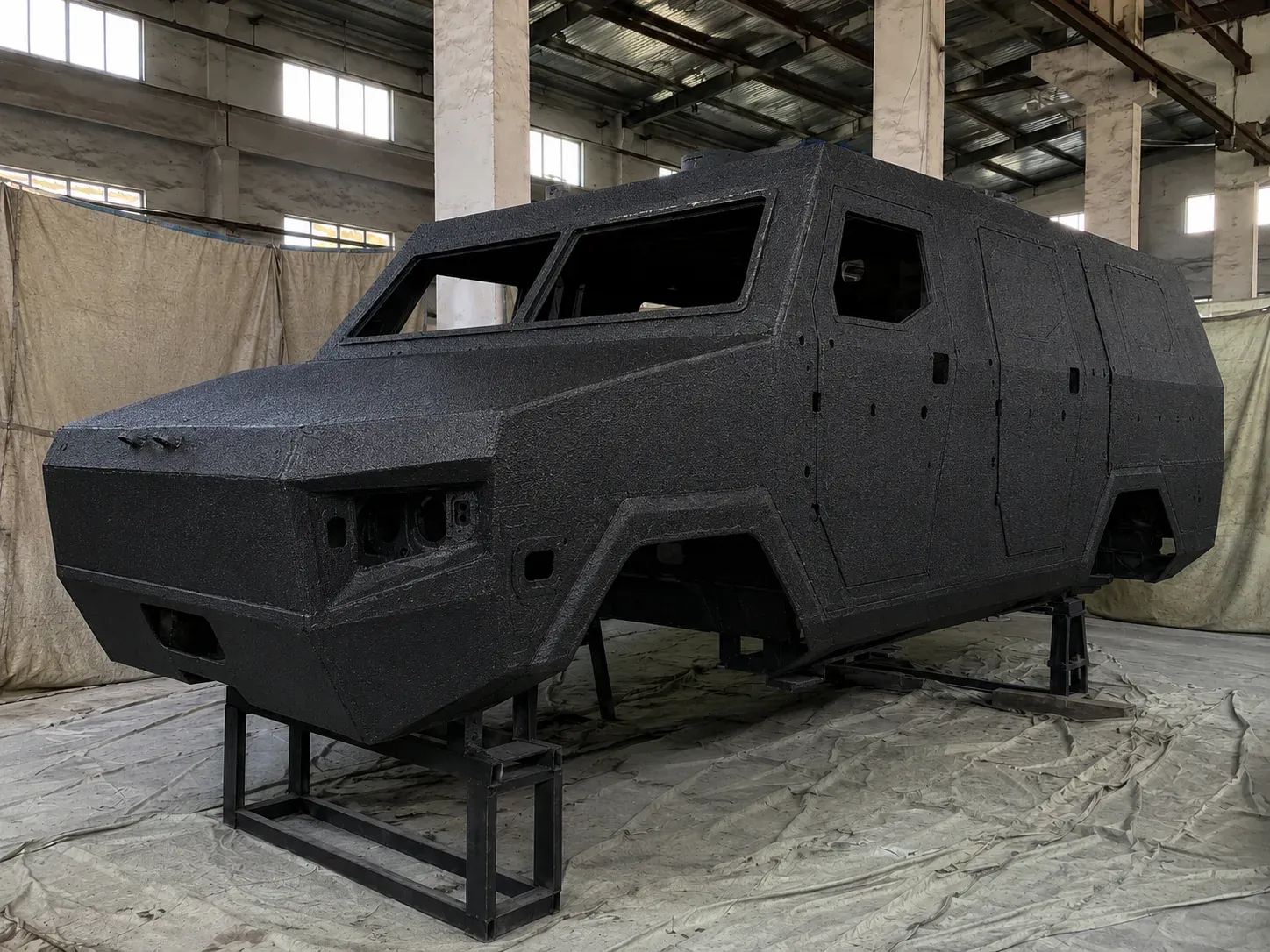
Self-built vehicle frame coated with BW3-319 high-strength spray polyurea protective coating
Self-built vehicle frame for coating-system visualization
03

BW3-319 High-Strength Spray Polyurea Protective Coating

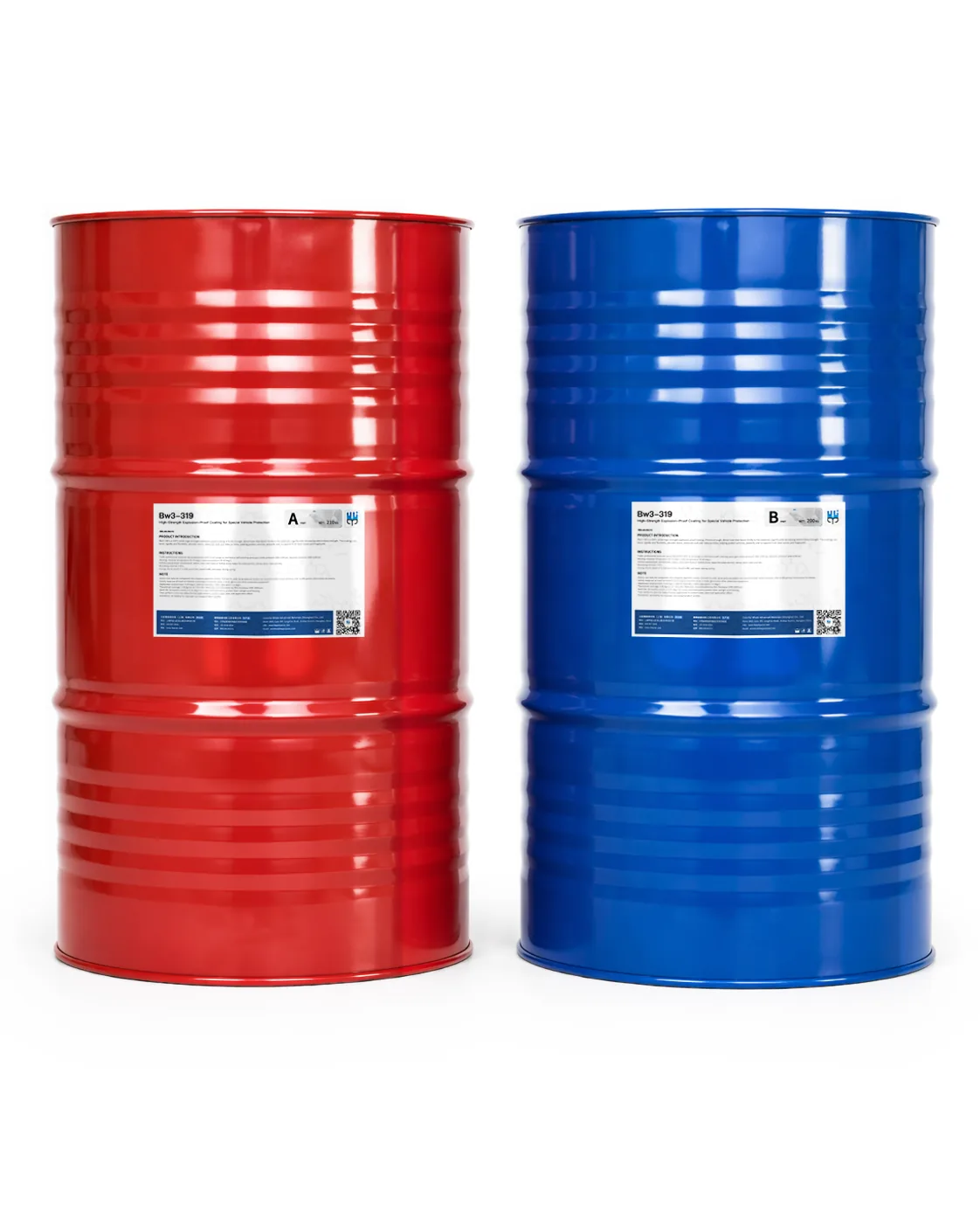
Spray BW3-319 as the main high-strength protective coating for vehicle cargo beds, chassis, equipment shells and special vehicle surfaces requiring impact, abrasion and blast-mitigation review.

Product used: BW3-319. Product data lists 1000-3000 um recommended film thickness and 1.08 kg/m2 theoretical coverage at 1 mm DFT. Image note: the application photo uses a self-built vehicle frame for coating-system visualization. BW3-319 High-Strength Spray Polyurea Protective Coating official product packaging image Product usedView BW3-319 ->
04

BW0-8029 Protective Decorative Topcoat

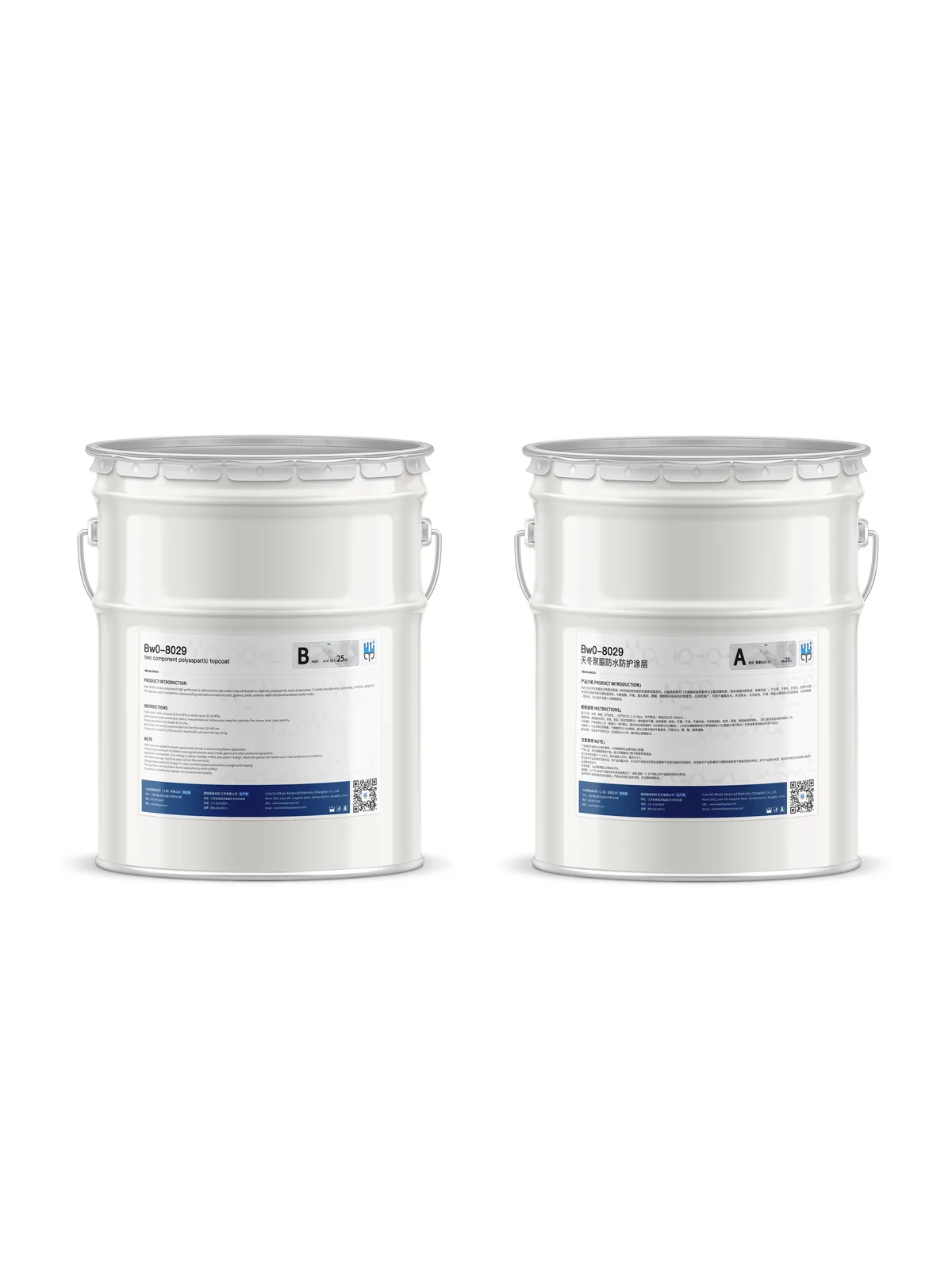
Apply BW0-8029 as the exposed protective decorative topcoat to improve weathering resistance, surface appearance, cleanability and top-surface wear protection.

Product used: BW0-8029. Product data lists 30-60 um recommended DFT and 0.10 kg/m2 theoretical coverage at 60 um film thickness. Image note: the application photo uses a self-built vehicle frame for coating-system visualization. BW0-8029 Polyaspartic Protective Topcoat official product packaging image Product usedView BW0-8029 ->
Self-built vehicle frame finished with BW0-8029 protective decorative topcoat over spray polyurea coating
Self-built vehicle frame for coating-system visualization

Technical data center

Technical Data Center

Scenario-relevant technical evidence for vehicle metal primer bonding, BW3-319 high-strength spray polyurea protection, impact and abrasion review, salt spray exposure and BW0-8029 exposed topcoat durability.

BW8008 Metal Primer Key Data

ItemTest standard / referenceResult
Product role System planning Metal primer, adhesion support on prepared vehicle metal and anti-corrosion interface
Recommended dry film thickness Product guide 30-50 um
Theoretical coverage 50 um film thickness 0.12 kg/m2
Mix ratio By weight A:B = 1:1
Adhesion / tensile strength ASTM D-3359 11.5 MPa or substrate failure
Cathodic disbonding resistance HG / T 3831-2006 <=15 mm
Salt resistance Product data reference 60 g/L, 30 d: no rust, no bubbles, no peeling
Relevance to vehicle metal System planning Supports primer bonding before BW3-319 on prepared vehicle metal substrates

BW3-319 High-Strength Spray Polyurea Key Data

ItemTest standard / referenceResult
Product role System planning Main high-strength spray polyurea protective coating
Solid content Part A / Part B 100% / 100%
Mix ratio By volume 1 : 1
Gel time @ 25 deg C Product data reference 4-6 s
Theoretical coverage 1 mm DFT 1.08 kg/m2
Recommended film thickness Product data reference 1000-3000 um
Hardness Shore D 56
Tensile strength GB / T 23446-2009 34 MPa
Elongation rate GB / T 23446-2009 340%
Tear strength GB / T 23446-2009 95 kN/m
Wear resistance GB / T 23446-2009 4.3 mg
Steel-base adhesion GB / T 23446-2009 11.3 MPa
Cathodic disbondment Product data reference <=15 mm
Salt spray resistance Product data reference 2000 h; no corrosion, no blistering, no peeling

BW0-8029 Protective Topcoat Key Data

ItemTest standard / referenceResult
Product role System planning Exposed protective decorative topcoat over BW3-319
Recommended DFT Product guide 30-60 um
Theoretical coverage 60 um film thickness 0.10 kg/m2
Tensile strength ASTM D-412 20 MPa
Elongation rate ASTM D-412 200%
Abrasion resistance HG / T 3831-2006 5 mg
Impact resistance GB / T 1732 50 kg.cm
Accelerated aging GB / T 14522-1993, 1000 h Loss of light <1; chalking <1
Salt spray resistance Product data reference 1500 h; no rust, no bubbles, no peeling

Technical values are planning references from current product data. Final material selection, surface preparation standard, film thickness, consumption and application conditions should be confirmed according to project specification and the latest technical data sheet.

Quality control

Application & Quality Control

Quality control should focus on vehicle metal readiness, primer continuity, BW3-319 film thickness and BW0-8029 topcoat finish before handover.

01

Vehicle Metal Readiness

Confirm surface condition before BW8008 primer application.

  • Rust, oil and dust removal
  • Surface profile
  • Weld seams and edges
  • Dew point margin
02

Primer and Spray Coating Control

Review BW8008 coverage and BW3-319 spray coating build during application.

  • Continuous primer film
  • Recoat interval
  • Spray ratio and pressure
  • Target BW3-319 film thickness
03

Topcoat and Handover

Check BW0-8029 exposed topcoat before service.

  • Surface finish
  • Color requirement
  • Topcoat continuity
  • Final inspection records
Inspection focus
  • Vehicle metal preparation
  • Primer bonding
  • BW3-319 film thickness
  • Impact and abrasion review
  • BW0-8029 finish

Vehicle protection risk areas

How This System Helps Reduce Vehicle Surface Protection Risks

Vehicle protection risks often concentrate around cargo beds, chassis, frame surfaces, equipment shells, wheel-arch areas, weld seams, metal edges, bolt holes, impact zones, abrasion zones, chemical splash and exposed decorative surfaces. This three-layer system helps address metal adhesion, high-strength spray polyurea protection and exposed topcoat durability.

  1. 01

    Cargo Beds and Wear Zones

    Cargo beds and loading areas need review because impact, abrasion, dragging movement and repeated cleaning can stress the coating surface.

    Check before specification: cargo beds / impact / abrasion

  2. 02

    Chassis and Frame Surfaces

    Chassis, frame and underbody metal surfaces may face corrosion exposure, water splash, road debris and local impact risk.

    Check before specification: chassis / frame / splash exposure

  3. 03

    Special Vehicle Shells and Equipment Housings

    Special vehicle shells and equipment housings may require project-specific film thickness and acceptance requirements for protection review.

    Check before specification: special vehicle shells / equipment housings / DFT review

  4. 04

    Decorative Exposed Surfaces

    Exposed surfaces need topcoat color, finish, cleanability, weathering and appearance retention reviewed before coating work starts.

    Check before specification: decorative finish / weathering / appearance retention

Do not treat BW8008 or BW0-8029 as the main high-strength protective layer. In this system, BW3-319 is the main spray polyurea protective coating. Explosion-risk or blast-mitigation performance must be confirmed by project-specific testing and acceptance requirements.

Before you request a quote

Before You Request a Quote

Share the vehicle type, metal condition and protection target so the BW8008 + BW3-319 + BW0-8029 system can be reviewed before material planning.

Prepare the vehicle protection project basics first.

A useful vehicle protection system quotation starts with substrate metal, surface preparation, target BW3-319 film thickness, impact and abrasion exposure, chemical splash and finish requirement.

Photos or drawings of cargo beds, chassis, weld seams, bolt holes, worn areas and exposed decorative surfaces can help review the build-up faster.

  • Vehicle type
  • Metal substrate
  • Existing coating or rust
  • Surface preparation method
  • Coating area
  • Cargo-bed or chassis zones
  • Impact exposure
  • Abrasion exposure
  • Chemical splash
  • Target BW3-319 DFT
  • Color or finish requirement
  • Indoor or outdoor exposure
  • Project timeline
  • Required inspection standard

After these details are ready, use the inquiry form below to request a vehicle spray polyurea system review.

FAQ

FAQ About Vehicle Spray Polyurea Protection

Common questions about using BW8008, BW3-319 and BW0-8029 for vehicle metal protection, wear resistance and decorative exposed protection.

What is this vehicle spray polyurea protection system used for?

It is used for prepared vehicle metal substrates, cargo beds, chassis, equipment shells and special vehicle protection projects where impact, abrasion, corrosion exposure and decorative surface protection need to be reviewed.

Why is BW8008 used as the primer?

BW8008 is the metal primer selected for prepared vehicle metal surfaces because this system is built around metal bonding and anti-corrosion interface control before spray polyurea application.

Which product is the main protective layer?

BW3-319 is the main high-strength spray polyurea protective coating. BW8008 supports metal adhesion and BW0-8029 protects the exposed finish.

Is BW0-8029 the main protective coating?

No. BW0-8029 is the exposed protective decorative topcoat. The main high-strength protective coating in this system is BW3-319.

Can this system be used for cargo beds and chassis areas?

It can be reviewed for prepared cargo beds, chassis, frame surfaces and equipment-shell areas when the substrate condition, surface preparation, target film thickness and service exposure are suitable.

Does this system guarantee explosion-proof performance?

No single coating page should be treated as a guarantee. Explosion-risk or blast-mitigation performance must be confirmed by project-specific testing, design requirements and acceptance standards.

What information is needed before quotation?

Provide vehicle type, metal substrate, existing coating or rust condition, surface preparation method, coating area, impact and abrasion exposure, chemical splash, target BW3-319 DFT, color or finish requirement and project timeline.

Why is metal surface preparation important?

Metal surface preparation controls bonding, corrosion-interface risk, coating continuity and long-term performance. Rust, oil, dust, old weak coating and edge details should be handled before BW8008 primer application.