
Project case
Australia Desalination Polyurea Project Case
A desalination infrastructure coating case using separate BW Polyurea routes for external concrete protection, internal metal-primer areas and local detail reinforcement.
- Project Type
- Desalination infrastructure coating protection
- Application Area
- Prefabricated desalination infrastructure units
- Main Substrates
- External concrete areas, internal metal-side or steel-related areas and local details
- Service Environment
- Marine or water-treatment infrastructure environment with moisture, salt-containing air and handling exposure
- Coating Approach
- Separate concrete-primer route, metal-primer route and local detail reinforcement route according to substrate condition
- Main Functions
- Waterproofing, anti-corrosion protection and local detail reinforcement
Project information is summarized for application reference. Some project details are not disclosed due to confidentiality requirements.

Polyurea coating protection for prefabricated desalination units
1. External Concrete-Side Protection
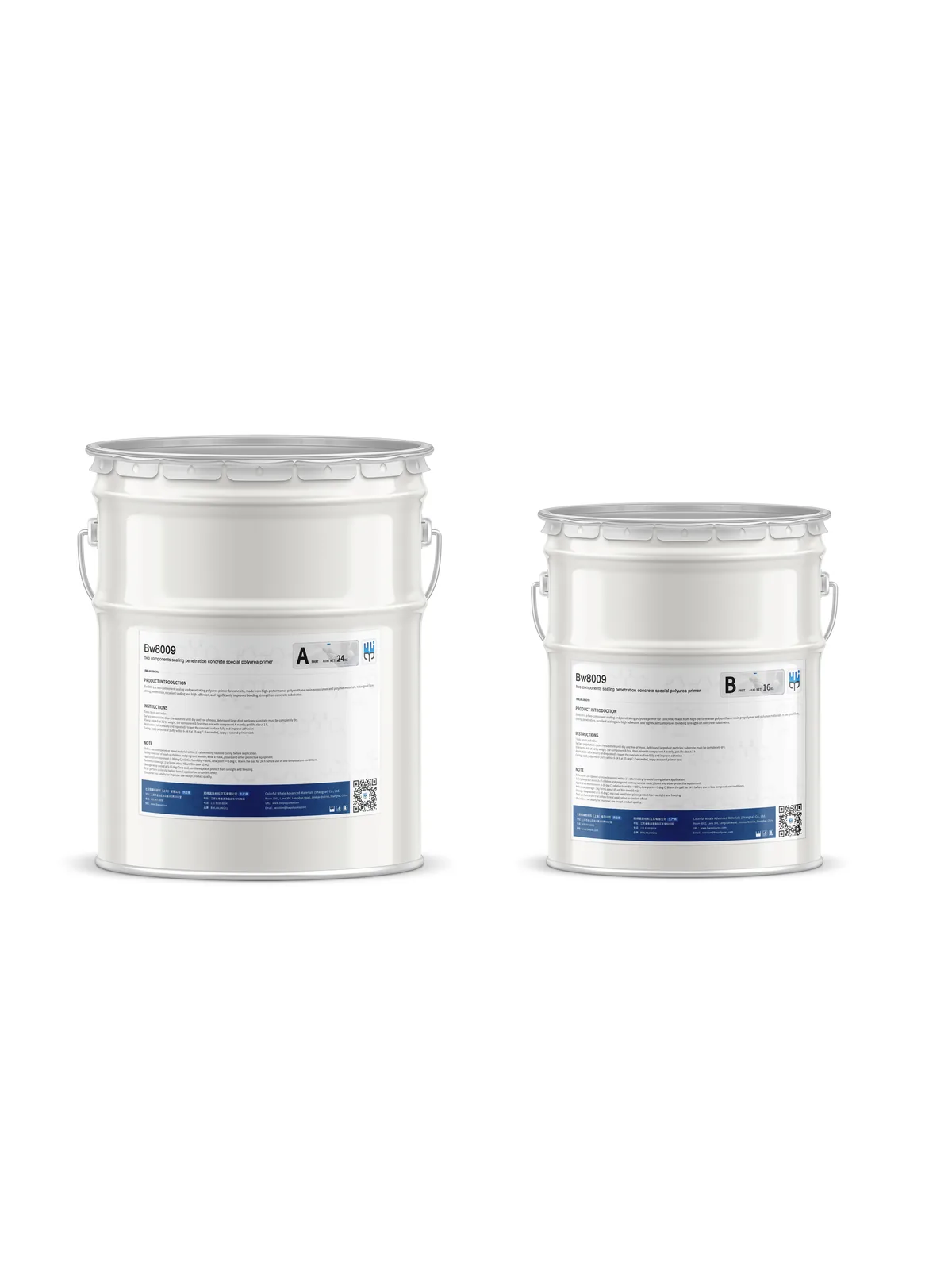
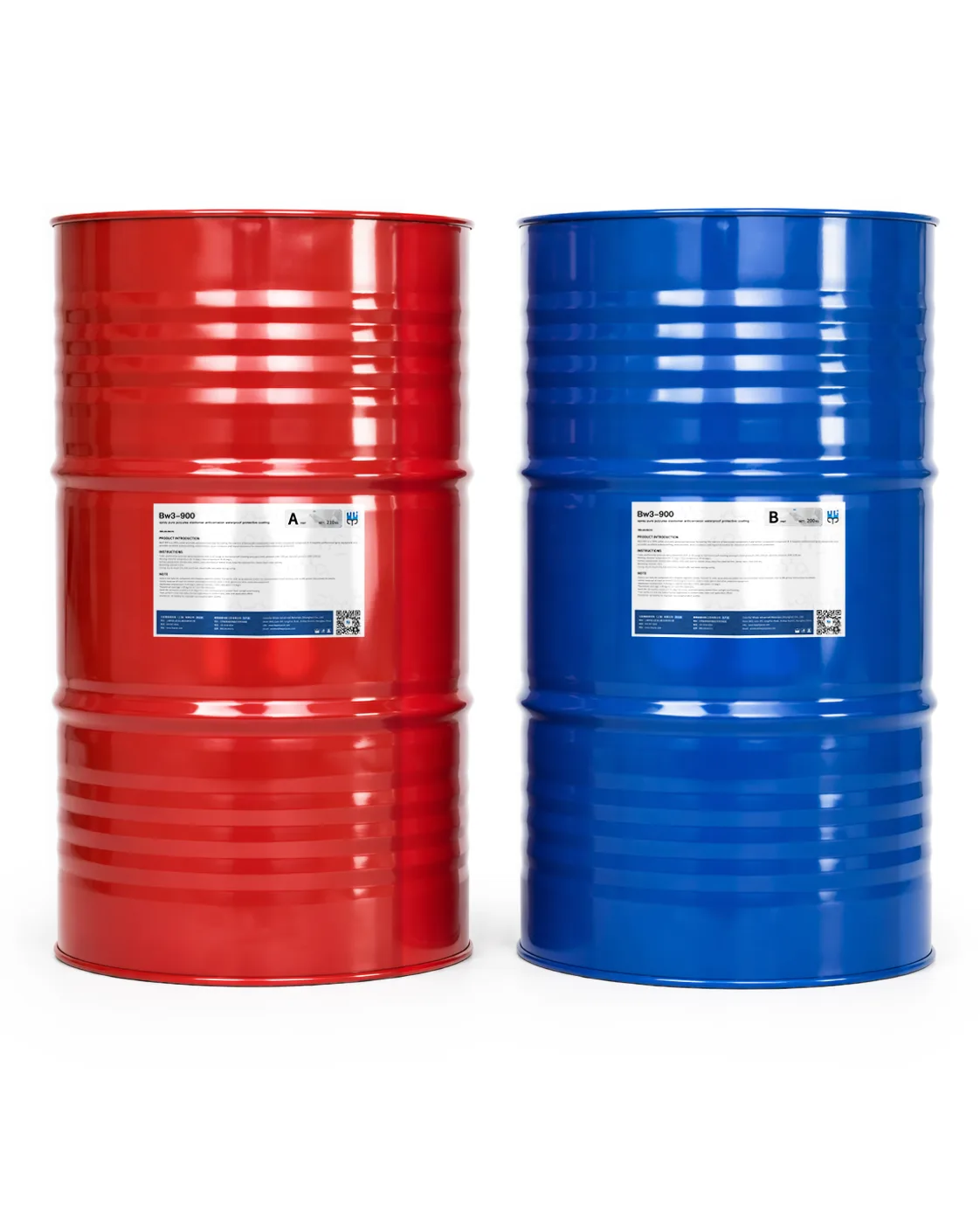
BW8009 Concrete Primer + BW3-900 Spray Polyurea
The project photographs show large prefabricated modules in an outdoor yard, during handling and with access scaffolding along their external faces. The work areas include broad vertical surfaces, edges and local openings. For this type of concrete-side protection, review the substrate across the main surface and separately at edges, openings and areas exposed to handling contact, so that the primer interface and main protective layer suit the module geometry.
BW8009 was used as the concrete-side primer because this part of the project required substrate sealing and adhesion support before spray polyurea application. Its role is to wet out the prepared concrete surface, reduce the influence of pores and small surface defects, and create a more stable bonding base for the subsequent coating layer. This is especially important in desalination-related structures because chloride-containing moisture can enter weak or porous concrete areas over time, and any discontinuity at the coating interface may reduce the effectiveness of the protective system.
After the concrete-side primer route, BW3-900 was applied as the main spray polyurea protective coating. The value of using spray polyurea in this area is its ability to form a continuous, seamless and fast-applied protective membrane over large concrete surfaces and complex shapes. For the external concrete-side areas of a desalination module, this helps improve waterproofing continuity, reduce direct moisture exposure to the concrete surface, and provide a durable protective layer during handling, transport and later service.
For this project, the BW3-900 main spray polyurea coating on the external concrete-side areas was applied at 4.5 mm.
This route is therefore not simply "primer plus coating." It is a substrate-specific protection route: BW8009 prepares the concrete interface, while BW3-900 provides the main continuous protective layer. Together, they help address the concrete-side risks of porosity, moisture pathways, salt-containing exposure and coating discontinuity.
2. Internal Metal-Side / Steel-Related Protection
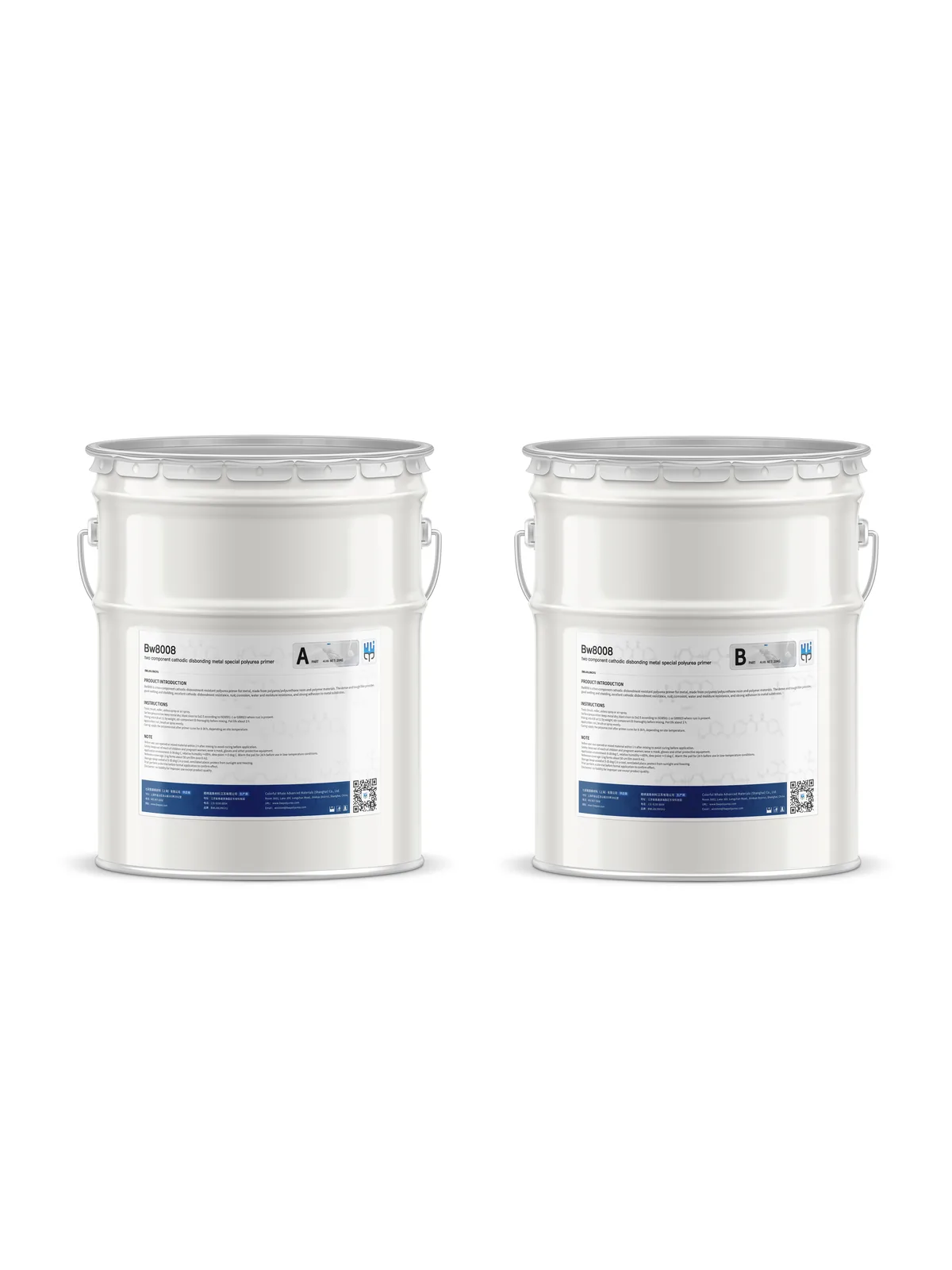
BW8008 Metal Primer + BW3-900 Spray Polyurea
Interior photographs show an overhead surface with multiple circular openings, intersecting members and scaffolded working areas. A separate close-up shows local hand work on a member surface. Access differs from the broad external faces. For a similar project, confirm the preparation requirements for internal metal surfaces, coating transitions around member junctions and openings, and the reach of the spray equipment before coordinating broad-area application with local detail work.
BW8008 was used as the metal-primer route for these areas because a concrete primer is not suitable for metal-side protection. A metal primer is needed to support adhesion to prepared steel or metal-related surfaces and to provide a more appropriate base for the following protective coating. This helps the coating system respond to the main requirement of metal-side areas: reducing corrosion risk at the substrate interface and improving bonding stability before the main spray-applied protective layer is installed.
BW3-900 was then applied over the BW8008-primed metal-side areas as the main spray polyurea protective coating. In this role, BW3-900 helps form a dense and continuous barrier layer over the prepared metal surface. For desalination infrastructure, this type of continuous coating route is valuable because corrosion protection depends not only on the coating material itself, but also on adhesion, surface continuity, edge treatment and compatibility with the actual service environment.
For the internal metal-side / steel-related areas, the BW3-900 main spray polyurea coating was also applied at 4.5 mm.
This route shows why the project used different primers for different substrates. The concrete-side areas required BW8009 for mineral substrate sealing, while the metal-side areas required BW8008 for metal-primer support. BW3-900 then served as the main spray-applied protective layer over both routes, helping maintain a more consistent protection strategy while still respecting the different substrate requirements.
3. Local Detail Reinforcement
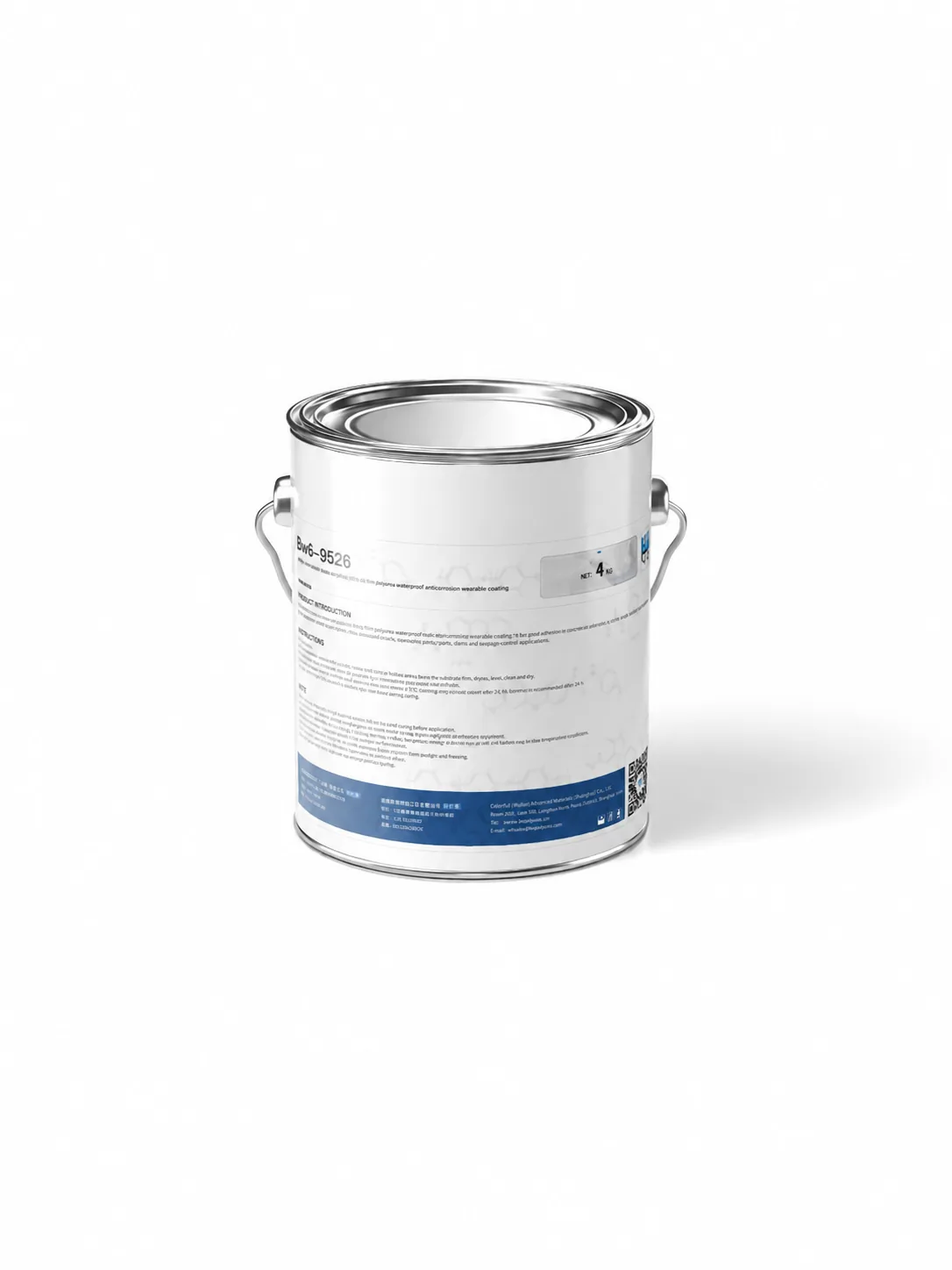
BW6-9526 Thick-Film Detail Repair Coating
In desalination infrastructure, local details are often as important as broad surfaces. Corners, joints, edges, transitions, lifting or handling areas, local repair points and irregular details may become weak points if they are treated only as ordinary flat surfaces. These areas can experience higher stress, sharper geometry, coating thickness variation, local impact during transport, or more difficult spray access. For this reason, the project needed a material that could be applied with more control in local detail zones.
BW6-9526 was used for local detail reinforcement because it is a trowel-applied thick-film polyurea repair coating. Unlike broad spray application, a hand-applied thick-film material can be placed more precisely at corners, joints, edges and irregular details. This makes it useful where the project requires local build-up, crack or joint support, transition treatment or additional detail protection before or around the main spray polyurea coating route.
The benefit of BW6-9526 in this project is that it helps strengthen areas where coating continuity is most likely to be challenged. It does not replace the main BW3-900 spray-applied protective layer; instead, it supports the overall coating route by improving local detail treatment. This is important for prefabricated desalination infrastructure modules because handling, installation and service exposure can place stress on edges and detail areas, not only on large flat surfaces.
By combining BW6-9526 local reinforcement with BW8009 / BW8008 primer routes and BW3-900 spray polyurea protection, the project used a more practical zone-specific approach. Broad concrete and metal-side areas received spray-applied membrane protection, while details and irregular zones received hand-applied reinforcement where more precise local control was needed.
This case separates external concrete areas, internal metal areas and local details so that substrate and access conditions can be reviewed by zone. For a similar modular project, provide photographs of each area, substrate information, openings and member layouts, handling and installation arrangements, and locations exposed to water or other media. Confirm external weather exposure, internal service chemistry and detail access separately before selecting the material combination.
Related Products Used
Project Photo Gallery
The photographs cover external module faces, internal scaffolding, spraying around an overhead surface with openings, local hand work and module handling. These views help compare broad-area access and detail-working space for similar projects.