
Project case
Exterior Steel Structure Anti-Corrosion Coating Case
An exterior industrial steel structure coating case using BW8008 metal primer and BW0-8028 anti-corrosion protective topcoat for atmospheric corrosion protection, weather resistance and exposed steel surface durability.
- Project Type
- Exterior steel structure anti-corrosion coating
- Application Area
- Industrial pipe racks, steel platforms, support frames, steel columns, beams and exterior structural components
- Main Substrates
- Prepared steel surfaces, welded joints, bolts, edges, base plates, pipe supports and local steel details
- Service Environment
- Outdoor industrial exposure, rainwater, humidity, temperature change, sunlight, dust, atmospheric corrosion and maintenance conditions
- Coating Approach
- BW8008 metal primer + BW0-8028 exposed anti-corrosion protective topcoat
- Main Functions
- Atmospheric anti-corrosion protection, metal surface protection, weather resistance, exposed coating durability and maintenance-friendly steel structure protection
Project information is summarized for application reference. Some project details are not disclosed due to confidentiality requirements.

Why This Coating Route Was Used for Exterior Steel Structure Anti-Corrosion Protection
Exterior industrial steel structures are exposed to long-term atmospheric corrosion risks. In daily service, steel columns, pipe racks, platforms, support frames, trusses and structural connections may face rainwater, humidity, condensation, sunlight, temperature change, industrial dust, chemical particles and repeated wet-dry cycles. If the surface protection is weak, damaged or poorly bonded, corrosion can begin from local exposed areas and gradually spread along edges, welds, bolts, seams and steel-to-concrete connection zones.
The main pain point of exterior steel structure protection is that corrosion rarely starts evenly across a large flat surface. It often begins at vulnerable details. Welded seams, sharp edges, bolt areas, base plates, column feet, pipe supports, drainage paths and hard-to-access corners are more likely to retain moisture, dust and contaminants. Once the coating film becomes thin, cracked or detached in these areas, the steel surface may be exposed to oxygen and moisture, leading to rust, coating peeling and maintenance difficulty.
Another challenge is the shape of industrial steel structures. Unlike a simple flat panel, pipe racks and steel frames include round tubes, H-beams, diagonal braces, welded joints, corners, overlapping areas and narrow spaces between components. A protective coating route must be able to cover these complex shapes while maintaining adhesion and surface continuity. For this reason, exterior steel anti-corrosion work depends heavily on surface preparation, primer selection and topcoat performance.
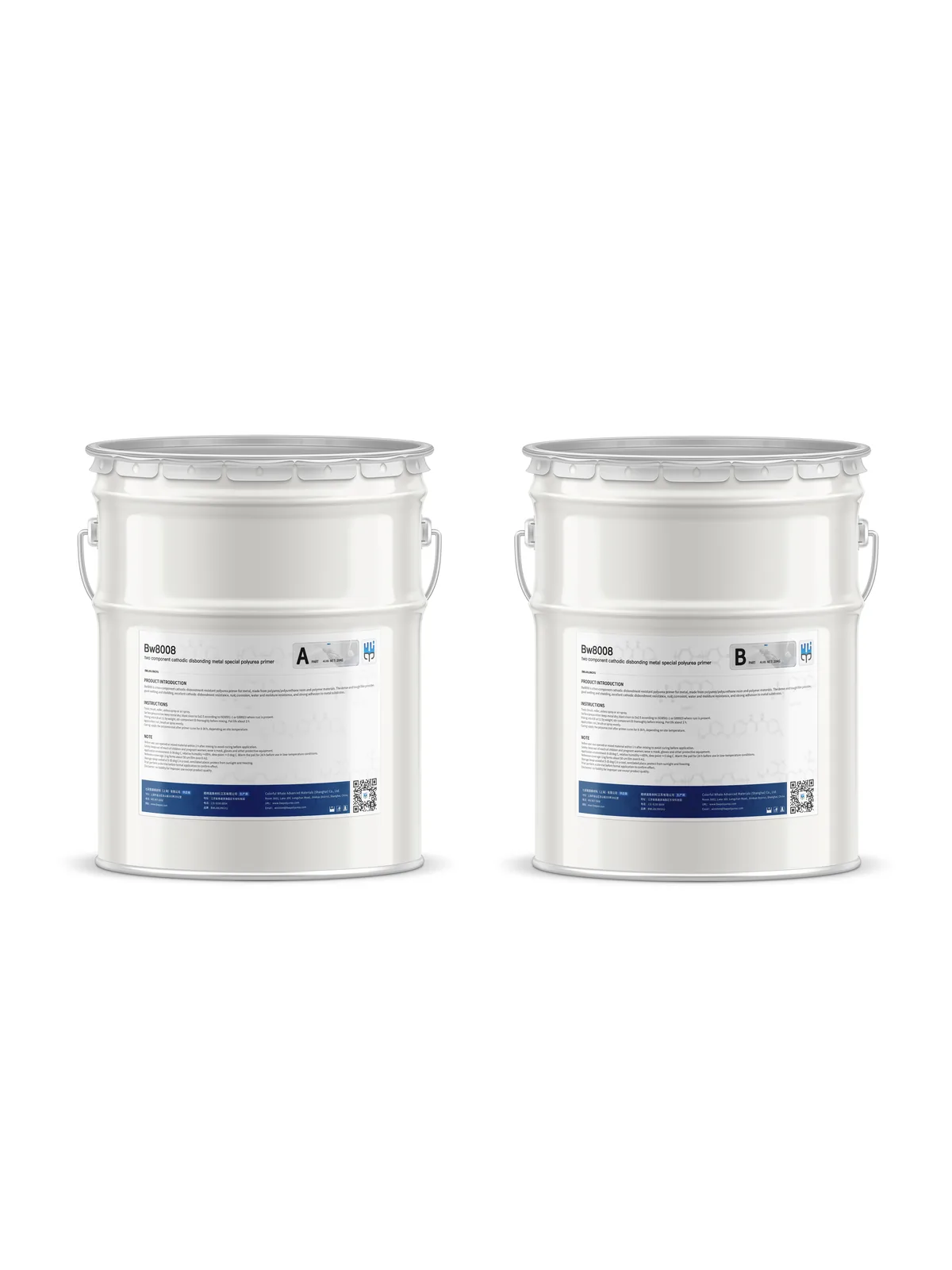
In this project, BW8008 was used as the metal primer. The role of BW8008 is to provide a suitable primer route for prepared steel surfaces before the exposed protective topcoat is applied. This primer layer helps support adhesion between the steel substrate and the subsequent coating layer. For outdoor industrial steel structures, a stable primer interface is important because the coating system must resist moisture, temperature variation, vibration, structural movement and local corrosion risk over time.
BW8008 is not used as the final exposed surface in this route. Its main value is at the substrate interface. It helps prepare the metal surface for the following anti-corrosion topcoat and supports the bonding stability of the coating system. This is especially important for steel members with welded areas, edges, connection plates and complex structural details, where coating failure may start if the primer interface is weak.
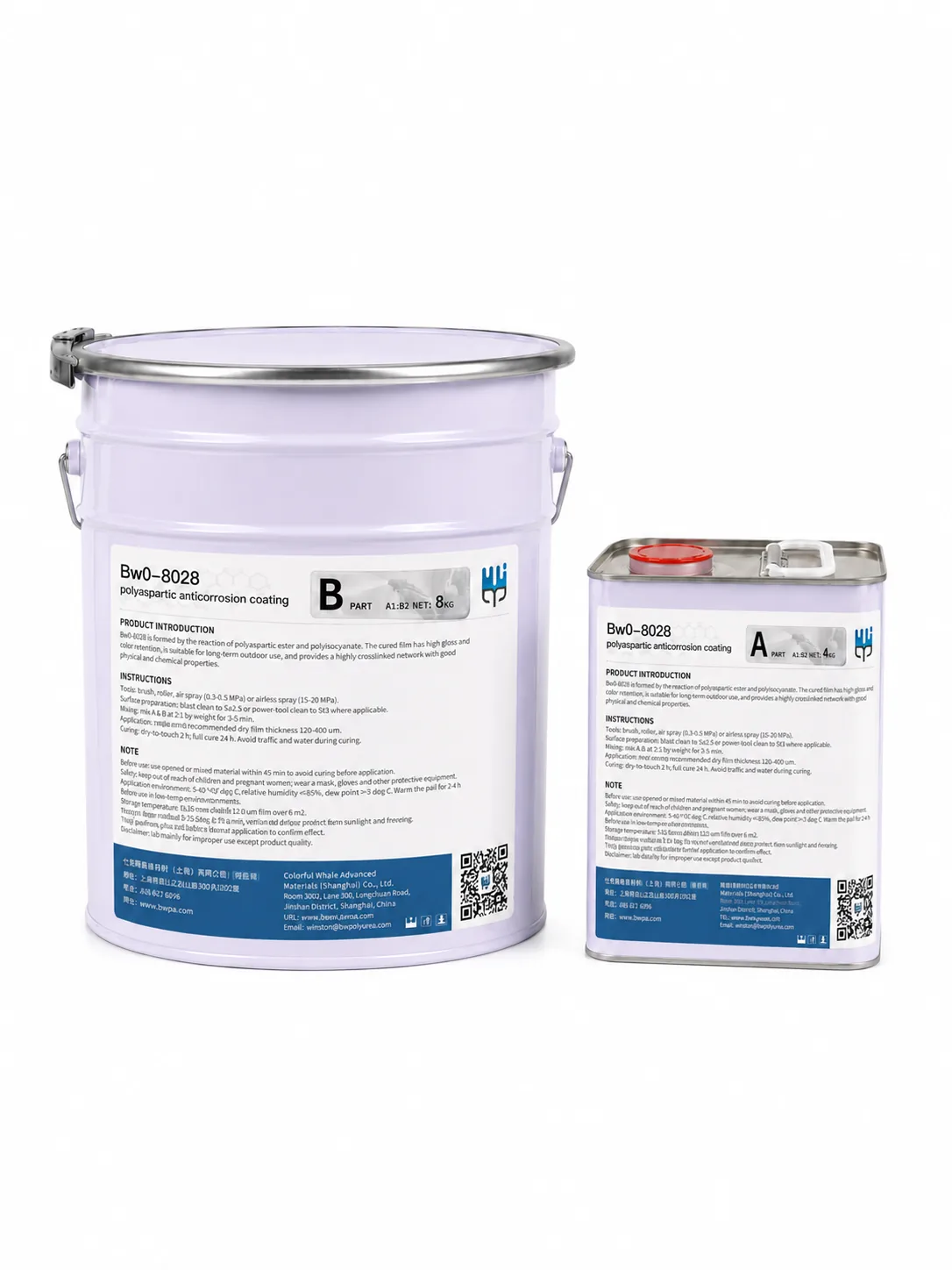
After the primer layer, BW0-8028 was used as the exposed anti-corrosion protective topcoat. The external steel structure is directly exposed to outdoor and industrial service conditions, so the topcoat must provide more than color. It needs to protect the primer layer, support weather resistance, improve surface durability and help reduce the influence of rain, sunlight, moisture and atmospheric corrosion factors on the steel structure.
The advantage of BW0-8028 in this route is that it functions as an exposed protective finish for metal structures. It helps complete the surface protection system after BW8008 primer application. In exterior steel structure projects, the topcoat is important because it is the layer that directly faces the environment. Its surface durability, weather resistance and anti-corrosion finish support the long-term service of the entire coating route.
This two-layer coating route has a clear division of function. BW8008 supports the metal-primer interface and adhesion on prepared steel surfaces. BW0-8028 provides the exposed anti-corrosion protective topcoat for outdoor steel structure service. Together, they form a practical exterior steel protection route for industrial environments where the main requirement is atmospheric anti-corrosion protection, weather-resistant surface performance and maintenance-friendly coating renewal.
This route is suitable for exterior steel structures because it addresses the main risks of outdoor industrial service: moisture exposure, atmospheric corrosion, sunlight, temperature change, dust accumulation, structural details and local coating damage. It is not designed as an internal tank lining or heavy immersion system. Instead, it is organized as an exposed steel structure coating route for pipe racks, support frames, steel platforms, columns, beams and similar industrial steel components.
Surface preparation remains critical. Existing rust, loose coating, oil contamination, dust, welding residues and poorly bonded old layers should be removed or treated before the primer is applied. Edges, welds, bolts, base plates and hard-to-access areas should be checked carefully because these locations often determine the long-term performance of the coating system. A good coating material cannot compensate for unstable substrate conditions.
The key value of this case is that the coating route matches the needs of exterior steel structure protection. BW8008 supports bonding on prepared metal surfaces, while BW0-8028 provides the exposed anti-corrosion and weather-resistant finish. This makes the route suitable for industrial steel structures that require a cleaner, more durable and more practical external protection system under outdoor atmospheric exposure.
For similar pipe racks, steel platforms, support frames, industrial corridors, equipment structures and exterior steel components, the final coating route should still be reviewed according to the existing corrosion condition, surface preparation level, exposure environment, accessibility, maintenance cycle and project requirements. This case provides an application reference for using BW8008 and BW0-8028 to support exterior steel structure anti-corrosion protection and exposed surface durability.
Related Products Used

Project Photo Gallery
Project photos show exterior steel structure coating areas, pipe racks, support frames, steel columns, platform details and finished anti-corrosion protective coating references.