BW PolyureaProtective CoatingsContact

Spray Polyurea Waterproofing System
for Concrete Roofs

A spray polyurea waterproofing system for prepared concrete roofs, industrial flat roofs and exposed roof decks with drains, parapets, pipe penetrations and equipment bases. It forms a seamless waterproofing membrane over primed concrete and adds an exposed protective topcoat to support long-term roof durability under outdoor weathering.

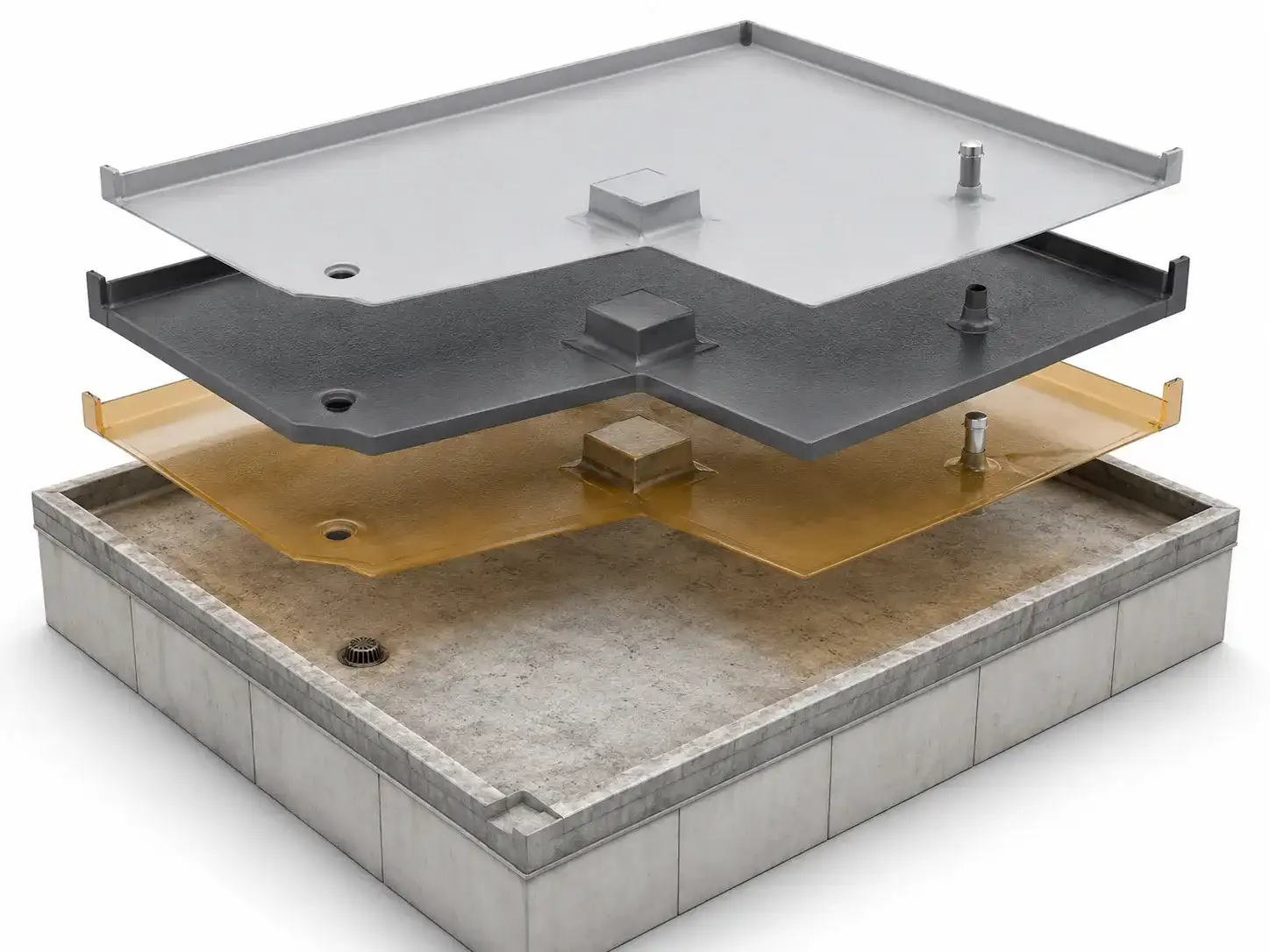
Spray polyurea concrete roof waterproofing system with BW8009 primer, BW3-900 membrane and BW0-8029 protective topcoat

Three-Layer Roof Build-Up

Concrete primer interface + seamless spray polyurea waterproofing membrane + exposed polyaspartic protective topcoat

  1. 01
    BW8009 Concrete Primer

    Concrete pore sealing and adhesion support for prepared roof substrates

  2. 02
    BW3-900 Spray Polyurea Membrane

    Main seamless spray polyurea waterproofing membrane

  3. 03
    BW0-8029 Protective Topcoat

    Exposed polyaspartic protective topcoat for UV, weather and surface durability

What Each Layer Solves

The system separates concrete primer bonding, main seamless waterproofing and exposed surface protection, helping reduce substrate-related defects, roof leakage risk and outdoor aging on prepared concrete roof projects.

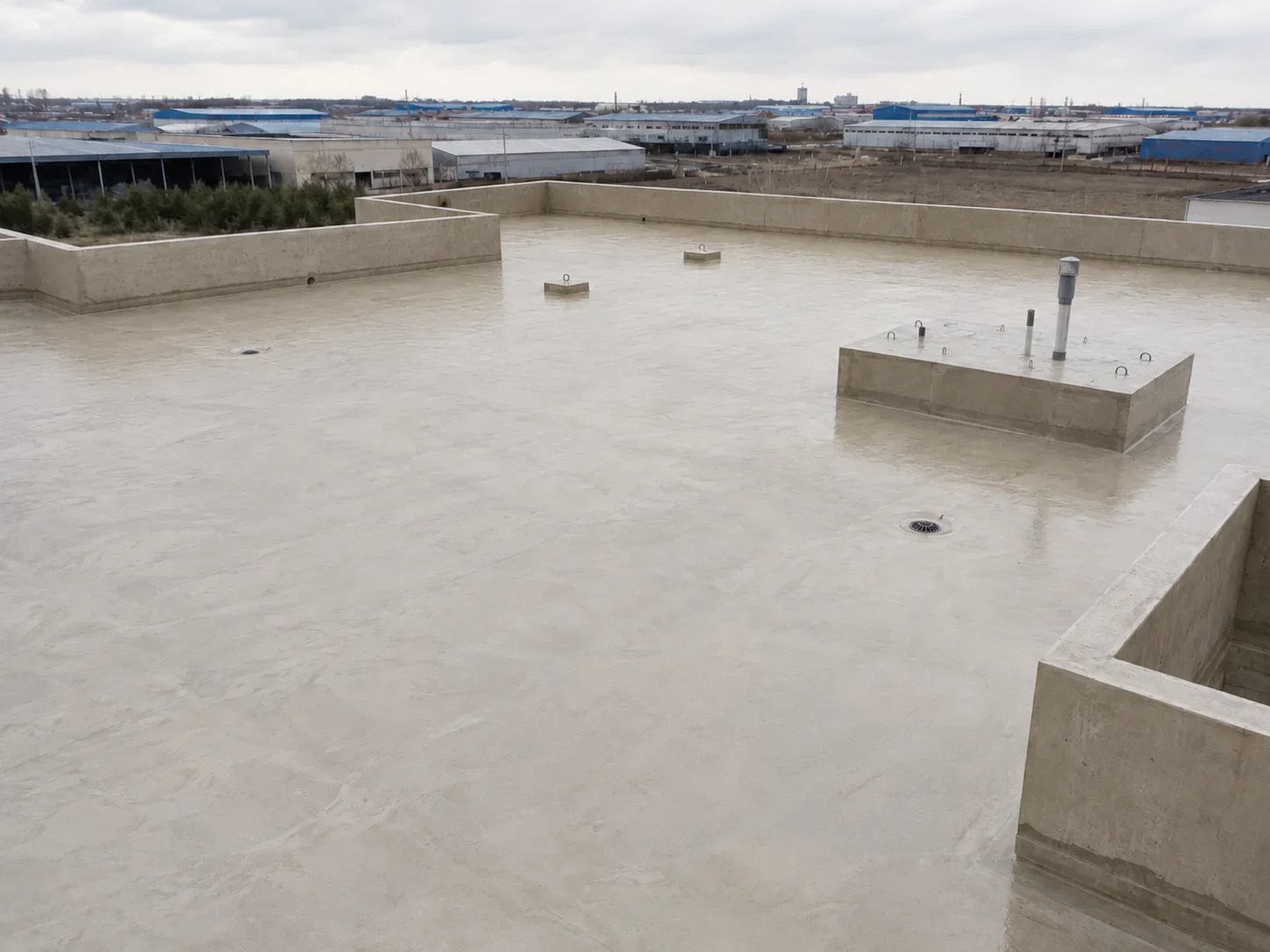
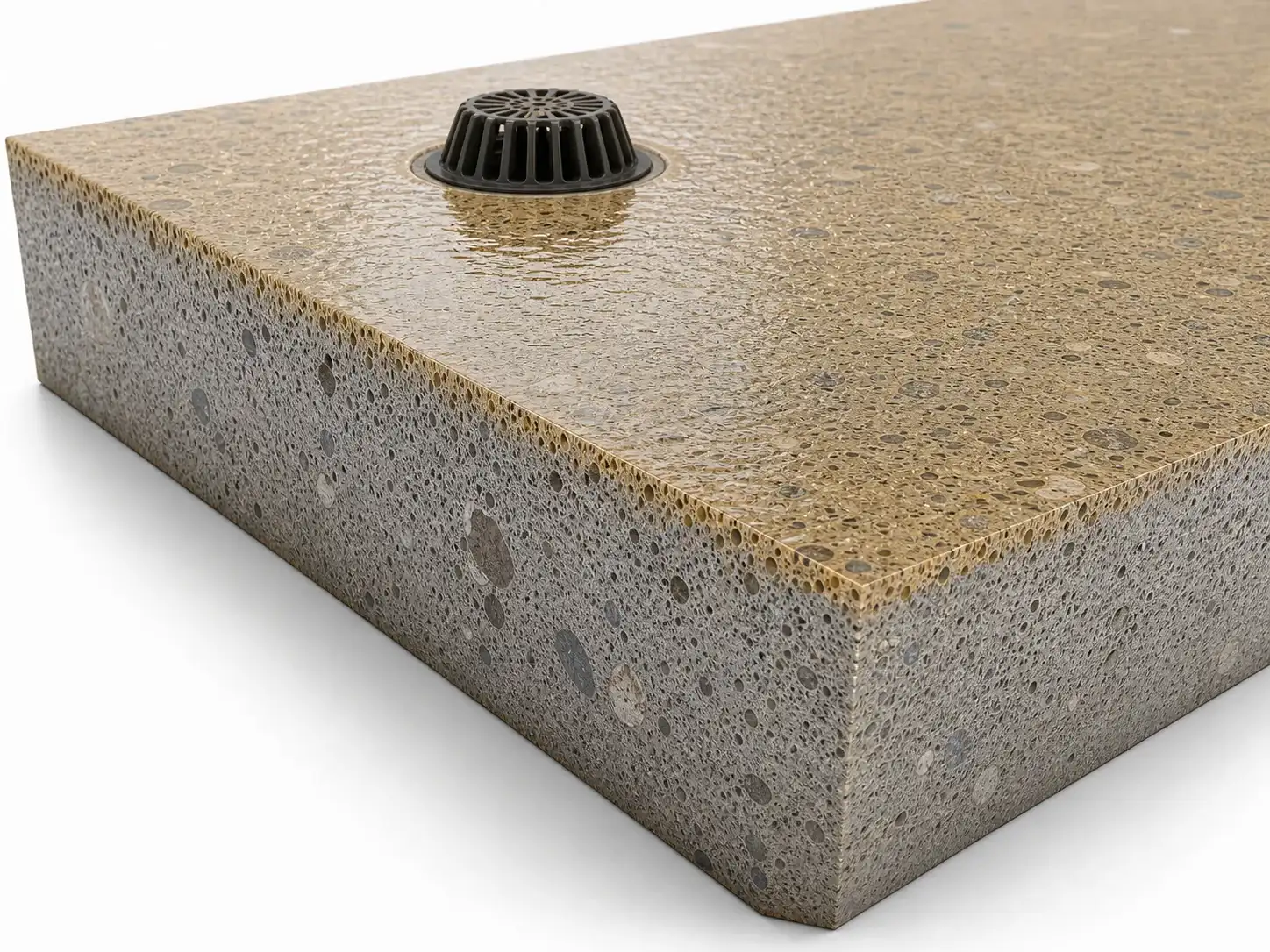
BW8009 concrete primer applied on prepared roof substrate before spray polyurea waterproofing

BW8009 improves the concrete bonding base.

BW8009 seals prepared concrete, reduces uneven absorption and supports adhesion before the spray membrane is applied. It helps create a more stable primer interface on porous, dusty or mineral concrete roof substrates after proper surface preparation.
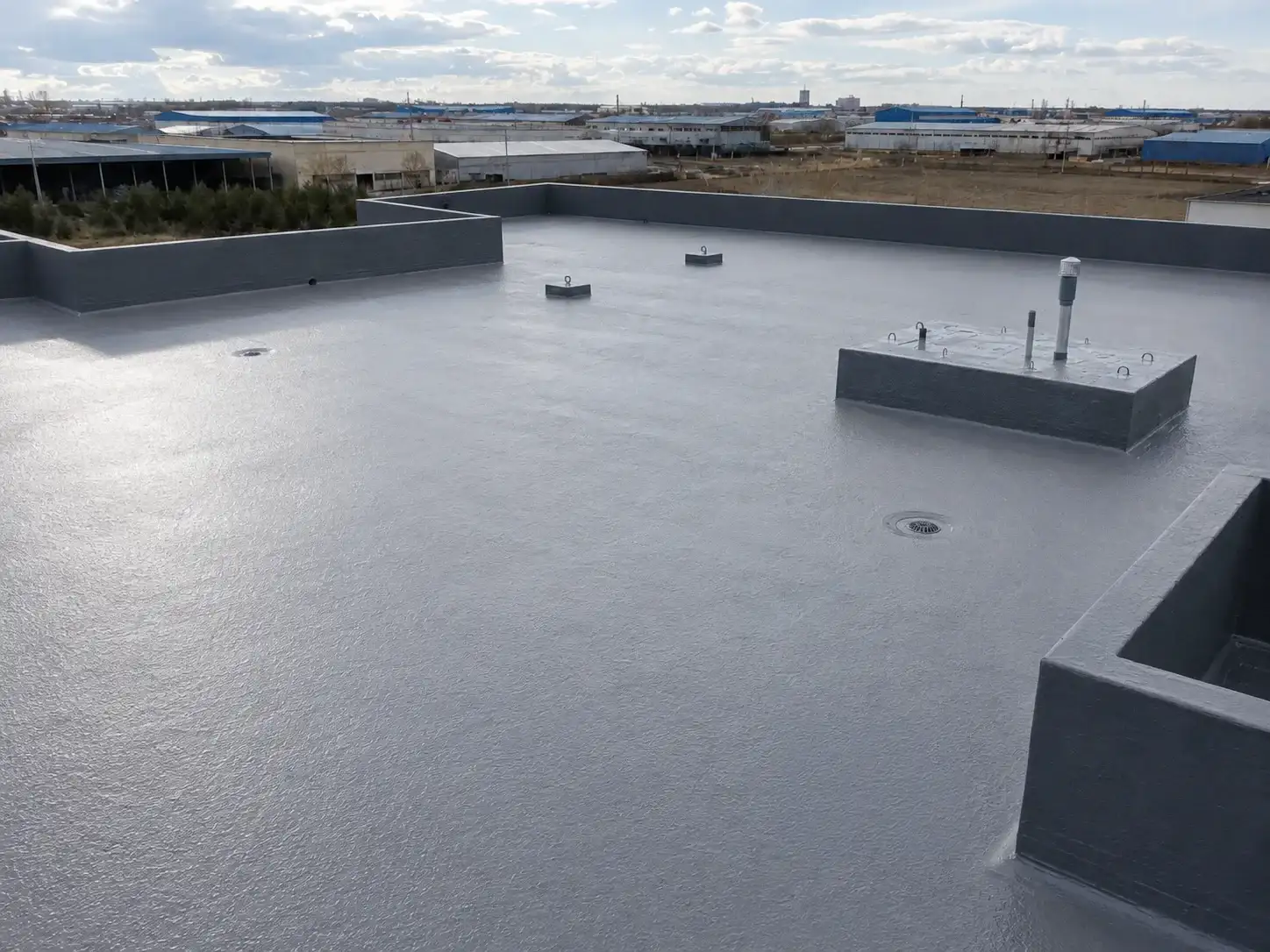
BW3-900 spray polyurea waterproofing membrane forming a seamless roof protection layer

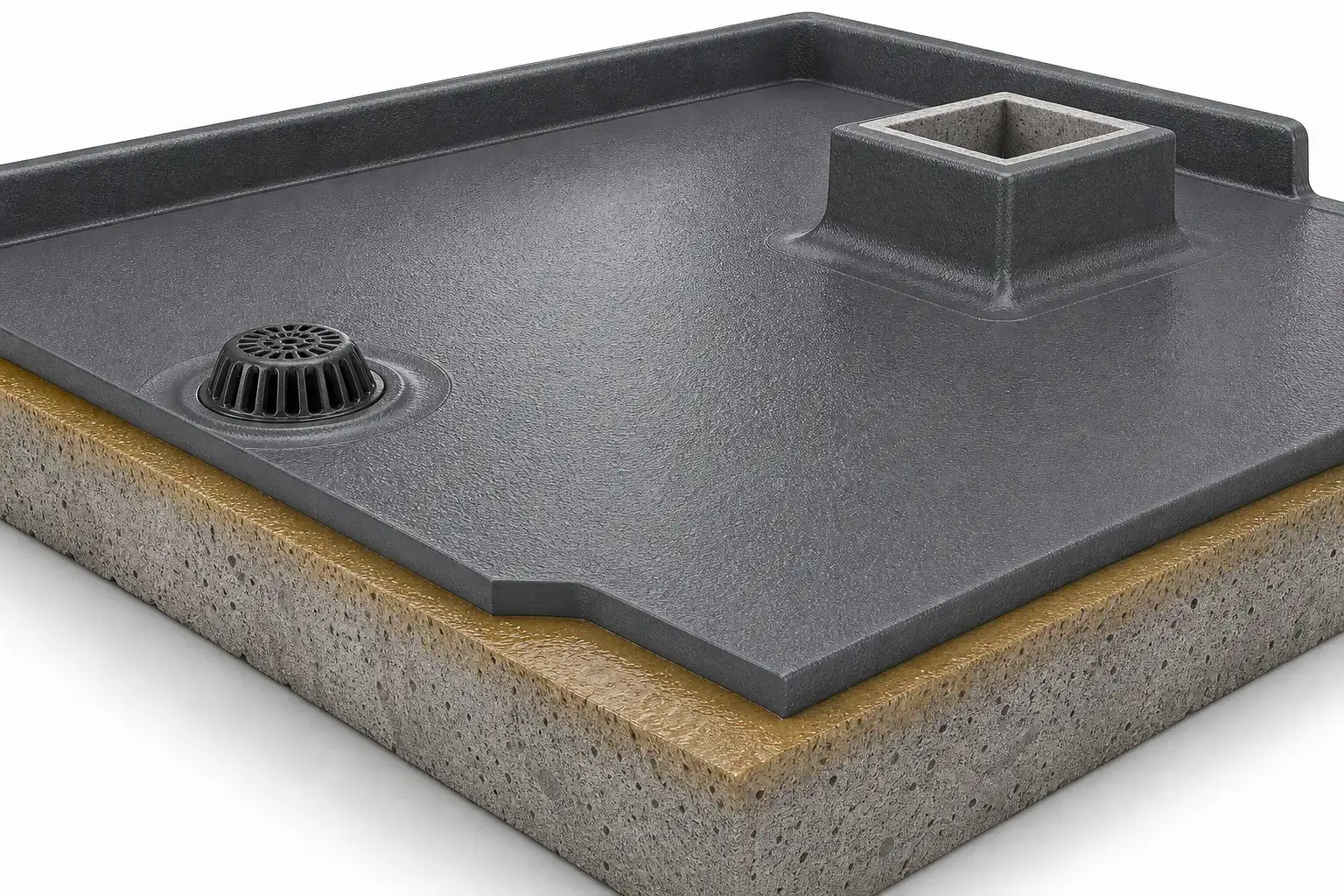
BW3-900 builds the main seamless waterproofing membrane.

BW3-900 forms the main continuous spray polyurea waterproofing membrane over the primed concrete roof surface. It helps reduce leakage paths across large roof areas and around parapets, drains, pipe penetrations, equipment bases, cracks, corners and transitions.

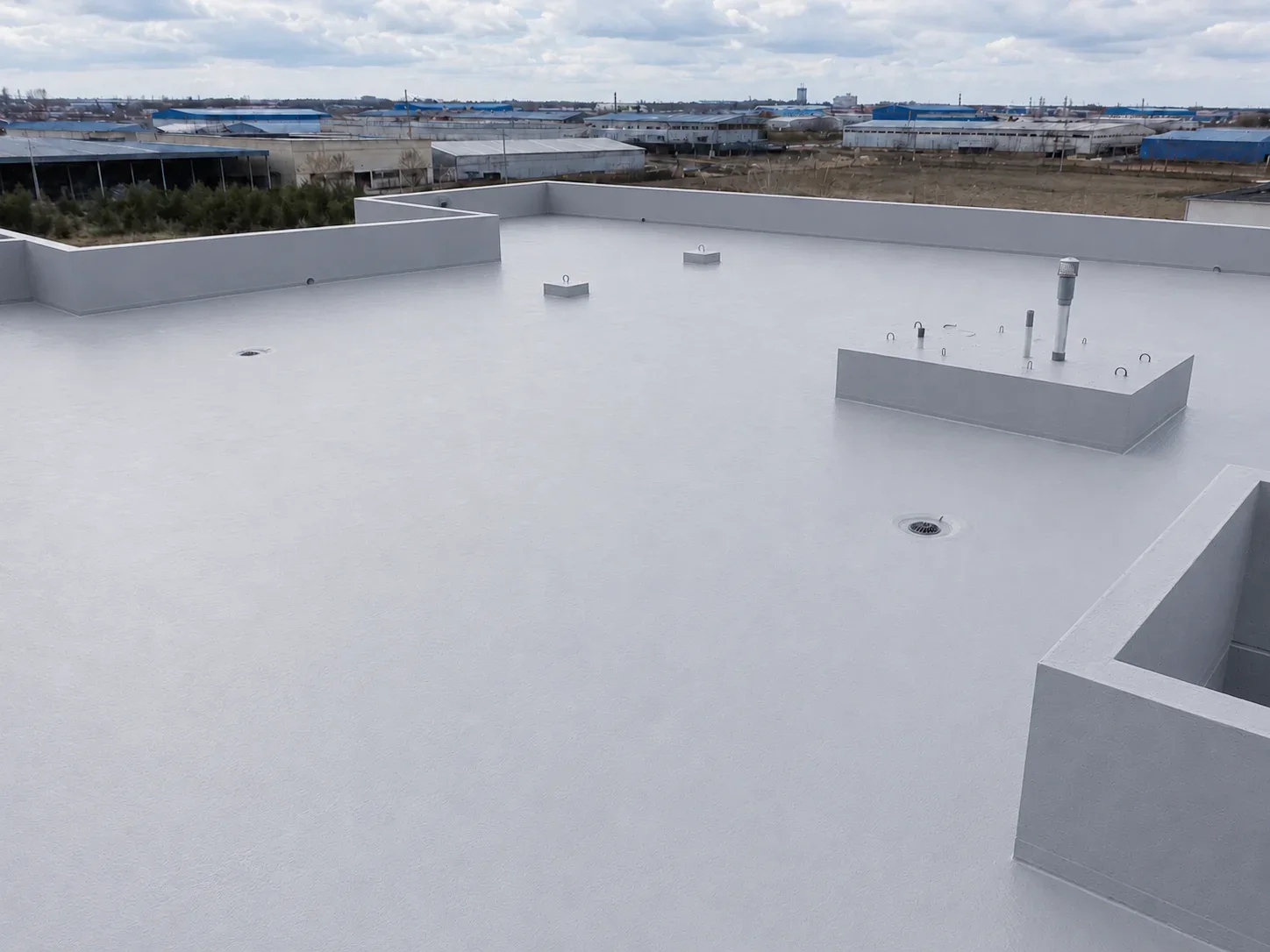
BW0-8029 protective topcoat for exposed concrete roof polyurea waterproofing system

BW0-8029 protects the exposed roof surface.

BW0-8029 is applied as the exposed protective topcoat over the BW3-900 membrane. It helps improve UV resistance, weathering resistance, surface durability, color stability and maintainability when the roof waterproofing membrane remains exposed.

How This System Helps Reduce Common Roof Problems

Concrete roof leakage often starts from small weak points: dusty or porous concrete, cracks, parapet wall roots, roof drains, pipe penetrations, equipment bases, expansion joints, corners, transitions and ponding water zones. The BW8009 + BW3-900 + BW0-8029 system helps reduce these risks through a controlled route from substrate preparation to primer bonding, seamless membrane formation and exposed-surface protection.

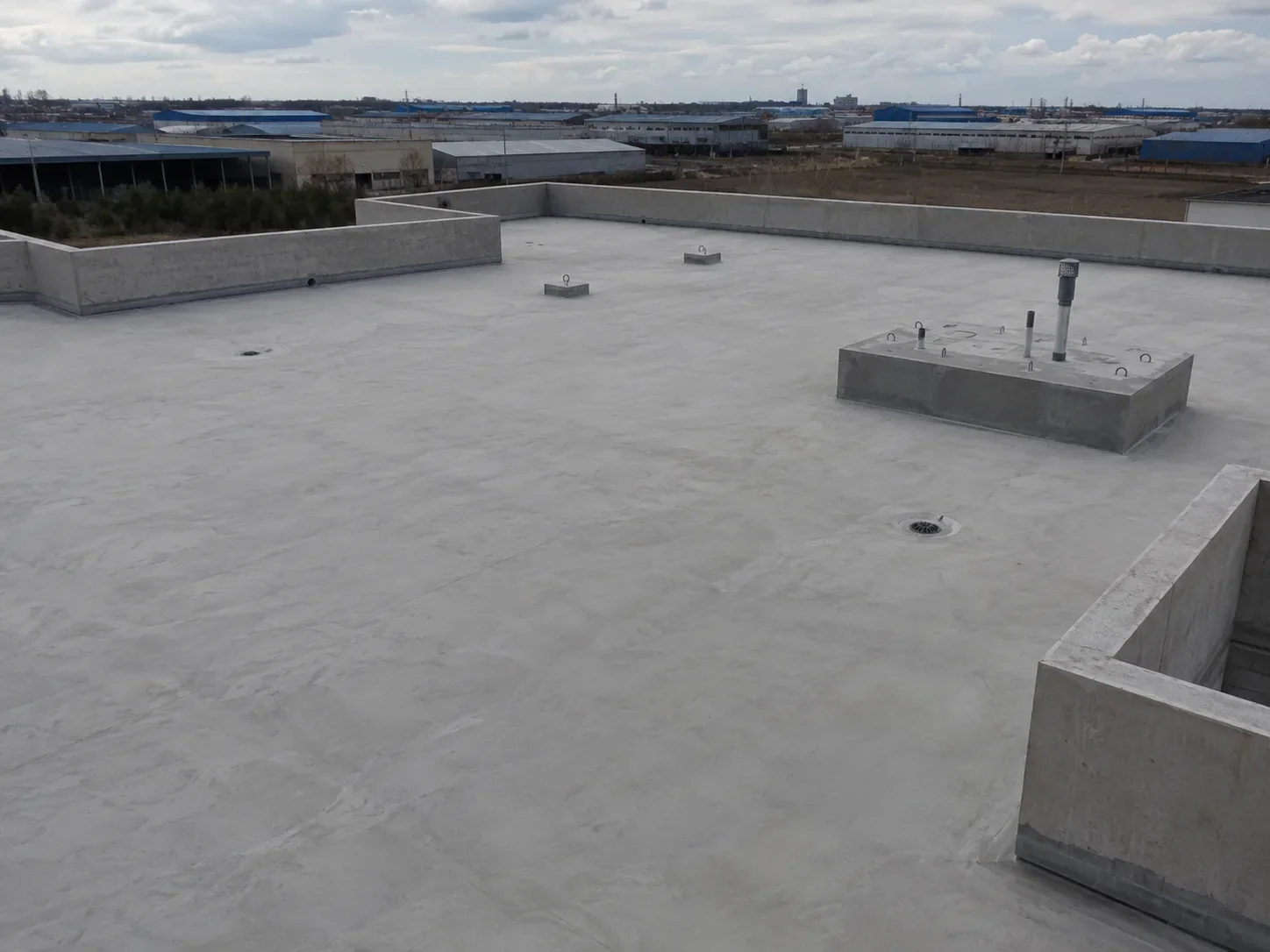
Spray polyurea concrete roof waterproofing construction progress on an industrial flat roof before primer application

01 Prepare the Concrete Roof Substrate

Concrete roof waterproofing starts with a solid, clean, dry and stable substrate. Remove loose concrete, laitance, dust, oil, standing water and weak surface layers, then review cracks, parapets, drains, pipe roots, equipment bases, expansion joints, slope and ponding water areas before primer application.

02 Apply BW8009 as the Concrete Primer

Apply BW8009 to seal prepared concrete, reduce surface absorption and support adhesion before the spray membrane is applied. Primer coverage, substrate dryness and recoat condition should be controlled so BW3-900 is sprayed over a stable primed surface.

BW8009 concrete primer applied on prepared roof substrate before spray polyurea waterproofing
BW3-900 spray polyurea waterproofing membrane forming a seamless roof protection layer around roof details

03 Spray the BW3-900 Main Membrane

Spray BW3-900 as the main seamless waterproofing membrane over the primed concrete roof. The membrane should continuously cover field areas and roof details such as parapet wall roots, drains, pipe penetrations, equipment bases, cracks, corners, transitions and movement-sensitive areas after proper detail treatment.

04 Protect the Exposed Surface with BW0-8029

Apply BW0-8029 over the BW3-900 membrane as the exposed protective topcoat. It helps protect the roof surface from UV exposure, rain, weathering, color aging, maintenance traffic and long-term outdoor service conditions.

BW0-8029 protective topcoat for exposed concrete roof polyurea waterproofing system

System Key Data

System-relevant values for spray polyurea roof waterproofing: concrete adhesion, membrane crack-resistance, impermeability and exposed topcoat durability.

BW8009 Concrete Penetrating Primer

BW8009 Concrete Penetrating Primer
ItemTest standard / referenceResult
Density g/cm³ GB/T 6750-2007 1.02
Solid content Product Information >60% / >60%
Concrete adhesion ASTM D-3359 3.5 MPa or substrate broken
Viscosity (cps) @ 25°C Product Information Part A 220 / Part B 260
Temperature variation resistance GB/9278-1988 -40 to +180°C, 24 h: normal
Salt resistance GB / T 9274-1988 reference 50 g/L, 30 d: no corrosion, blistering or peeling
Alkali resistance GB / T 9274-1988 reference 50% NaOH, 30 d: no corrosion, blistering or peeling

BW3-900 Spray Polyurea

BW3-900 Spray Polyurea
ItemTest standard / referenceResult
Elongation GB / T 23446-2009 482%
Tear strength GB / T 23446-2009 85 kN/m
Gel time @ 25°C Product Information 4-6 s
Tensile strength GB / T 23446-2009 22 MPa
Solid content Product Information 100% / 100%
Impermeability GB / T 23446-2009 0.4 MPa / 2 h, impermeable

BW0-8029 Elastic Polyaspartic Topcoat

BW0-8029 Elastic Polyaspartic Topcoat
ItemTest standard / referenceResult
Impact strength GB / T 1732 50 kg·cm
Abrasion resistance HG / T 3831-2006 5 mg
Tensile strength / elongation ASTM D-412 20 MPa / 200%
Accelerated aging GB / T 14522-1993, 1000 h Gloss loss <1; chalking <1
Water resistance Chemical Resistance 48 h, no bubbles, wrinkles, color change or peeling

The above values are selected from the current product-detail Product Information, Physical Properties and Chemical Resistance tables. Final film thickness and suitability should be confirmed according to substrate condition, service exposure, detail design, project specification and the latest approved technical data sheet.

Quality Control Checklist

Before handover, key inspection should focus on concrete roof readiness, BW8009 primer condition, BW3-900 membrane continuity, roof detail treatment and BW0-8029 exposed topcoat quality.

01

Concrete Roof & Primer Readiness

Confirm the roof substrate and primer condition before spray membrane application.

  • Surface strength and dryness
  • Dust, oil and weak-layer removal
  • BW8009 primer coverage
  • Slope, drainage and ponding water review
02

BW3-900 Membrane Continuity Check

Review the spray polyurea membrane across roof areas and details before topcoat application.

  • Continuous seamless membrane
  • Target membrane thickness
  • Drains, parapets and pipe penetrations
  • Equipment bases, cracks, joints and transitions
03

BW0-8029 Topcoat & Final Handover

Check the exposed topcoat and final roof condition before delivery.

  • Continuous topcoat coverage
  • Surface finish and color requirement
  • Pinholes, missed areas and damage repair
  • Final inspection records

Suitable Roof Conditions and System Boundaries

Use these checks to judge whether the BW8009 + BW3-900 + BW0-8029 spray polyurea system is suitable before final specification, and when another roof waterproofing system may be more appropriate.

  • Prepared Concrete Flat Roofs

    For prepared concrete flat roofs, industrial roofs and exposed concrete roof decks where surface strength, dryness, slope and drainage can meet primer and spray membrane requirements. Key review: concrete roof, dryness and drainage.

    Detail-Heavy Technical Roof Areas

    For roofs with parapets, drains, pipe penetrations, equipment bases, expansion joints, corners and transitions where seamless spray membrane continuity is required. Key review: parapets, drains and penetrations.

  • Exposed Roof Weathering Conditions

    For exposed concrete roof waterproofing projects where the BW3-900 membrane needs BW0-8029 topcoat protection against UV, weathering, rain and maintenance traffic. Key review: UV exposure, topcoat and durability.

    When Another System Is Better

    For old SBS or bitumen membrane renovation, metal roofs, hand-applied small-area repairs or basement garage roof decks with overburden layers, choose a dedicated system design instead. Key review: old membrane, metal roof and buried deck.

Do not finalize system selection from roof area alone. Confirm concrete condition, moisture, surface strength, cracks, slope, drainage, ponding water risk, roof details, spray access, target DFT, exposure level and inspection requirements before ordering. Long-term ponding water areas may require additional drainage or detail design review.

FAQ

Common questions about using the BW8009 + BW3-900 + BW0-8029 spray polyurea system for prepared concrete roof waterproofing projects.

What is this spray polyurea concrete roof waterproofing system used for?

It is used for prepared concrete roof substrates, including industrial flat roofs, exposed concrete roof decks and technical roof areas that require a seamless spray polyurea waterproofing membrane and exposed surface protection.

Which layer is the main waterproofing membrane?

BW3-900 spray polyurea membrane is the main waterproofing layer. BW8009 is the concrete primer, and BW0-8029 is the exposed protective topcoat.

Why is BW8009 primer needed?

BW8009 helps seal prepared concrete, reduce uneven absorption and support adhesion before the BW3-900 spray polyurea membrane is applied.

Can BW8009 be used as the main waterproofing layer?

No. BW8009 is the concrete primer in this system. It should not replace BW3-900 as the main waterproofing membrane.

Why is BW0-8029 topcoat used?

BW0-8029 is used as an exposed protective topcoat to improve weather resistance, surface durability, color stability and long-term protection of the BW3-900 membrane.

Can BW0-8029 replace BW3-900 as the waterproofing membrane?

No. BW0-8029 is the exposed protective topcoat. The main waterproofing membrane in this system is BW3-900.

Can this system be used on old SBS or bitumen membranes?

This system is mainly designed for prepared concrete roof substrates. For old SBS or bitumen membrane renovation, a dedicated old waterproofing layer renovation system should be selected.

Which roof details need special attention?

Roof drains, parapets, pipe penetrations, equipment bases, corners, cracks, transitions and expansion joints should be reviewed and treated carefully to improve waterproofing continuity.

What is the difference between spray polyurea and hand-applied polyurea roof systems?

Spray polyurea is usually applied with plural-component spray equipment and is suitable for larger areas and fast membrane formation. Hand-applied polyurea is applied by roller, brush or scraper and is useful for smaller areas, repair zones or projects where spray equipment is not convenient.

Can this system solve all roof cracks?

No. Small surface cracks and roof movement areas should be evaluated before application. Active structural cracks, wide cracks or moving joints should be repaired or treated with a dedicated detail design before the main spray polyurea membrane is applied.

Is this system suitable for long-term ponding water?

Roof slope, drainage design and ponding water conditions should be evaluated before application. Long-term ponding water areas may require additional drainage design, detail treatment or technical confirmation.

What is the typical coating thickness for this system?

For this concrete roof waterproofing system, BW3-900 is the main waterproofing membrane and is recommended at about 1.2 mm. A typical system build-up may include about 50 um BW8009 primer, about 1.2 mm BW3-900 spray polyurea membrane and about 60-120 um total BW0-8029 protective topcoat design. Final thickness should follow project specification and the latest approved technical data.

What is the expected service life of this waterproofing coating system?

Based on laboratory testing and practical project verification, this waterproofing coating system is designed to support up to 20 years of service life when properly installed on suitable concrete substrates and maintained according to project requirements. Final service life depends on concrete condition, surface preparation, membrane thickness, detail treatment, drainage, exposure and maintenance.

What information is needed before requesting a quote?

Share roof area, concrete condition, moisture condition, cracks, drainage, parapets, pipe penetrations, equipment bases, ponding water risk, spray access, target membrane thickness, topcoat color, project location and construction timeline.